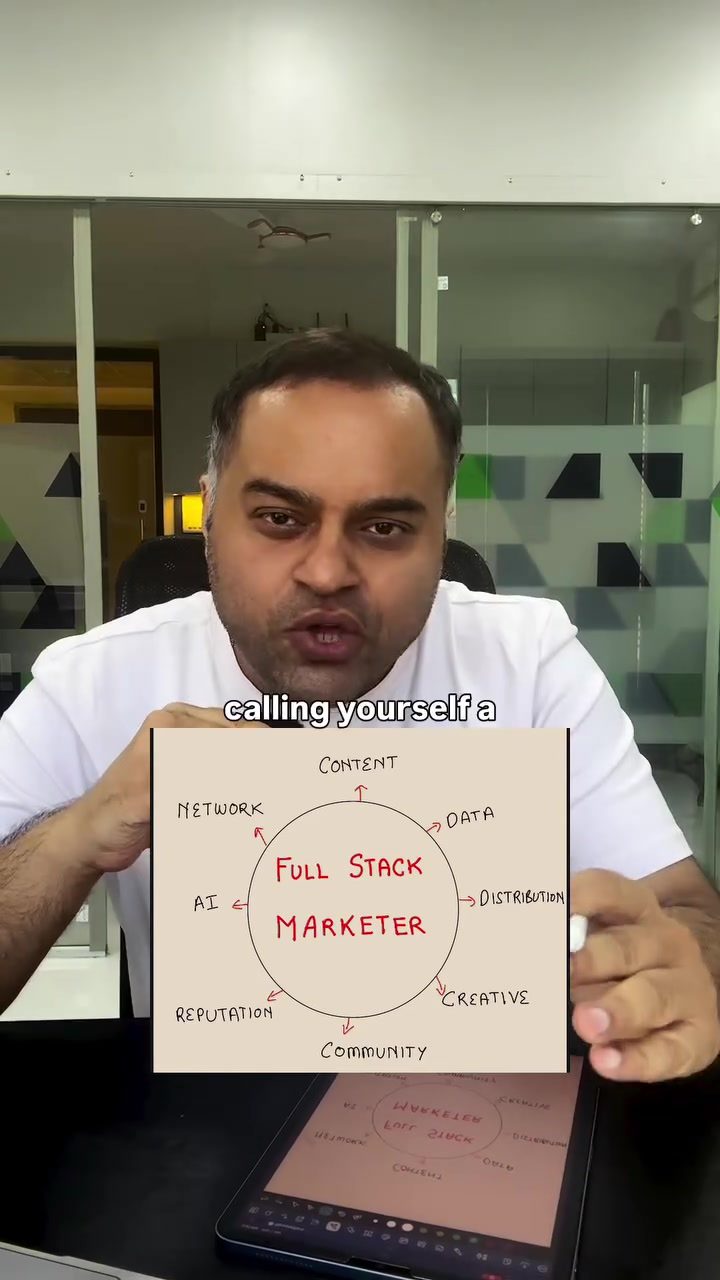
The Reality of Full Stack Marketers
Full stack marketers are often seen as the elite in the marketing world, but what does it really take to earn this title? Let's dive into the essential elements and the reality behind the full stack marketer label.
Why This Matters
The term "full stack marketer" is often misused, leading to misconceptions about what it truly means to be one. Understanding the reality behind this label is crucial for both job seekers and employers. It helps set realistic expectations, avoid overpromising, and ensure that everyone is on the same page.
The Full Stack Marketer: A Reality Check
The Misconception of Certifications
Many young professionals, sometimes as young as 24, claim to be full stack marketers based on short-term certifications. However, these certifications are often nothing more than pieces of paper. Knowing the definitions of SEO, PPC, and CRO does not equate to being a full stack marketer. These certifications do not replace the hands-on experience and real-world application needed to drive growth and retention for a business.
The Truth About Experience
True full stack marketers have a decade of experience under their belts. They have personally "pulled the levers" to drive business growth and retention. This means they have dealt with real money, real risk, and real failures. It's not about sitting in marketing review meetings or knowing the buzzwords; it's about getting your hands dirty and making things happen.
The Eight Pillars of Full Stack Marketing
To truly be a full stack marketer, one must master eight key areas:
- Content: Beyond just posting content, a full stack marketer builds narratives that sell.
- Data: It's not about reading dashboards; it's about finding leaks in the funnel and fixing them.
- Distribution: Knowing how to get eyeballs without begging the algorithm is crucial.
- Creative: Understanding visual psychology better than a designer is a must.
- Community: Building a tribe is essential for long-term success.
- AI: Using AI to scale output, not replace your brain, is a key skill.
- Network: Having distribution channels that money cannot buy is invaluable.
- Reputation: Maintaining a solid reputation is non-negotiable.
Most experts have mastered maybe two of these areas. To master all eight, it takes a decade. It's impossible to be a full stack marketer early in your career because you simply haven't seen enough failures yet.
Practical Tips for Aspiring Full Stack Marketers
-
Be Honest: If you're on the path to becoming a full stack marketer, say so. Claiming the title when you can't back it up does more harm than good.
-
Focus on Real-World Experience: Certifications are useful, but real-world experience is invaluable. Seek out opportunities to get your hands dirty and learn from your failures.
-
Master the Eight Pillars: Understand that becoming a full stack marketer is a journey. Focus on mastering one area at a time, and always be learning.
-
Build Your Network: Distribution channels that money cannot buy are invaluable. Start building your network early and nurture it over time.
-
Protect Your Reputation: Your reputation is everything. Be real, be honest, and always deliver on your promises.
Important Takeaways
- Certifications are not enough: Real-world experience and hands-on learning are crucial.
- Experience matters: It takes a decade to master all eight pillars of full stack marketing.
- Be honest about your skills: Claiming the full stack marketer title when you can't back it up can damage your reputation.
Conclusion
The reality of full stack marketers is much different from the common misconception. It's not about certifications or buzzwords; it's about real-world experience, hands-on learning, and mastering eight key areas. If you're on the path to becoming a full stack marketer, be patient, be honest, and always strive to learn and grow. The market can smell the fluff, so be real and deliver on your promises.
Questions readers ask
What are the key areas of expertise for a full stack marketer?
A full stack marketer should be well-versed in content marketing, data-driven marketing, and distribution. This includes creating compelling content, analyzing data to make informed decisions, and effectively distributing marketing materials across various channels.
How long does it typically take to become a full stack marketer?
Becoming a full stack marketer usually takes around a decade. This is because it requires extensive hands-on experience and a deep understanding of various marketing strategies, which can't be achieved overnight or through short-term certifications alone.
Why are certifications not enough to be a full stack marketer?
Certifications are a good starting point, but they do not replace real-world experience. A full stack marketer needs to have a proven track record of driving business growth and mastering the key areas of marketing, which typically comes from years of hands-on work.
What is the role of hands-on experience in a marketing career path?
Hands-on experience is crucial for a marketing career path, especially for those aiming to become full stack marketers. It allows professionals to apply theoretical knowledge in practical scenarios, learn from failures, and develop a nuanced understanding of various marketing strategies and tools.
How does a full stack marketer contribute to business growth?
A full stack marketer contributes to business growth by leveraging their expertise in content, data, and distribution. They develop and implement creative marketing strategies, manage marketing reputation, and use data to optimize campaigns, ultimately driving meaningful results for the business.
What are some misconceptions about the role of a full stack marketer?
One of the main misconceptions is that certifications alone can make someone a full stack marketer. Another is that the role is about mastering every single marketing tool or channel, rather than focusing on the key areas of content, data, and distribution that drive business growth.
Recent articles
Fresh deep dives from the latest Reels we unpacked.




Comments
Be the first to comment.