Presidential Term Limits and Political Speculation
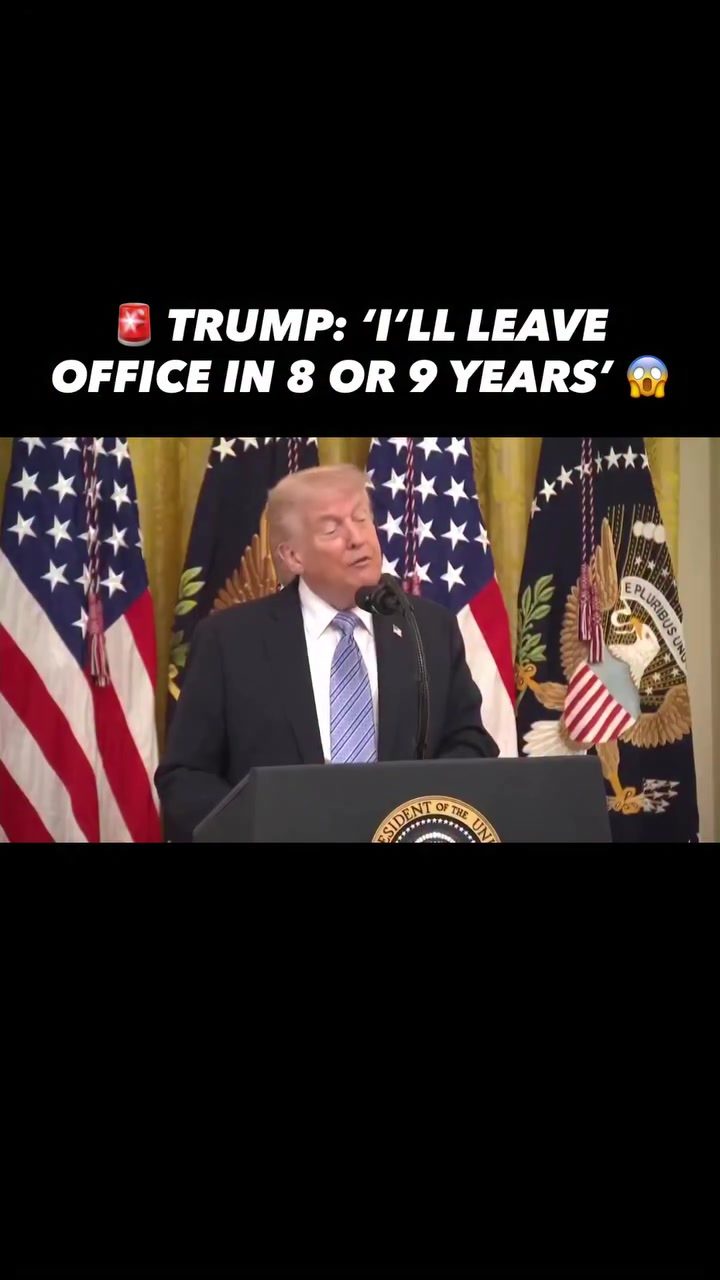
In the realm of political commentary, Donald Trump's remarks about his potential future in office have sparked considerable discussion. Trump's statement, "I’ll be getting out of office eight or nine years from now," suggests a timeline that extends far beyond the traditional two-term limit for U.S. presidents. This declaration has raised both eyebrows and questions about the future of presidential term limits and the potential for extended tenures in U.S. politics.
Context / Why This Matters
Understanding the implications of such statements is crucial for anyone engaged in U.S. politics. Presidential term limits have been a cornerstone of American democracy, ensuring regular turnover and preventing the amassing of unchecked power. Trump's suggestion, whether serious or speculative, challenges the norms that have governed the American presidency for decades. The statement underscores a deeper debate about the limits of power and the constitutional framework that guides the nation.
Main Discussion
Historical Context of Presidential Term Limits
The 22nd Amendment to the U.S. Constitution, ratified in 1951, limits a president to two four-year terms in office. This amendment was a reaction to Franklin D. Roosevelt's unprecedented four terms in office, which raised concerns about the concentration of power. The two-term limit has since been a stabilizing force in U.S. politics, ensuring a regular turnover of leadership and preventing the entrenchment of any single individual in the highest office.
Trump's Statement and Its Implications
Trump's statement, "I'll be getting out of office eight or nine years from now," extends his potential tenure far beyond the two-term limit. This period would span from 2021, assuming he had completed his term, to 2031. Such a timeline raises several critical questions. Does Trump envision a constitutional amendment to extend presidential terms, or does he imply that he might find other means to remain influential in American politics for an extended period? His reference to "using it myself" could hint at future political strategies or roles, though it doesn't specify a method.
Political Landscape and Public Reaction
The public and political reactions to Trump's statement reflect a mix of curiosity and concern. Some view the idea as a continuation of Trump's disruptive influence on traditional political norms. Others see it as a potential threat to democratic principles, while a few might interpret it as a bold move by a leader aiming to redefine the boundaries of political power. The discussion around this statement also touches on broader themes of political stability, the role of the presidency, and the adaptability of the U.S. Constitution.
Constitutional and Legal Framework
The U.S. Constitution provides a clear framework for presidential term limits. The 22nd Amendment explicitly states that "no person shall be elected to the office of the President more than twice." Any attempt to alter or bypass this limit would require a complex constitutional amendment process, involving two-thirds approval in both the House and Senate, followed by ratification by three-fourths of the states. This process is intentionally rigorous, ensuring that such changes are not made lightly.
Potential Scenarios and Speculations
The public is left to speculate on the potential scenarios that might arise from Trump's statement. These speculations range from pragmatic political strategies to more dramatic interpretations. Some believe that Trump might be positioning himself for a future role within the Republican Party or even exploring additional political strategies to maintain influence. However, these speculations are grounded in educated guesses based on past political behavior and current political trends.
Public and Political Responses
The public response to Trump's statement has been varied. Comments and discussions have ranged from supportive to critical, reflecting the polarized nature of contemporary politics. Some view Trump's suggestion as a natural extension of his political persona, while others see it as a dangerous precedent that could undermine the stability of U.S. governance. The lack of public comments in the provided data underscores the need for more direct engagement and discussion on this topic, highlighting the ongoing relevance of such statements in political discourse.
Political Speculation and Future Implications
Political speculation often serves as a barometer for public sentiment and political trends. Trump's statement, whether intended as a serious pledge or a casual remark, has sparked significant speculation about the future of American politics. This speculation not only reflects current political sentiments but also prompts deeper discussions about the balance of power and the role of the presidency in American governance.
Potential Challenges and Solutions
Navigating the potential challenges posed by such statements requires a nuanced understanding of both political intentions and constitutional limits. Addressing these challenges involves engaging in open and informed discussions, promoting transparency, and fostering a broader understanding of the principles that govern U.S. politics. This approach ensures that any future political developments are grounded in a solid foundation of democratic values and constitutional integrity.
Practical Tips
Stay Informed: Keeping abreast of current political developments and understanding the constitutional framework can help you engage in informed discussions. Follow reliable news sources and political analyses to deepen your understanding of the topic.
Encourage Dialogue: Engage in constructive discussions with peers and colleagues. Exploring different perspectives can enhance your comprehension of the issues at hand and foster a more inclusive political discourse.
Participate Actively: Participate in civic activities and political discussions. Your active involvement can help shape the political landscape and ensure that democratic principles are upheld.
Important Takeaways
Political statements, such as Trump's, highlight the ongoing debate around presidential term limits and the potential for extended tenures. Understanding the constitutional framework and engaging in informed discussions are crucial for navigating the complexities of U.S. politics. Public involvement and active participation can help ensure that political developments align with democratic values and constitutional principles.
Conclusion
The discussion around Donald Trump's statement about leaving office in eight or nine years underscores the importance of understanding presidential term limits and the broader implications for U.S. politics. By staying informed, engaging in dialogue, and actively participating in the political process, you can contribute to a more robust and inclusive political discourse.
Questions readers ask
What are the current presidential term limits in the United States?
The current presidential term limits in the United States are set by the Twenty-Second Amendment to the U.S. Constitution, which restricts presidents to two four-year terms (a maximum of 8 years) in office.
How does Donald Trump's statement about serving eight or nine years from now align with the current term limits?
Donald Trump's statement suggests a potential tenure of 8 to 9 years. This implies a potential extension beyond the current 8-year limit, which goes against the existing term limits set in the U.S. Constitution.
What is the significance of presidential term limits in U.S. politics?
Presidential term limits are significant as they promote regular leadership turnover, prevent the consolidation of power, and foster a competitive political environment. They ensure that no individual can hold the presidency indefinitely, thus maintaining a balance of power.
What constitutional debate might arise from Trump's comments about serving beyond 2030?
Trump's comments could spark a constitutional debate on the interpretation and enforcement of the Twenty-Second Amendment. This debate might focus on whether the Constitution can be amended or interpreted to permit longer tenures, and the potential consequences of such changes.
What are the implications of extending presidential tenure beyond the traditional two-term limit?
Extending presidential tenure beyond the two-term limit could lead to increased political controversy, polarized public opinion, and potential legal challenges. It could also alter the dynamics of U.S. politics, affecting governance and the balance of power.
Has any U.S. President ever served more than two terms?
No U.S. President has ever served more than two terms since the ratification of the Twenty-Second Amendment in 1951. Before this amendment, Franklin D. Roosevelt served as the 32nd President of the United States for four terms. Roosevelt's unprecedented tenure was a key catalyst for the establishment of the two-term limit.
What might be the legal and political consequences if Trump were to attempt serving beyond 2030?
If Trump were to attempt serving beyond 2030, he could face legal challenges and political backlash. The 22nd Amendment specifically prohibits a person from being elected to the presidency more than twice, making any attempt to extend his tenure a clear violation of the Constitution. This could result in legal battles and potentially a crisis in the political system.
Recent articles
Fresh deep dives from the latest Reels we unpacked.




Comments
Be the first to comment.