Donald Trump's Frustrated Stance on Israel and Iran
Donald Trump, the former President of the United States has left an indelible mark on American foreign policy with his approach to Middle Eastern diplomacy. His comments about Israel and Iran have been a focal point of both praise and criticism, reflecting the complexity and intensity of the geopolitical landscape.
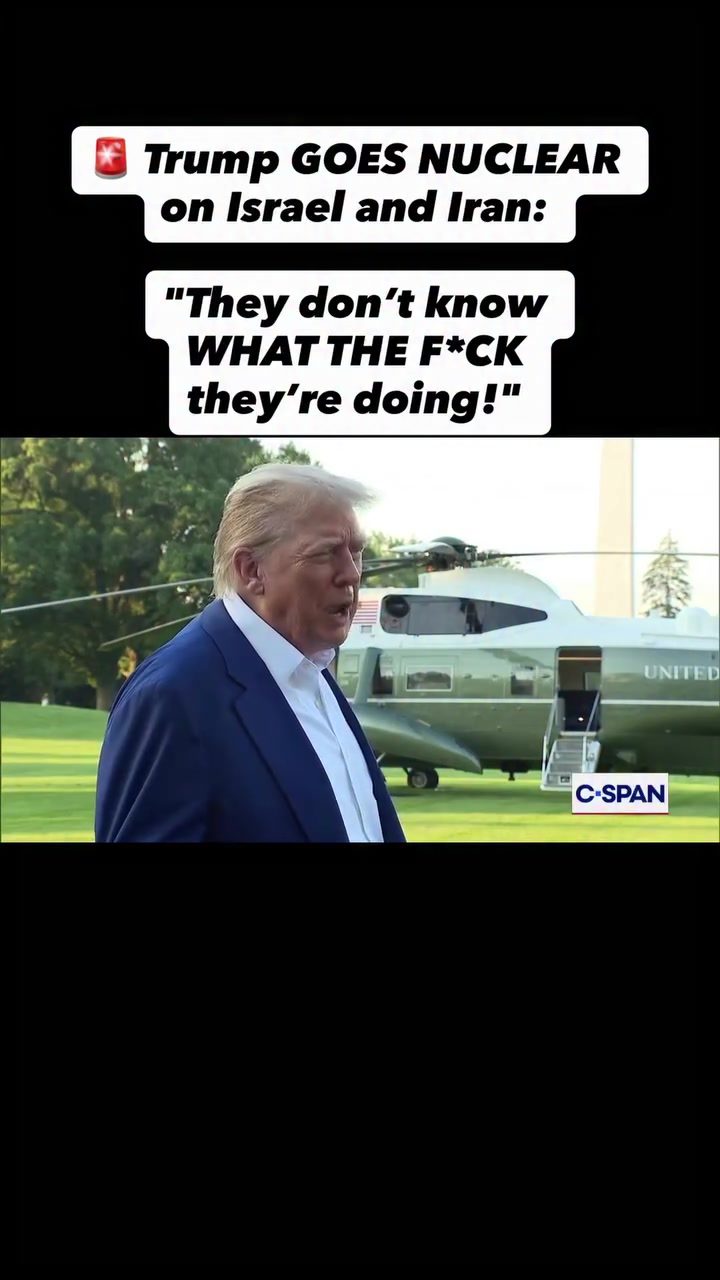
Trump has consistently expressed frustration with the ongoing conflict between Israel and Iran, often criticizing the actions of both countries. His remarks, including the one where he stated, "We basically have two countries that have been fighting so long and so hard that they don't know what the fuck they're doing," underscore his belief that prolonged conflict has led to a stalemate where neither side is making meaningful progress. Trump's direct language reflects his impatience with the situation and his desire for a more assertive resolution to the long-standing tensions.
Context and Implications
Geopolitical Background
Israeli and Iranian relations span a long and complex history. The two countries have been embroiled in a series of conflicts since the 1979 Islamic Revolution in Iran. This revolution, which overthrew the US-backed Shah, led to a profound shift in Iranian politics. The new Islamic Republic of Iran, under the leadership of Ayatollah Khomeini, vehemently opposed the United States and Israel, labeling them as enemies of Islam. This stance has been maintained by successive Iranian governments, complicating any potential for reconciliation or negotiation.
Israel, on the other hand, has long viewed Iran as a significant threat. Iran has consistently supported groups like Hezbollah and Hamas, which are considered terrorist organizations by Israel. Additionally, the Iranian nuclear program, which Israel sees as a potential existential threat, has been a major point of contention. These factors have created a highly volatile environment, where even the smallest incident can escalate into a broader conflict.
Trump's Approach
Trump's approach to the Middle East, including his stance on Iran, has been characterized by a tough stance on negotiation. He withdrew the United States from the Joint Comprehensive Plan of Action (JCPOA), commonly known as the Iran nuclear deal. This decision, which was met with significant international criticism, was driven by Trump's belief that the deal did not go far enough in curbing Iran's nuclear ambitions. Trump's administration imposed stringent economic sanctions on Iran, aiming to pressure the country into renegotiating a more favorable deal.
Trump's hardline approach also extended to his relationship with Israel. His administration recognized Jerusalem as Israel's capital, moving the U.S. embassy from Tel Aviv to Jerusalem. This move was controversial, as it was seen by many as undermining the potential for a two-state solution to the Israeli-Palestinian conflict. Trump's withdrawal from the JCPOA and his recognition of Jerusalem as Israel's capital were both significant moves that aligned with his overall approach of applying maximum pressure to achieve desired outcomes.
The Current State of Affairs
The current situation in the Middle East remains tense, with both Israel and Iran escalating their rhetoric and military actions. The U.S. withdrawal from the JCPOA has led to a revival of Iran's nuclear program, which has raised concerns both in Israel and among Western powers. The situation is further complicated by the presence of Iran-backed militias in Syria and Iraq, which are often seen as proxies for Iran in its conflict with Israel.
The political and military strategies of the two countries have been shaped by decades of conflict, but Trump's comments highlight the urgent need for a more decisive resolution. Whether through renewed diplomatic efforts or a significant shift in policy, the path forward remains uncertain.
Main Discussion
The Impact on Regional Stability
The ongoing conflict between Israel and Iran has significant implications for regional stability. The two countries are major players in the Middle East, and their actions have a ripple effect throughout the region. The volatility of the situation has led to increased tensions and military build-ups, making the risk of a wider conflict ever-present. Trump's remarks, while blunt, reflect a broader frustration with the status quo and a desire for a more effective resolution.
The conflict has also had a destabilizing effect on neighboring countries, which have often been drawn into the fray. Syria and Iraq, for example, have become battlegrounds for Iranian-backed militias and Israeli military actions. The presence of these militias has further complicated the already fragile political and security situations in these countries, leading to increased violence and displacement.
The Role of the United States
The United States has long been a key player in the Middle East, with a significant military and diplomatic presence. Its policies have often been driven by a desire to maintain stability in the region, while also protecting its allies. Trump's approach, with its emphasis on applying maximum pressure, has been a significant departure from previous U.S. policies. This approach has had far-reaching consequences, both in terms of its impact on the region and on U.S. relations with other international actors.
The U.S. withdrawal from the JCPOA, for example, has led to a revival of Iran's nuclear program, which has raised concerns both in Israel and among Western powers. The move has also strained U.S. relations with its European allies, who have remained committed to the deal despite Trump's withdrawal. The recognition of Jerusalem as Israel's capital has similarly been a contentious issue, further complicating U.S. relations with the Arab world.
The Future of U.S. Policy
The future of U.S. policy towards the Middle East remains unclear, particularly in light of the changing political landscape. The Biden administration, which succeeded Trump's, has taken a different approach, seeking to re-engage with Iran and revive the JCPOA. However, the path forward remains fraught with challenges, as both Iran and Israel have become more entrenched in their positions. The ongoing conflict, and the broader geopolitical tensions, will continue to shape U.S. policy in the region, making it a critical area of focus for policymakers.
Public Perception and Media Reaction
Trump's comments have drawn a mixed reaction from the public and media. Some have praised his straightforward approach and his willingness to confront the issues head-on. Others, however, have criticized his language and his perceived lack of nuance. The media's coverage of Trump's remarks has been largely critical, with many outlets highlighting the potential implications of his comments for regional stability and U.S. foreign policy.
The public perception of the conflict between Israel and Iran is also shaped by a range of factors, including national interests, cultural ties, and religious beliefs. For many in the U.S., the conflict is seen through the lens of support for Israel, which is often seen as a key ally in the region. For others, particularly those with ties to the Arab world, the conflict is seen as a broader struggle against Western intervention and Israeli aggression.
Practical Tips
The conflict between Israel and Iran is a complex and multifaceted issue, with deep historical and political roots. For those seeking to better understand the situation, it's important to approach the topic with an open mind and a willingness to engage with a range of perspectives. Here are some practical tips:
- Stay Informed: Follow reliable news sources to stay updated on the latest developments in the region. This can help provide a more nuanced understanding of the situation, beyond the often-sensationalized headlines.
- Seek Diverse Perspectives: Engage with a variety of sources, including those from different cultural and political backgrounds. This can provide a more comprehensive view of the conflict and its implications.
- Understand the History: The conflict between Israel and Iran has a long and complex history. Understanding the historical context can provide valuable insights into the current situation and its potential future trajectories.
- Engage in Constructive Dialogue: The conflict is a divisive issue, and it's important to approach discussions with an open mind and a willingness to listen to different views. This can help foster a more constructive and productive dialogue about the situation.
By following these tips, individuals can gain a more informed and nuanced understanding of the conflict, and contribute to a more constructive and productive dialogue about the situation.
Important Takeaways
The conflict between Israel and Iran is a complex and multifaceted issue, with deep historical and political roots. Trump's remarks, while blunt, reflect a broader frustration with the status quo and a desire for a more effective resolution. As the situation continues to evolve, it will be important for policymakers, the public, and the media to approach the topic with nuance, sensitivity, and a willingness to engage with a range of perspectives. By staying informed and engaging in constructive dialogue, it is possible to foster a more productive and nuanced understanding of the situation, and contribute to a more effective and sustainable resolution.
Conclusion
The conflict between Israel and Iran is a critical issue with far-reaching implications for regional stability and U.S. foreign policy. Trump's comments, while controversial, reflect a broader frustration with the ongoing stalemate and a desire for a more decisive resolution. As the political and military strategies of the two countries continue to shape the region, it will be important for policymakers, the public, and the media to approach the situation with nuance, sensitivity, and a willingness to engage with a range of perspectives. By staying informed and engaging in constructive dialogue, it is possible to foster a more productive and nuanced understanding of the situation, and contribute to a more effective and sustainable resolution.
Questions readers ask
How did Trump's views on the Israel-Iran conflict differ from his predecessors?
Trump's approach was marked by a more direct and blunt criticism of both Israel and Iran, unlike his predecessors who often maintained a more diplomatic language. He frequently expressed frustration with the prolonged stalemate, urging both nations to seek a resolution and move away from the conflict. Trump's administration’s strategy was a departure from the traditional US foreign policy, with an emphasis on achieving peace through public pressure and criticism.
What specific criticisms did Trump have regarding the Israel-Iran conflict?
Donald Trump was vocal about his frustration with the prolonged tensions between Israel and Iran. He criticized the ongoing stalemate and the lack of progress in resolving the conflict. Trump's public remarks often highlighted the futility of the prolonged conflict, suggesting that both nations had lost sight of potential solutions and were stuck in an endless cycle of hostility.
Did Trump’s approach to the Israel-Iran conflict involve any diplomatic efforts?
Trump's approach was primarily characterized by public criticism and pressure rather than traditional diplomatic interventions. He believed that the prolonged conflict had led to a stalemate, where neither side was making meaningful progress. His public stance aimed to bring attention to this stalemate and push both nations towards a resolution, although he did not always engage in direct diplomatic dialogues to achieve this.
What impact did Trump’s views on the Israel-Iran conflict have on his Middle East policy?
Trump's criticism of the Israel-Iran conflict was a significant part of his broader Middle East policy. His blunt stance reflected his desire to move beyond the traditional approaches to the Middle East. He aimed to address the conflict through public pressure and criticism, hoping this would prompt both Israel and Iran to reevaluate their positions and seek a resolution, which was a key component of his foreign policy.
How did Trump's foreign policy address the Israel-Iran nuclear confrontation?
Trump’s foreign policy regarding the Israel-Iran nuclear confrontation involved a mix of public pressure and strategic actions. He was critical of Iran’s nuclear program and often emphasized the need for Israel to remain secure in the face of potential threats. Trump's administration withdrew from the Joint Comprehensive Plan of Action (JCPOA), which was a multilateral agreement aimed at preventing Iran from developing nuclear weapons, citing concerns over Iran's compliance and the agreement's effectiveness.
Why did Donald Trump believe that the Israel-Iran conflict was a stalemate?
Trump believed the Israel-Iran conflict had become a stalemate due to the prolonged tensions between the two countries. He felt that both nations had been engaged in a conflict for so long that they had lost sight of potential solutions. Trump's public remarks often underscored his frustration with this situation, urging both countries to break the cycle of hostility and move towards a resolution.
What was Trump's stance on the long-term conflict between Israel and Iran?
Trump's stance on the long-term conflict between Israel and Iran was one of frustration and criticism. He believed that the prolonged tensions had led to a stalemate where neither side was making meaningful progress. His public remarks often highlighted the futility of the ongoing conflict, urging both nations to seek a resolution and move away from the cycle of hostility. Trump’s approach was aimed at bringing attention to this stalemate and pushing both countries towards a resolution.
Recent articles
Fresh deep dives from the latest Reels we unpacked.




Comments
Be the first to comment.