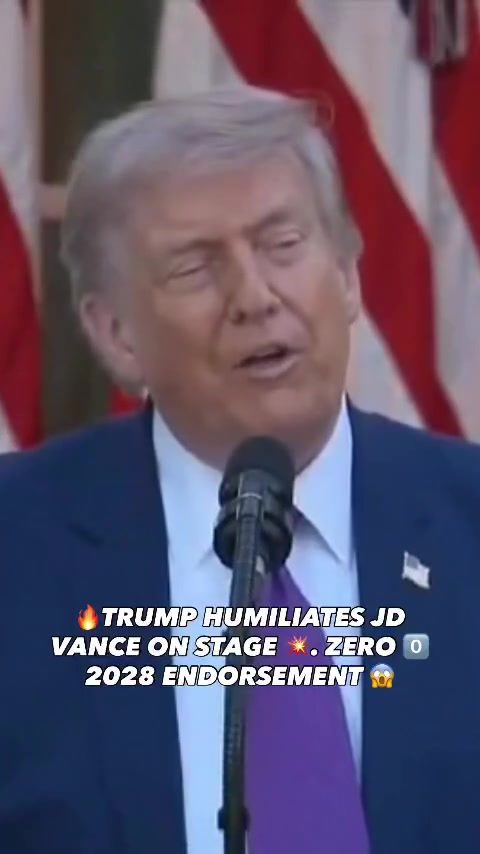
Trump's Public Intervention in JD Vance's 2028 Presidential Bid
Donald Trump's recent public remarks at a rally have sparked intense debate about the future of the Republican Party and his enduring influence. During the event, Trump openly questioned the audience about their preference between JD Vance and Marco Rubio for the 2028 presidential election. This public polling, coupled with his later refusal to endorse Vance, has raised intriguing questions about the dynamics within the Republican Party and the role of loyalty in political alliances.
Context: Why This Matters
Trump's actions carry significant weight in the Republican landscape. His endorsement, or lack thereof, can sway public opinion and significantly impact a candidate's campaign. The dynamics between Trump and Vance are particularly noteworthy, as Vance is a prominent figure within the party and has been seen as a potential successor to Trump. This public intervention underscores the ongoing influence of Trump within the Republican Party and the strategic calculations that underpin political endorsements.
Public Polling and Endorsement Withdrawal
The Rally Dynamics
During the rally, Trump engaged in a direct query with the audience, asking who they preferred between JD Vance and Marco Rubio for the 2028 presidential election. This approach is a departure from typical political endorsements, where leaders often privately discuss their support for candidates.
The text overlays, "TRUMP HUMILIATES JD" and "2028 ENDORSEMENT," suggest a deliberate attempt to highlight Trump's authority and control over the political narrative. By publicly questioning his support, Trump effectively reminded everyone of his pivotal role in the party's future. This move was not only a strategic power play but also a clear message to Vance and other potential candidates about the importance of loyalty and alignment with Trump's vision.
The Endorsement Refusal
When Trump doubled down on his stance, stating that he did not have his endorsement under any circumstance, it sent a clear message. Despite the crowd's apparent support for Vance, Trump's refusal to endorse him publicly underscored the complexity of political endorsements. The claim that even his own VP isn't guaranteed the throne suggests that, in politics, the dynamic of loyalty and support goes only one way.
Trump described a potential ticket featuring both Vance and Marco Rubio, saying it sounded like a "dream team." However, he quickly clarified that this did not translate to an endorsement. Instead, he emphasized the "minor details" and the significant influence he wields over the party's direction.
The Strategic Implications
Power Dynamics and Loyalty
Trump's actions reveal the intricacies of power and loyalty within political alliances. By openly questioning his support for Vance in front of a large audience, Trump signals that loyalty to his leadership is paramount. This move underscores the hierarchical nature of political endorsements, where the endorsement and support from a powerful figure like Trump can be a game-changer.
The Future of the Republican Party
The incident at the rally has implications for the future of the Republican Party. It highlights the ongoing influence of Trump and his ability to sway public opinion and political support. This dynamic is particularly relevant for candidates like JD Vance, who are vying for the party's support and recognition. The public polling and endorsement refusal underscore the importance of aligning with Trump's vision and the potential risks of deviating from it.
Political Calculations and Public Opinion
The Role of Public Opinion
Political endorsements, especially from influential figures, often rely heavily on public opinion. By publicly questioning his support for Vance, Trump leverages the audience's input to shape the narrative. This approach not only garners attention but also reinforces his authority within the party. The crowd's reaction, with cheers and support, highlights the ongoing influence of Trump and his ability to rally the base.
Strategic Moves and Political Chess
Trump's actions, including his public polling and endorsement refusal, are part of a broader strategic calculation. By openly questioning his support, he positions himself as the ultimate decision-maker, reminding everyone of his influence. This move, often described as "playing 4D chess," underscores the complexity of political maneuvering and the importance of strategic alignment.
Important Takeaways
Power and Influence
The dynamics between Donald Trump and JD Vance illustrate the power and influence that influential figures wield within political parties. Trump's refusal to endorse Vance, despite his apparent popularity, underscores the significance of loyalty and alignment with Trump's vision.
The Role of Public Polling
Public polling during a rally is a strategic move that leverages the audience’s input to shape the narrative. This approach not only garners attention but also reinforces the endorser's authority, highlighting the ongoing influence of influential figures like Trump.
The Future of 2028
Trump's actions have significant implications for the 2028 presidential election. His refusal to endorse Vance, despite his popularity, signals that the dynamic of loyalty and support within the Republican Party is complex and multifaceted. This move underscores the importance of aligning with influential figures and the potential risks of deviating from their vision.
Conclusion
The incident at the rally involving Donald Trump and JD Vance highlights the complex dynamics of power, loyalty, and endorsement in politics. Trump's public polling and subsequent refusal to endorse Vance underscore his enduring influence within the Republican Party. The strategic calculations and the role of public opinion in political endorsements remain critical factors in shaping the future of the party and its candidates. As the 2028 presidential election approaches, these dynamics will continue to play a pivotal role in determining the direction of the Republican Party.
Questions readers ask
Why did Donald Trump publicly poll his rally attendees about JD Vance and Marco Rubio?
Trump's public polling at the rally was a strategic move to gauge the sentiment of his supporters regarding the 2028 presidential candidates. By directly asking the crowd about their preferences, he highlighted his influence and underscored the importance of his endorsements in shaping the Republican primary.
What was the impact of Trump's refusal to endorse JD Vance?
Trump's refusal to endorse JD Vance sent a strong signal within the Republican Party about Vance's standing. This non-endorsement can significantly affect Vance's campaign, potentially altering his public image and support base among Trump's followers.
How does Trump’s influence play a role in the Republican Party?
Trump's influence in the Republican Party is substantial. His endorsements and public opinions can sway both voters and other politicians, making him a key figure in determining the direction of the party and the success of individual candidates.
What does Trump’s public polling of rally attendees indicate about his role in the 2028 election?
Trump's public polling indicates that he plans to play a pivotal role in the 2028 election. By directly involving his supporters in the decision-making process, he reinforces his influence and ensures that his preferences are considered in the Republican primary.
How might Trump’s actions affect the relationship between JD Vance and Marco Rubio?
Trump’s public polling and refusal to endorse Vance may create tension between Vance and Rubio, as it highlights a clear division of support. This dynamic could influence their campaign strategies and their efforts to garner endorsements from other key figures in the Republican Party.
What can we infer from Trump’s decision to ask about 2028 presidential candidates at his rally?
Trump’s decision to ask rally attendees about their preferences for the 2028 presidential candidates suggests that he is actively engaged in shaping the upcoming election. His involvement in this manner indicates that his support and endorsements will continue to be crucial factors in determining the Republican nominee.
How does Trump’s rally attendance reflect his influence?
Rally attendance is a direct indicator of Trump's enduring influence. By drawing large crowds, he demonstrates his continuing relevance and the loyalty his supporters hold. This influence can extend to the 2028 election, where his endorsements and public opinions will remain a significant factor.
Recent articles
Fresh deep dives from the latest Reels we unpacked.




Comments
Be the first to comment.