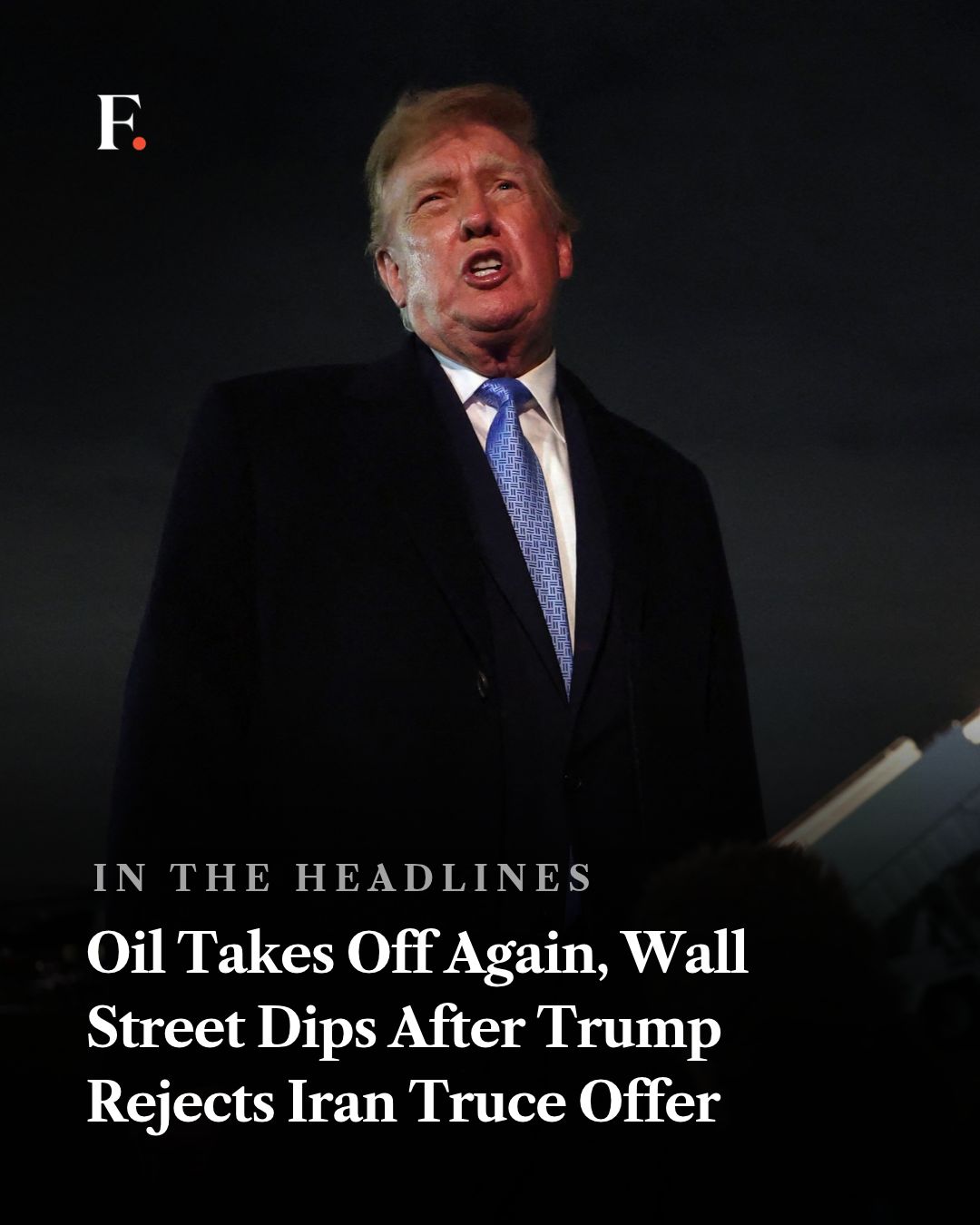
The Week's Oil Market Rally
Market volatility was the story of last week, as traders hoped for peace in the Middle East while face with a missile strike in Saudi Arabia and President Trump's rejection of a seven-day truce offer from Iran. The result? A whirlwind in the oil futures market. The on-screen headline, "Oil Takes Off Again, Wall Street Dips After Trump Rejects Iran Truce Offer" underscores the headline of the day.
The Whiplash of Oil Futures
Oil futures, which had been relatively stable, surged Monday by more than three percent. The reason was not a sudden increase in demand, but concern over the specter of a Middle East conflict. The price of oil can change based on headlines alone, a reminder that suppliers of oil rely on the specter of conflict to maintain high prices. US President Donald Trump's move to reject a seven-day truce offer from Iran last week changed how investors globally view the energy market's stability. The U.S. President has continually levied economic sanctions against the Iranian regime, which, while having almost no impact on Iran's economy, serves as a check to future energy contracts. Yet oil is not the only commodity seeing volatility. Bonds were also affected, as the United States' Federal Reserve continued to manage global economic policies. The looming threat of the Fed hiking interest rates heightened the uncertainty in the oil market — and unleashed volatility in the stock market more broadly. This month, the Federal Reserve already tightened monetary policy by hiking interest rates. This was done to address inflation.
The Iran Factor
The headline reads "Trump Rejects Iran Truce Offer," but Iran has not been at war with the U.S. Iran has been economically disabled by Western policy. The global economy is more sensitive than ever to conflict in the Middle East, since the region produces a large portion of the world's oil. That energy output can dramatically shape consumer expectations, from gas prices to the costs of goods. Iran has also been accused of funding terrorist groups across the world, including across the Middle East and in India; this drives fuel prices up for everyone. The Iranian truce offer was a brief glimmer of hope to provide some nudge towards peace in the Middle East, which could thereafter help the global economy recover. Trump's rejection of the ceasefire offer made former news headlines from the Iran-Iraq War, in the 1980's-1990's, a tragical reminder. The Iran-Iraq War ended in 1988, with both sides suffering many casualties. The maybe most consequential move was from President Trump. Rejecting Iran's offer of a seven-day ceasefire, Trump refuses to allow Iran to "breathe." As he said, "It's hoping for the best, but preparing for the worst." Trump's move broke the spell of relative calm. His move placed the oil market into a tailspin, that had a broader economic impact on global markets.
Reaching for Safe Havens in an Uncertain World
The uncertainty descended upon global markets. While US stocks dipped, European equities stalled. The U.S. President's move to reject a seven-day truce offer from Iran, coupled with the global economy's continued recovery from the pandemic, made investors hungry for stability. That sentiment contributed to the surge in oil prices. As the world waits for a solution to the pandemic, adding uncertainty to the market from this old geopolitical problem makes people reach for safer havens: commodities that can hold their value in uncertain times. Investors reached for safe havens by buying gold, and even Bitcoin.
Hedging the Dollar
The surge in oil futures also gave a jolt to the global bond market. Investors' concerns over inflation increased demand for government bonds, which saw a lift in yields. This, in turn, made traders bet on the Federal Reserve raising interest rates. The Fed already tightened monetary policy this month, but as inflation concerns rose and the dollar strengthened, expectations for further rate hikes grew. This is considered inflationary.
Making Sense of the Markets
For traders, geopolitical risk on an old geopolitical problem that has plagued the world for centuries is an expectation. During times of uncertainty, commodities tend to thrive. However, commodities themselves are not immune to volatility. However, the oil market is still down for the year. So far, it's been a rough year for oil, despite the recent surge. But what should traders do? When it comes to oil futures, it's all about managing expectations. In uncertain times, the market is all about the headlines. So if your eyes are always on the latest news headlines, and you're aware of what the major economic players are up to, you can potentially get ahead.
Questions readers ask
What exactly was Iran's ceasefire offer that Trump rejected?
Iran offered a seven-day truce to the U.S. and Saudi Arabia. This was seen as a potential step towards peace in the Middle East, which could have helped stabilize the global economy and oil prices. Trump's rejection of this offer was a major factor in the oil market's volatility.
Why did oil prices surge after Trump's rejection of the ceasefire?
Oil prices surged due to increased uncertainty and the potential for conflict in the Middle East. The region is a major oil producer, and any disruption in supply can cause prices to rise. Trump's rejection of the truce offer heightened these concerns, leading to a more than 3% increase in oil futures.
How does the U.S. Federal Reserve's interest rate hike affect the oil market?
The Federal Reserve's decision to hike interest rates can increase uncertainty in the oil market. Higher interest rates make borrowing more expensive, which can dampen economic growth and, consequently, demand for oil. This volatility can lead to fluctuations in oil prices.
What role does Iran play in the global oil market?
Iran is a significant player in the global oil market due to its large oil reserves. Any disruption in Iran's oil production or exports can have a substantial impact on global oil prices. Additionally, geopolitical tensions involving Iran can create uncertainty in the market, leading to price volatility.
How might the situation in the Middle East impact gas prices for consumers?
Conflict or uncertainty in the Middle East can lead to disruptions in oil supply, which can drive up the price of gas for consumers. This is because the region is a major producer of oil, which is refined into gasoline. Higher oil prices typically translate to higher gas prices at the pump.
Related deep dives
Similar reads based on topic and creator.


Recent articles
Fresh deep dives from the latest Reels we unpacked.




Comments
Be the first to comment.