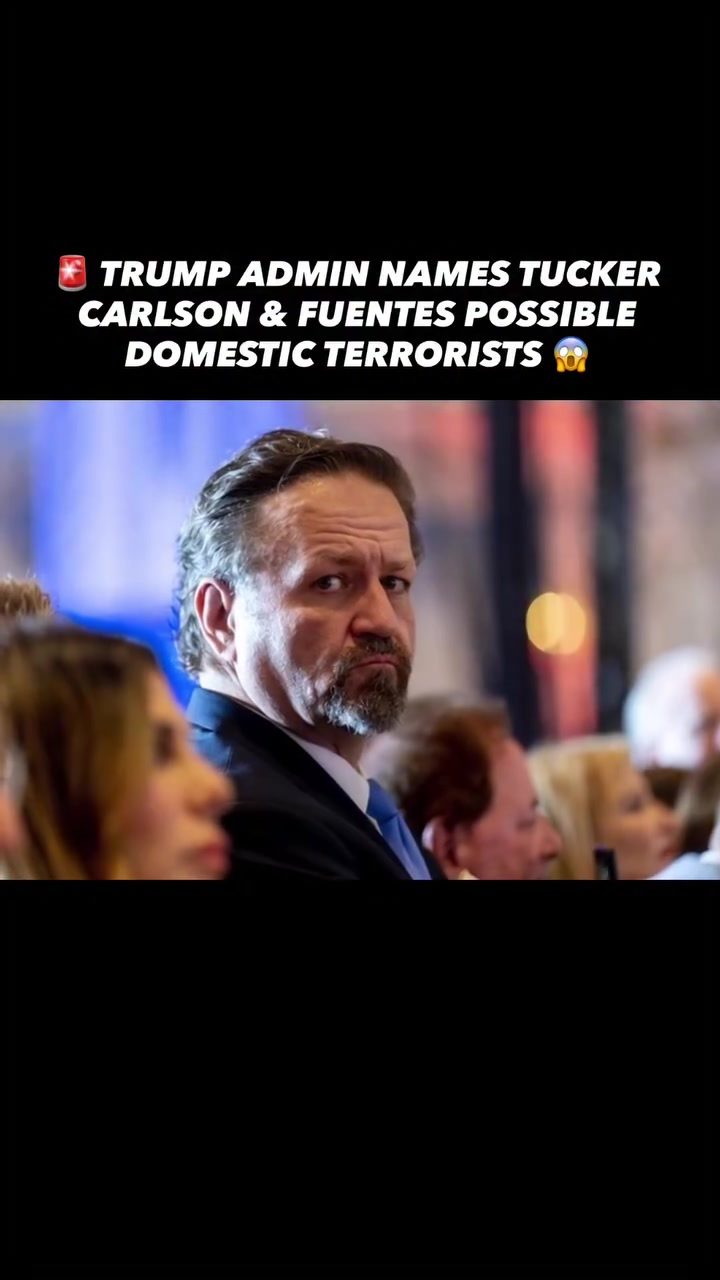
Recent Developments in Political Commentary: Tucker Carlson, Nick Fuentes, and the Trump Administration
The recent designation of Tucker Carlson and Nick Fuentes as possible domestic terrorists by the Trump administration has sparked significant debate and raised critical questions about counterterrorism strategies and political rhetoric. This move, highlighted by Sebastian Gorka, Trump’s top counterterrorism official, has drawn attention to the evolving landscape of political commentary and the government's approach to domestic threats.
Context: The Political Landscape and Counterterrorism
Political commentary has always been a double-edged sword, capable of both galvanizing public opinion and stoking controversy. The Trump administration's latest actions add a new layer of complexity to this dynamic, particularly when it comes to defining and addressing domestic threats.
The Trump Administration's Designation of Carlson and Fuentes
Sebastian Gorka, a prominent figure in the Trump administration, openly identified Tucker Carlson and Nick Fuentes as potential right-wing terror threats. This designation is part of a broader national strategy aimed at countering domestic terrorism. Gorka's statements, which effectively place Carlson and Fuentes in the same category as other monitored threats, have sparked intense reactions from various political quarters.
Why This Matters
The implications of this move are far-reaching. The Trump administration, which has historically campaigned on fighting the "deep state" and advocating for free speech, now finds itself labeling prominent conservative voices as potential domestic terrorists. This ironic twist has highlighted the administration's shifting stance on what constitutes a threat to national security. The administration's actions raise critical questions about the criteria used to define domestic terrorism and the potential chilling effect on political speech.
The Broader Implications for Political Commentary
The designation of Carlson and Fuentes as possible domestic terrorists has sent shockwaves through the political landscape. It underscores the increasing polarization and the blurred lines between political dissent and domestic terrorism. This move also raises concerns about the scope of counterterrorism measures and the potential for overreach. As political commentary becomes increasingly intertwined with national security, the need for clear and consistent guidelines becomes ever more pressing.
The Role of Political Figures in Counterterrorism
The Trump administration's actions underscore the pivotal role that political figures play in shaping counterterrorism strategies. Figures like Sebastian Gorka and their statements can significantly influence public perception and policy direction. This dynamic highlights the need for transparency and accountability in how such decisions are made and communicated.
The Public's Reaction
The public's reaction to these developments has been diverse and intense. Opinions range from outrage at the perceived overreach to concern about the administration's shifting stance on threats. The irony of the situation—where an administration that once advocated for free speech now labels conservative voices as potential threats—has not gone unnoticed. This has sparked a broader conversation about the boundaries of political commentary and the potential for government overreach.
Practical Tips for Navigating the Changing Political Landscape
In light of these developments, it's crucial to stay informed about the evolving political landscape. Here are some practical tips for navigating this complex terrain:
Stay Informed
Keep up with the latest developments in political commentary and counterterrorism strategies. This includes following reliable news sources and staying informed about the latest policy changes and statements from key political figures. Understanding the context and implications of these changes can help you form a more nuanced perspective.
Engage in Constructive Dialogue
Engage in constructive dialogue with others, especially those with differing viewpoints. This can help foster a deeper understanding of the issues at hand and promote a more informed and balanced discourse. Avoiding polarization and seeking common ground can lead to more productive conversations and a better-informed public.
Advocate for Transparency and Accountability
Advocate for transparency and accountability in political commentary and counterterrorism strategies. This includes calling for clear guidelines and consistent policies that respect free speech while addressing real threats. Holding policymakers accountable for their decisions can help ensure that counterterrorism measures are fair, effective, and democratic.
Important Takeaways
The recent designation of Tucker Carlson and Nick Fuentes as possible domestic terrorists by the Trump administration has highlighted the increasing complexity of political commentary and counterterrorism strategies. This move underscores the need for clear guidelines, transparency, and accountability in defining and addressing domestic threats. It also emphasizes the importance of informed dialogue and public engagement in shaping the political landscape.
Conclusion
The political landscape is evolving rapidly, and the recent developments surrounding Tucker Carlson, Nick Fuentes, and the Trump administration are a testament to this change. As we navigate these complex issues, it's crucial to stay informed, engage in constructive dialogue, and advocate for transparency and accountability. By doing so, we can help shape a more informed and balanced political discourse that respects free speech while addressing real threats.
Questions readers ask
What prompted the Trump administration to label Tucker Carlson and Nick Fuentes as potential domestic terrorists?
The Trump administration, under the guidance of former counterterrorism advisor Sebastian Gorka, designated Tucker Carlson and Nick Fuentes as potential domestic terrorists as part of a broader strategy to address perceived domestic threats. This move was driven by concerns about the rhetoric used by these figures and their potential influence on public opinion and political discourse.
How has the media reacted to the designation of Tucker Carlson and Nick Fuentes as potential terrorists?
The media reaction has been mixed, with some outlets criticizing the designation as an overreach of government power and a threat to free speech. Others have supported the move, citing the need to monitor and counteract potentially dangerous political rhetoric. The debate highlights the tensions between national security and freedom of expression.
What is the significance of Sebastian Gorka's role in this designation?
Sebastian Gorka, a prominent figure in the Trump administration's counterterrorism efforts, played a key role in the designation of Tucker Carlson and Nick Fuentes. His involvement has added to the controversy, as critics question the motives behind the administration's actions and the potential for political bias in counterterrorism strategies.
What are the implications of labeling political commentators as terrorists for free speech?
Labeling political commentators as terrorists raises significant concerns about free speech. Critics argue that such designations could set a dangerous precedent, potentially leading to the suppression of dissenting voices and the chilling of open political debate. It also blurs the line between legitimate political commentary and actual threats to national security.
How does this action reflect the Trump administration's approach to domestic threats?
The designation of Tucker Carlson and Nick Fuentes reflects the Trump administration's proactive stance on domestic threats, particularly those emanating from right-wing groups. This approach has drawn criticism for its potential to overstep boundaries and target political opponents, while proponents argue that it is a necessary measure to safeguard the country from internal risks.
What are the potential consequences of including Tucker Carlson and Nick Fuentes in the list of potential domestic terrorists?
Including Tucker Carlson and Nick Fuentes on the list of potential domestic terrorists could have several consequences. It may lead to increased scrutiny and surveillance of their activities, as well as potential restrictions on their freedom of movement and speech. Additionally, it could polarize public opinion further, with supporters viewing it as a necessary security measure and critics seeing it as an infringement on civil liberties.
How has this designation affected the broader debate on political commentary and national security?
The designation has intensified the debate on the boundaries of political commentary and national security. It has sparked discussions about the appropriate role of the government in monitoring and regulating political speech, as well as the potential risks posed by certain ideologies and rhetorical strategies. The controversy underscores the complexity of balancing security concerns with the protection of free expression.
Recent articles
Fresh deep dives from the latest Reels we unpacked.




Comments
Be the first to comment.