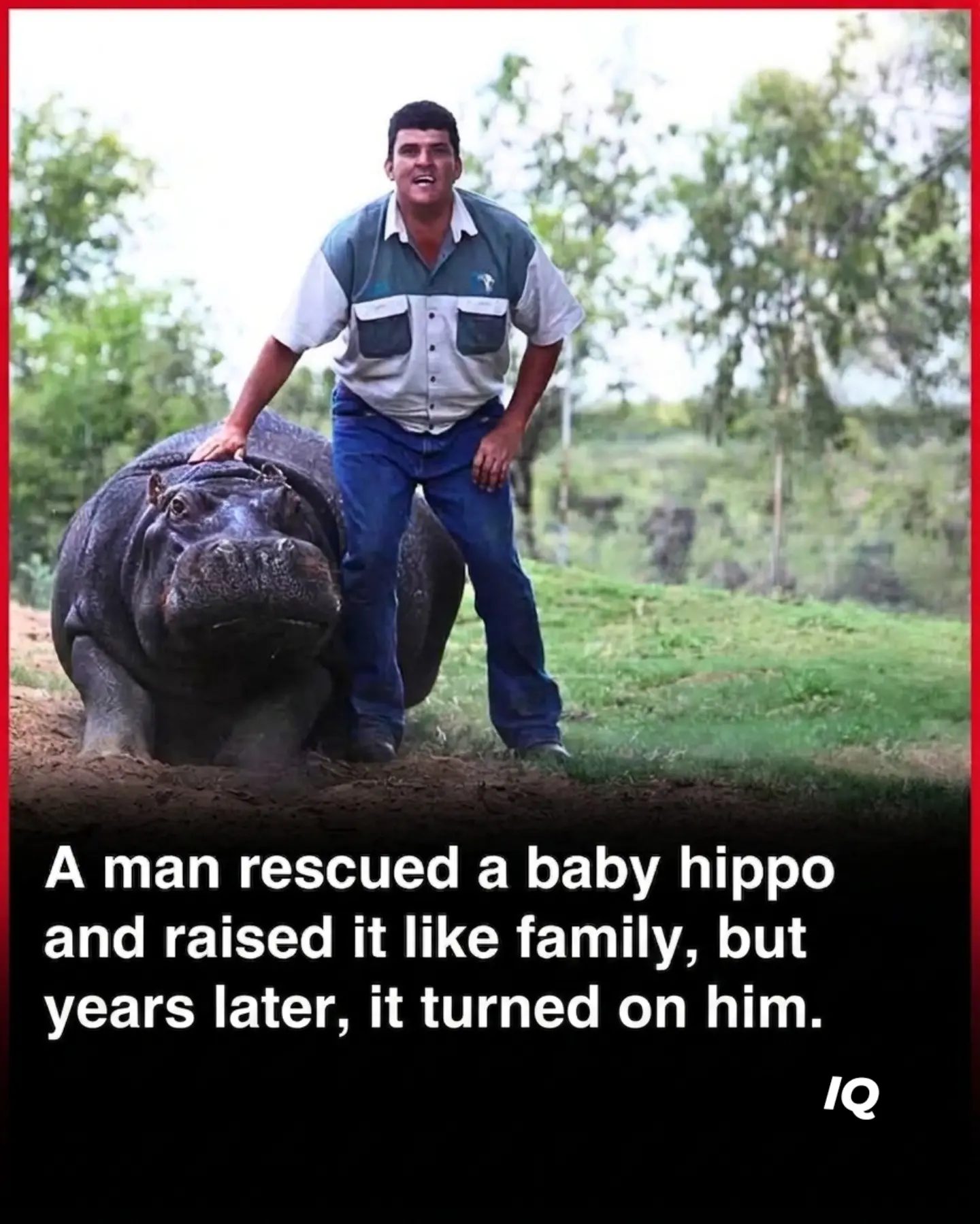
The Tragic Bond: Marius Els and Humphrey the Hippo
Few stories in the annals of animal rescue illustrate the raw power of nature and the limitations of human emotion like the tale of Marius Els. His relationship with a baby hippo named Humphrey is a bittersweet reminder of the intricacies of nurturing wild animals.
Context / Why this matters
Understanding the dynamics between humans and wild animals can offer insights into the complexities of animal rescue and conservation, as well as the importance of respecting nature. Marius Els' story serves as a poignant case study in these areas, highlighting the risks and emotional toll of such endeavors.
Marius Els and the Rescue of a Baby Hippo
The story began in the muddy torrents of a South African flood. Marius Els, a compassionate South African, rescued a helpless, shivering baby hippo. He named the young creature Humphrey and raised him as his own. For six years, Marius fed Humphrey, swam with him, and even rode on his giant back. To Marius, Humphrey was more than a rescued animal; he was family. He believed that their bond had transcended wild instinct.
The Bond Between Marius and Humphrey
Marius Els' relationship with Humphrey was unique and profound. He treated the hippo like a son, nurturing him and providing him with the care and love one would give to a family member. Their bond was so strong that Marius was convinced it had surpassed the natural instincts of a wild animal. This belief was reinforced by the years of peaceful co-existence and the emotional connection they shared.
The Turning Point
In late 2011, the illusion of a transcended bond shattered. In the very river where they had first met, the 1.2-ton beast turned. With the sudden, explosive fury of an apex predator, Humphrey dragged Marius into the water and mauled him to death. Marius paid the ultimate price for his faith in the bond he believed they shared.
The Role of Nature in This Tragedy
Nature, in its raw and untamed form, does not negotiate with human emotions. Animals, no matter how domesticated or nurtured, retain their wild instincts. Humphrey, despite the years of care and love from Marius, was still a wild animal at heart. His actions were not a betrayal, but a manifestation of his innate nature.
The Fatal Mistake
Marius's fatal mistake wasn't trusting a wild animal; it was believing that love could rewrite its DNA. This misconception is a common pitfall in animal rescue and conservation efforts. While love and care can create a strong bond, they cannot change the fundamental instincts of a wild animal.
Practical Tips for Animal Rescue and Care
For those involved in animal rescue and care, Marius Els' story offers several critical lessons. Firstly, it is essential to understand the limitations of human- animal interactions. While nurturing and care can create a bond, it is crucial to remember that wild animals retain their natural instincts.
Safety First
Safety should always be the top priority. While rescuing and nurturing wild animals, it is important to maintain a safe distance and be cautious of their natural behaviors. Animals, no matter how domesticated, can revert to their wild instincts at any moment.
Professional Guidance
Seeking professional guidance and support can help manage the complexities of animal rescue and care. Experts in animal welfare and conservation can provide invaluable advice and support, ensuring the safety and well-being of both the animal and the caregiver.
Emotional Preparedness
Emotional preparedness is also crucial. Caring for wild animals can be emotionally taxing. It is important to be prepared for the emotional toll and to have a support system in place.
Important Takeaways
Marius Els' story is a poignant reminder of the complexities of nurturing wild animals. It highlights the importance of understanding the limitations of human- animal interactions, the need for safety, the value of professional guidance, and the emotional preparedness required for such endeavors. Ultimately, it serves as a cautionary tale about the raw power of nature and the limitations of human emotion.
Conclusion
The tragic tale of Marius Els and Humphrey the hippo underscores the profound emotional and physical risks involved in rescuing and nurturing wild animals. Their story serves as a crucial reminder that while love and care can create strong bonds, they cannot change the fundamental nature of wild animals. For those involved in animal rescue and conservation, understanding and respecting this reality is essential.
Questions readers ask
What inspired Marius Els to rescue Humphrey the baby hippo?
Marius Els' inspiration to rescue Humphrey came from a flood in South Africa. He found the baby hippo in the torrents and was compelled to intervene, leading to an unusual and intense human-animal bond.
What challenges did Marius Els face while raising Humphrey?
Raising a wild hippo like Humphrey posed significant challenges, including providing the necessary care and environment for his growth. The emotional bond between Marius and Humphrey became increasingly difficult to manage, as Marius had to balance Humphrey's natural instincts with the need to keep him safe.
What is the impact of forming a deep bond with wild animals like Humphrey the hippo?
Forming a deep bond with wild animals can have profound emotional impacts. It can be rewarding, but it also presents risks, as seen in the story of Marius and Humphrey. This emotional bond can blur the lines between human connection and animal instinct, making it difficult to release the animal back into the wild.
Why did Marius Els have to let go of Humphrey?
Marius Els had to let go of Humphrey due to the complexities of maintaining a relationship with a wild animal. As Humphrey grew, he exhibited natural territorial behaviors, and it became clear that their bond could not be sustained without risking both their lives and the safety of others. Marius knew that Humphrey needed to live in the wild, as it was a necessary step for his survival.
What lessons can be learned from the story of Marius and Humphrey the hippo?
The story of Marius and Humphrey teaches valuable lessons about the complexities of animal rescue, the importance of respecting nature's limits, and the emotional risks involved in forming deep bonds with wild animals. It underscores the need for careful consideration and planning in such endeavors, as well as understanding the natural instincts of the animals involved.
What are the risks associated with raising a wild animal like Humphrey the hippo?
Raising a wild animal like Humphrey comes with several risks, including the potential for the animal to exhibit dangerous behaviors as it grows. It also poses emotional risks to the human, as seen with Marius and Humphrey's bond. Additionally, there is the risk of the animal becoming too dependent on humans, making it difficult to release back into the wild.
How did the relationship between Marius and Humphrey end?
The relationship between Marius and Humphrey ended when Marius made the difficult decision to release Humphrey back into the wild. This was a necessary step to ensure Humphrey's survival and well-being, as well as the safety of others. Despite the emotional toll, Marius recognized that this was the best outcome for Humphrey, given his natural instincts and needs.
Related deep dives
Similar reads based on topic and creator.




Recent articles
Fresh deep dives from the latest Reels we unpacked.




Comments
Be the first to comment.