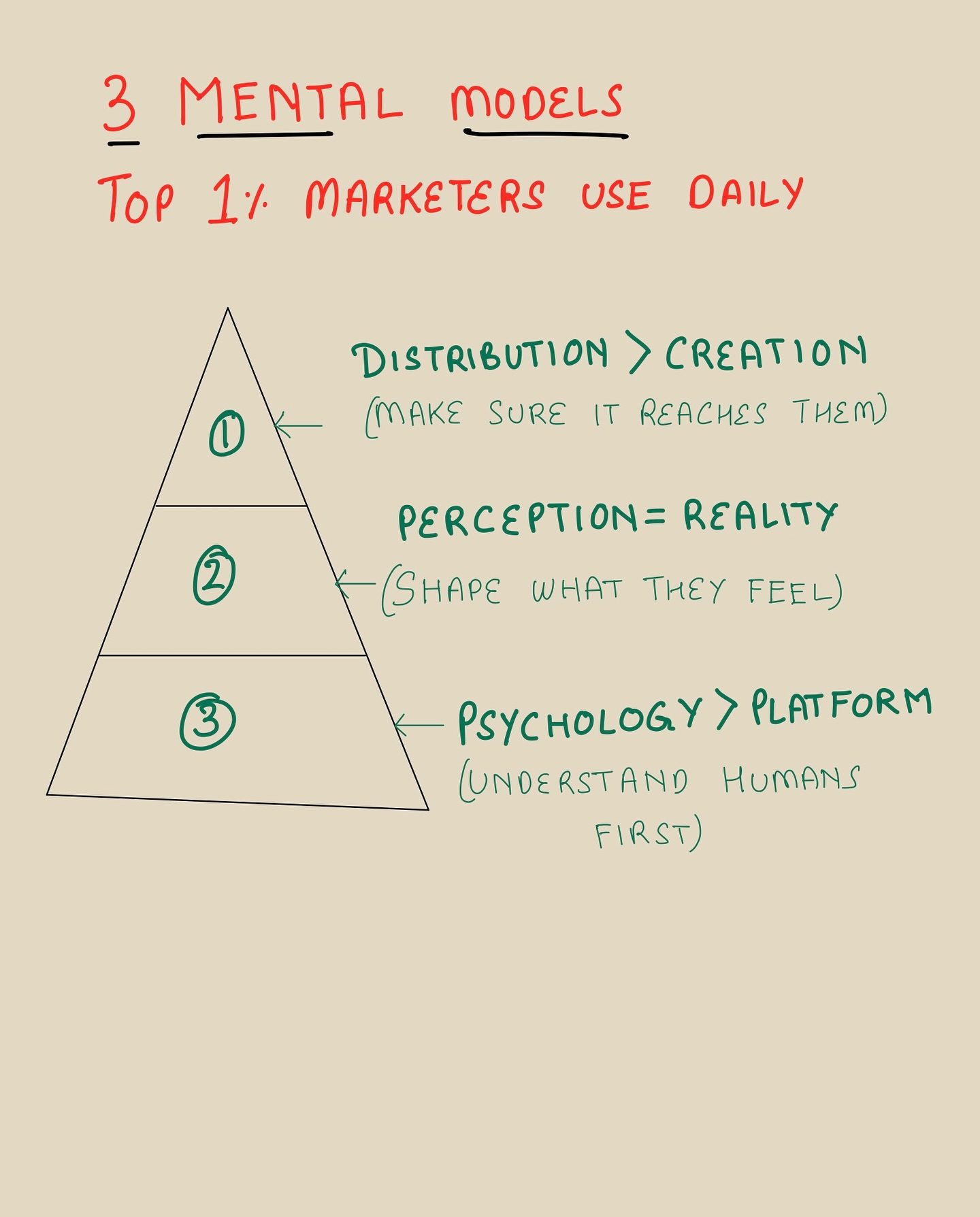
Mental models are essential frameworks that transform the way marketers approach their strategies. These models serve as a foundation for understanding and predicting consumer behavior, market trends, and strategic outcomes. By mastering the right mental models, marketers can stay ahead of platform shifts and algorithm changes, making their efforts more effective and resilient.
Context / Why this matters
Marketing is an ever-evolving field, and keeping up with the latest trends and tools is crucial. However, understanding the underlying principles that drive consumer behavior and market dynamics is equally important. Mental models provide a structured way to think about these principles, allowing marketers to navigate the complexities of their field more effectively. These models are particularly valuable in a landscape where platforms and algorithms frequently change, ensuring that strategies remain relevant and impactful.
Successful marketers often prioritize understanding these models over merely learning new tools. They recognize that while tools can be valuable, the true power lies in the mental frameworks that guide strategic decisions. By adopting these models, marketers can develop a deeper, more strategic approach to their work, making them more adaptable and forward-thinking.
Main discussion
Distribution Over Creation
The first mental model emphasizes the importance of distribution over creation. This means that the focus should be on ensuring that content reaches the intended audience, rather than just creating it. Marketing efforts are only as effective as their distribution channels, and marketers who prioritize this aspect are more likely to see tangible results.
Key channels for distribution include:
- SEO: Optimizing content for search engines to ensure it appears in relevant search results.
- Social Media: Utilizing platforms like Instagram, Facebook, and Twitter to reach a broader audience.
- PR: Engaging with media outlets and influencers to gain exposure and credibility.
- Community: Building a loyal community around your brand that engages with and shares your content.
To excel in this area, marketers need to master both creation and dissemination. This dual focus ensures that not only is the content high-quality, but it also reaches the right people at the right time. Resources like "Traction" by Gabriel Weinberg and Justin Mares can be invaluable in this regard, offering practical insights into achieving explosive customer growth.
Perception Shapes Reality
The second mental model underscores the significance of perception in shaping reality. How consumers perceive a brand or product can significantly impact their purchasing decisions. Therefore, marketers must focus on shaping these perceptions effectively to align with their strategic goals.
Key elements of perception include:
- Branding: Creating a consistent and compelling brand image that resonates with the target audience.
- Messaging: Crafting messages that evoke the desired emotions and perceptions, whether it's through storytelling, testimonials, or other forms of content.
- User Experience: Ensuring that every interaction with the brand is positive and reinforces the desired perception.
By prioritizing these elements, marketers can influence how their audience views their brand, ultimately shaping consumer behavior and driving growth.
Psychology Over Platform
Finally, the third mental model emphasizes the importance of psychology over the platform. This means understanding human behavior and leveraging psychological triggers to create more impactful marketing strategies. A deep understanding of consumer psychology can be more valuable than choosing the right platform, as it allows marketers to tailor their messages to resonate with their audience on a deeper level.
Key psychological triggers to leverage include:
- Urgency: Creating a sense of urgency to drive action, such as limited-time offers or exclusive deals.
- Identity: Connecting with consumers on a personal level by tapping into their sense of self and identity.
- Belonging: Building a sense of community and belonging around the brand, making consumers feel part of something larger.
- Curiosity: Piquing curiosity to encourage engagement and exploration of the brand.
Resources like "Influence" by Robert Cialdini can provide valuable insights into these psychological principles, helping marketers create more compelling campaigns.
Practical tips
To effectively leverage these mental models, consider the following practical tips:
- Analyze Your Distribution Channels: Regularly evaluate the effectiveness of your distribution channels and make adjustments as needed. This might involve testing new platforms, optimizing existing channels, or experimenting with different content formats.
- Monitor Consumer Perceptions: Use surveys, focus groups, and other forms of market research to understand how consumers perceive your brand. Act on this feedback to shape your messaging and branding strategies.
- Leverage Psychological Insights: Incorporate psychological triggers into your marketing campaigns to create a more impactful and engaging experience for your audience. This might involve crafting messages that evoke specific emotions or creating content that tap into consumer desires and motivations.
Important Takeaways
Understanding and applying mental models can significantly transform marketing strategies, making them more effective and adaptable. By prioritizing distribution, perception, and psychology, marketers can stay ahead of industry changes and create more impactful campaigns.
These models provide a structured way to think about the key elements of marketing, helping marketers develop a deeper, more strategic approach to their work. By leveraging these frameworks, marketers can navigate the complexities of their field more effectively, ensuring their efforts remain relevant and impactful in a constantly evolving landscape.
Conclusion
Incorporating mental models into marketing strategies is not just a recommendation—it’s a necessity for staying competitive. By understanding and applying these frameworks, marketers can develop a more strategic, adaptable approach to their work. Whether it’s prioritizing distribution over creation, shaping consumer perceptions, or leveraging psychological insights, these models provide a powerful foundation for effective marketing.
Questions readers ask
What are the top 3 mental models every marketer should know?
The top 3 mental models for marketers are the 80/20 rule (Pareto Principle), customer lifetime value (CLV), and the four Ps of marketing. These models help marketers focus on the most impactful areas, understand customer value, and develop comprehensive marketing strategies.
How can mental models help marketers stay ahead of platform changes?
Mental models provide a framework for understanding and adapting to changes in marketing platforms. For example, the diffusion of innovations model helps marketers understand how new platforms are adopted, allowing them to tailor their strategies accordingly.
What mental models are best for understanding consumer behavior?
The consumer decision journey and the jobs-to-be-done framework are excellent for understanding consumer behavior. These models break down the customer's journey and clarify the problem they are trying to solve with a product or service.
How can marketers apply the 80/20 rule (Pareto Principle) in their strategies?
The 80/20 rule helps marketers identify the 20% of efforts that drive 80% of their results. By focusing on these high-impact areas, marketers can optimize their strategies, allocate resources more effectively, and improve overall performance.
What resources are available for learning mental models in marketing?
There are numerous books, online courses, and blogs dedicated to mental models in marketing. Some recommended resources include 'The Little Book of Marketing Models' by Tim Jones, online courses on platforms like Coursera, and industry blogs that offer practical insights and case studies.
Why are mental models important in marketing distribution?
Mental models help marketers understand and predict how consumers will interact with and adopt new products or services. Models like the diffusion of innovations and the customer adoption curve can guide marketers in creating effective distribution strategies.
How can marketers use customer lifetime value (CLV) to inform their strategies?
Calculating and leveraging customer lifetime value helps marketers understand the total revenue a business can reasonably expect from a single customer account throughout the business relationship. This insight helps in tailoring strategies to maximize long-term customer value and profitability.
Recent articles
Fresh deep dives from the latest Reels we unpacked.




Comments
Be the first to comment.