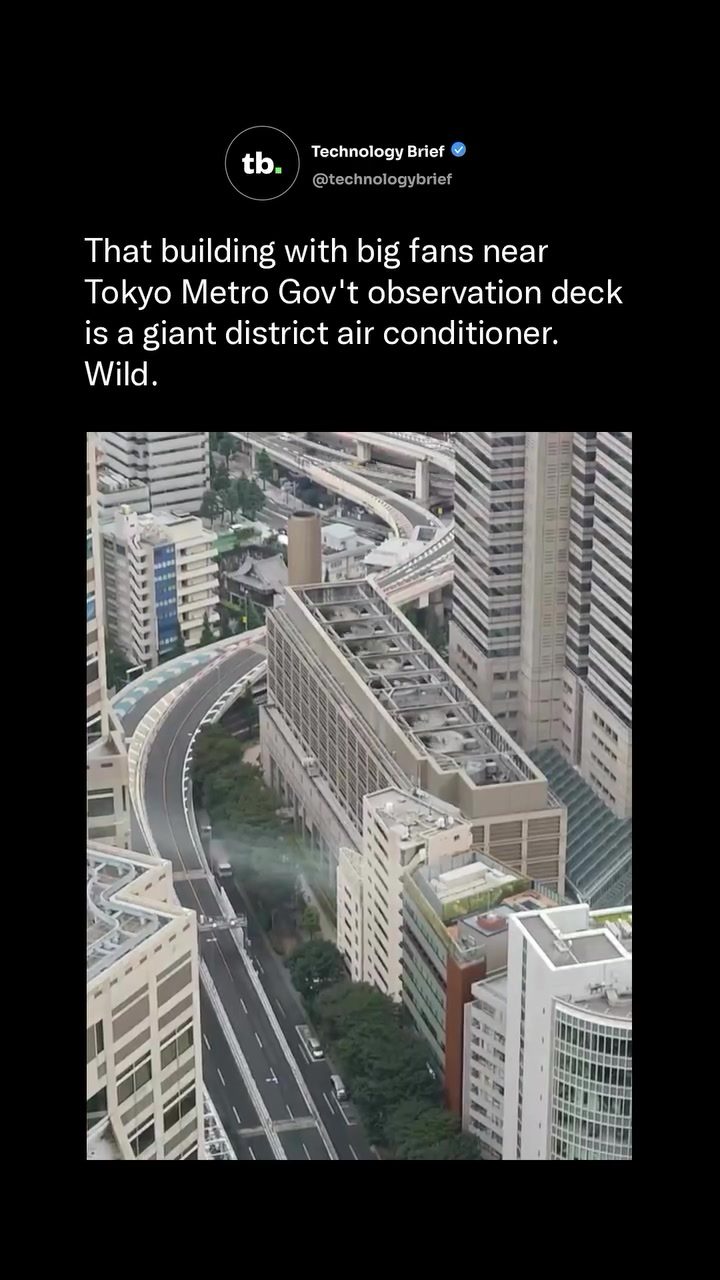
Tokyo's Ingenious District Cooling System
Nestled beneath the bustling streets of Tokyo's Shinjuku district lies an engineering marvel that has been quietly revolutionizing urban cooling since 1971. The Shinjuku District Heating and Cooling Center is a single facility responsible for cooling dozens of surrounding skyscrapers. This system pipes chilled water through an underground network, eliminating the need for each building to maintain its own cooling plant.
Context / Why this matters
In a city as dense and dynamic as Tokyo, efficient use of space and energy is paramount. The Shinjuku District Heating and Cooling Center exemplifies how innovative engineering can meet the demands of a modern metropolis. By centralizing cooling efforts, the system not only conserves energy but also maximizes the usable space within each building.
Main discussion
The History and Function of the Shinjuku District Heating and Cooling Center
The Shinjuku District Heating and Cooling Center, in operation since 1971, is a testament to forward-thinking urban planning. The facility generates both chilled water and steam by burning natural gas. This dual-output system is then distributed across an expansive area of over 2.2 million square meters, providing a cooling output of 208 megawatts. This makes it the largest system of its kind in Japan.
The Technology Behind the Cooling System
The Shinjuku District Heating and Cooling Center employs a sophisticated system of underground pipes to deliver chilled water to the surrounding skyscrapers. This centralized approach contrasts sharply with the traditional method, where each building would need its own cooling plant. The visible steam rising from the facility is a byproduct of the process and should not be mistaken for pollution. This efficient use of energy and space is a key feature of the system, offering significant advantages over decentralized cooling methods.
The Environmental and Economic Benefits
By centralizing the cooling process, the Shinjuku District Heating and Cooling Center achieves several noteworthy benefits. Energy consumption is significantly reduced compared to individual cooling plants. Additionally, the space that would otherwise be occupied by cooling machinery in each building is freed up, allowing for more usable floor space. This innovative approach not only conserves energy but also enhances the economic value of the real estate in the district, further highlighting the benefits of centralized urban infrastructure.
The Architectural Marvel
The building itself is an architectural marvel, featuring numerous large fans on its roof. Located near the Tokyo Metro Government Observation Deck, this building serves as a giant district air conditioner. The unique design and functionality of the facility add to the urban landscape, making it a notable landmark in the Tokyo skyline, and helping to cool the surrounding area.
The Urban Integration
The Shinjuku District Heating and Cooling Center is seamlessly integrated into the urban fabric of Tokyo. Its strategic location and efficient operation make it an integral part of the city's infrastructure. The centralization of cooling efforts not only enhances the city's sustainability but also contributes to its overall livability and efficiency.
Practical tips
To implement a similar system in a dense urban environment, consider the following practical tips:
- Conduct a thorough analysis of the existing infrastructure and identify potential areas for integration.
- Invest in advanced cooling technology that can efficiently produce and distribute chilled water and steam.
- Ensure that the underground piping network is robust and capable of handling the required load.
- Collaborate with local authorities and urban planners to integrate the system seamlessly into the city's layout.
- Educate the public about the benefits of the system to garner support and understanding.
Important takeaways
- The Shinjuku District Heating and Cooling Center is a pioneering example of centralized cooling in a dense urban environment.
- Centralization of cooling efforts significantly reduces energy consumption and frees up valuable floor space in buildings.
- The system's efficiency and integration into the urban landscape make it a model for sustainable urban development.
- The architectural design of the facility, featuring numerous fans, adds a unique element to the Tokyo skyline.
Conclusion
Tokyo's Shinjuku District Heating and Cooling Center stands as a beacon of innovative urban planning. By centralizing cooling efforts, this facility not only conserves energy but also enhances the livability and efficiency of the city. As urban populations continue to grow, the lessons learned from this system can serve as a blueprint for sustainable development in cities around the world. The next time you see the steam rising from the Shinjuku district, remember that it's not pollution, but a sign of a city that's working towards a greener, more efficient future.
Questions readers ask
How does the Shinjuku District Cooling System work?
The Shinjuku District Cooling System operates by centralizing the cooling process for dozens of skyscrapers in the Shinjuku district. It distributes chilled water through an extensive underground network, supplying cool air to each building without the need for individual cooling plants.
What are the primary benefits of Tokyo's district cooling technology?
Tokyo's district cooling technology offers several benefits, including significant energy conservation, efficient use of urban space, and reduced environmental impact. By centralizing the cooling process, the system minimizes the need for individual cooling systems in each building, thus maximizing usable space.
How does the district cooling system contribute to Tokyo's urban sustainability?
The district cooling system in Tokyo contributes to urban sustainability by reducing the overall energy consumption required for cooling. By centralizing the process, it minimizes the number of cooling plants, leading to lower greenhouse gas emissions and a more efficient use of resources.
Why is the Shinjuku District Cooling System considered a space-efficient solution?
The Shinjuku District Cooling System is considered space-efficient because it eliminates the need for individual cooling units within each building. By utilizing a centralized system, it frees up valuable space within buildings, making it an ideal solution for densely populated urban areas like Tokyo.
What role does the underground network play in the Shinjuku District Cooling System?
The underground network is crucial for the Shinjuku District Cooling System as it facilitates the distribution of chilled water to the numerous buildings connected to it. This network ensures that each building receives cool air efficiently, without the need for above-ground infrastructure that could occupy valuable urban space.
How long has the Shinjuku District Cooling System been in operation?
The Shinjuku District Cooling System has been operational since 1971, making it one of the pioneering district cooling systems in the world. Its longstanding operation demonstrates its reliability and effectiveness in meeting the cooling demands of a bustling urban environment.
Can other cities implement a similar district cooling system to Tokyo?
Yes, other cities with similar urban density and cooling demands can implement a district cooling system like Tokyo's. The key factors for successful implementation include sufficient underground infrastructure, centralized cooling facilities, and a network of buildings that can be efficiently connected to the system.
Recent articles
Fresh deep dives from the latest Reels we unpacked.




Comments
Be the first to comment.