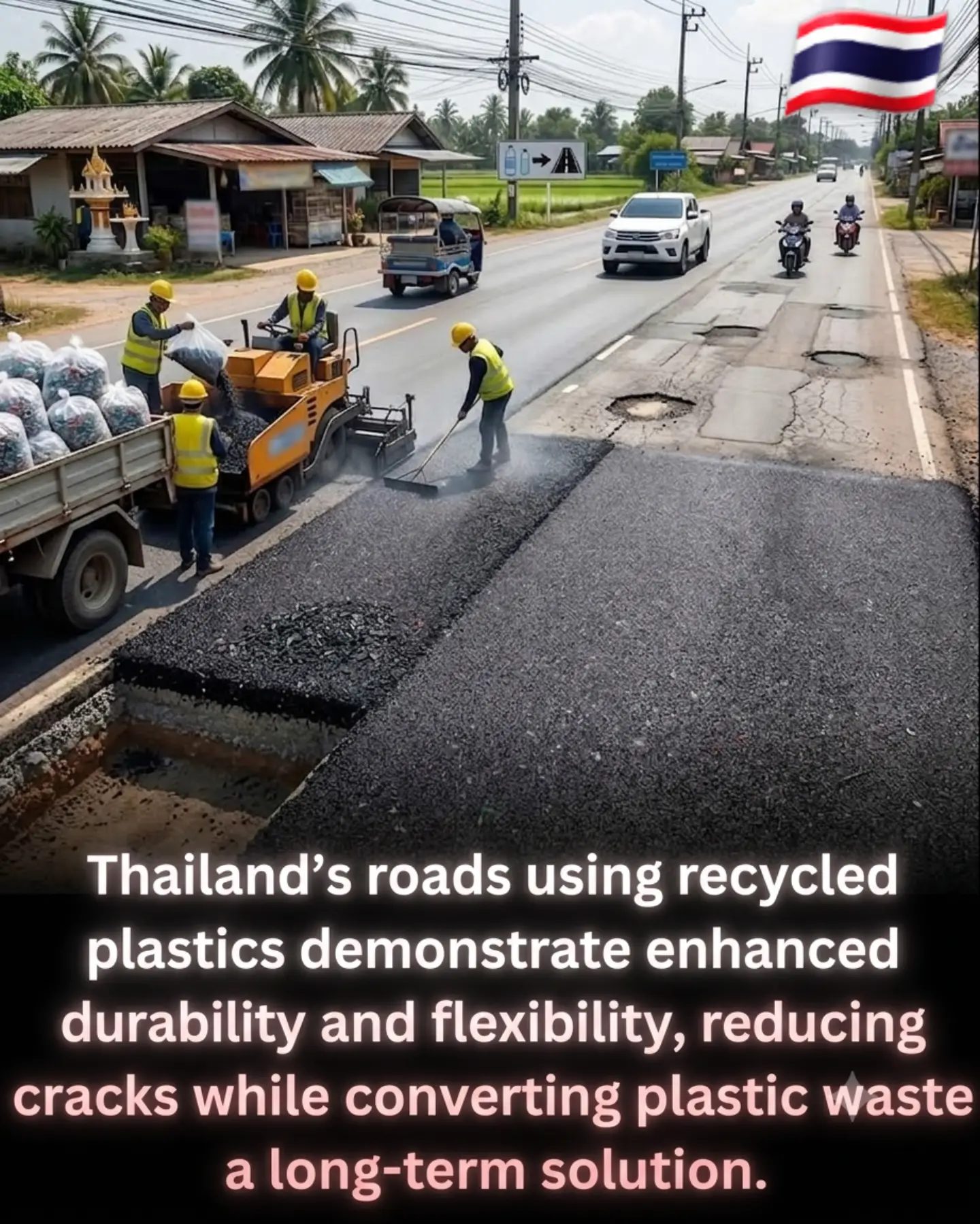
Road Construction with Recycled Plastics in Thailand
Thailand is making significant strides in addressing its plastic waste challenges by integrating recycled plastics into road construction. This innovative approach to infrastructure development seeks to create durable roads while reducing plastic waste. Let's explore how Thailand is leading the way in this sustainable initiative.
Why This Matters
Plastic waste is a global issue with severe environmental impacts. By repurposing plastic waste into road infrastructure, Thailand is not only tackling its own waste problem but also setting a precedent for other countries to follow. This approach exemplifies a circular economy model, transforming waste into valuable resources, and reducing the environmental footprint of road construction.
The Process of Recycled Plastic Asphalt
Materials and Preparation
In Thailand, road construction workers are using a paving machine to lay asphalt made from recycled plastics. The process involves shredding and blending discarded plastic bags and packaging with traditional asphalt concrete. This mixture is then used to create a new type of asphalt, known as plastic-modified asphalt.
Enhanced Durability and Flexibility
The inclusion of polymer-rich plastic waste enhances the pavement’s physical properties. Engineering studies have demonstrated that this modified aggregate can improve road stability by up to 30% compared to conventional standards. The roads made from this mixture offer superior flexibility, resistance to moisture, and long-term durability against heavy traffic load deformation and weathering.
Reduced Cracking and Longer Lifespan
One of the key benefits of using recycled plastics in road construction is the reduction of structural cracking. The enhanced durability of the modified asphalt significantly extends the lifespan of the roadway, making it a cost-effective solution in the long run. This long-term solution helps to create more resilient infrastructure that can withstand the rigors of heavy traffic and varying weather conditions.
Environmental Benefits
Beyond the physical benefits, this approach has significant environmental advantages. By diverting tens of thousands of kilograms of single-use plastics from landfills and marine ecosystems, Thailand is transforming a severe environmental hazard into a resilient and cost-effective infrastructure asset. This circular-economy model not only reduces plastic waste but also provides a sustainable solution for road construction.
Practical Tips for Implementing Recycled Plastic Asphalt
Partner with Academic and Corporate Alliances
Collaboration is key to the success of this initiative. Thailand has spearheaded community-led programs like the Green Road Project, founded by Dr. Wechsawan Lakas, and major corporate alliances involving entities like Dow Thailand and Siam Cement Group (SCG). These partnerships help to drive innovation, research, and implementation on a larger scale.
Conduct Thorough Engineering Studies
Before implementing recycled plastic asphalt, it is crucial to conduct thorough engineering studies. These studies should evaluate the physical properties of the modified asphalt and compare them to conventional standards. This ensures that the new asphalt meets or exceeds the durability and flexibility requirements for road construction.
Engage in Community and Corporate Programs
Community-led initiatives and corporate alliances can help drive the success of this initiative. Engaging with local communities, academic researchers, and industry leaders can provide the necessary support and resources to implement and scale this sustainable solution.
Important Takeaways
- Durability and Flexibility: Recycled plastic asphalt offers enhanced durability and flexibility, making it a superior choice for road construction.
- Environmental Impact: This approach reduces plastic waste and transforms a severe environmental hazard into a valuable resource.
- Cost-Effectiveness: The long-term durability of recycled plastic asphalt makes it a cost-effective solution for road construction.
- Collaboration: Partnering with academic researchers, community-led programs, and corporate alliances is essential for the success of this initiative.
Conclusion
Thailand's innovative use of recycled plastics in road construction is a shining example of how sustainability and infrastructure development can go hand in hand. By creating durable, flexible roads that reduce plastic waste, Thailand is paving the way for a more sustainable future. This approach not only addresses environmental challenges but also sets a global standard for responsible infrastructure development. As more countries take note of Thailand's success, we can expect to see a growing trend towards sustainable road construction practices worldwide.
Questions readers ask
How does Thailand incorporate recycled plastics into road construction?
Thailand mixes shredded recycled plastics with bitumen, the binding agent in asphalt, to create a more durable and flexible road surface. This process not only strengthens the roads but also reduces the need for virgin materials, thus lowering the environmental impact. The roads are constructed using a special blend of recycled plastic asphalt that is then laid on the road surface, enhancing its longevity.
What are the benefits of using recycled plastics in road construction?
Using recycled plastics in road construction offers several benefits. It helps to reduce the amount of plastic waste sent to landfills and oceans. Additionally, roads made with recycled plastic asphalt are more durable and resistant to cracks and potholes, leading to lower maintenance costs over time. This approach also reduces the demand for virgin materials, contributing to a more sustainable infrastructure development process.
How does Thailand's approach to road construction set a global precedent?
Thailand's innovative use of recycled plastics in road construction demonstrates a practical application of the circular economy model, transforming waste into valuable resources. By successfully integrating recycled plastics into its infrastructure, Thailand provides a tangible example for other countries grappling with plastic waste management. This approach encourages global adoption of sustainable road construction practices, fostering a more environmentally conscious world.
What types of plastic waste are used in Thailand's road construction?
Thailand primarily uses common plastic waste items such as plastic bags, bottles, and packaging materials. These are collected, cleaned, and shredded into small pieces before being mixed with bitumen. The process ensures that a variety of plastic waste types can be repurposed, making it a versatile solution for waste management and road development.
What is the environmental impact of using recycled plastics in road construction?
The environmental impact of using recycled plastics in road construction is significantly reduced compared to traditional methods. By repurposing plastic waste, Thailand decreases the amount of plastic that ends up in landfills and oceans. This approach also reduces the extraction of virgin materials, lowers greenhouse gas emissions, and conserves energy, contributing to a cleaner and more sustainable environment.
What challenges has Thailand faced in implementing this initiative?
Thailand has faced challenges such as the need for efficient waste collection and sorting systems to ensure a consistent supply of clean, shredded plastic. Additionally, there have been logistical considerations in integrating recycled plastics into the existing road construction supply chain. However, the country has made substantial progress through careful planning and strong partnerships with both public and private sectors.
How does the durability of recycled plastic roads compare to traditional roads?
Roads constructed with recycled plastic asphalt have shown to be more durable than traditional roads. The addition of recycled plastics enhances the asphalt's flexibility and resistance to cracking, making the roads more resilient to wear and tear. This increased durability leads to a longer lifespan for the roads, reducing the frequency of repairs and maintenance, and thus, lowering overall costs.
Recent articles
Fresh deep dives from the latest Reels we unpacked.




Comments
Be the first to comment.