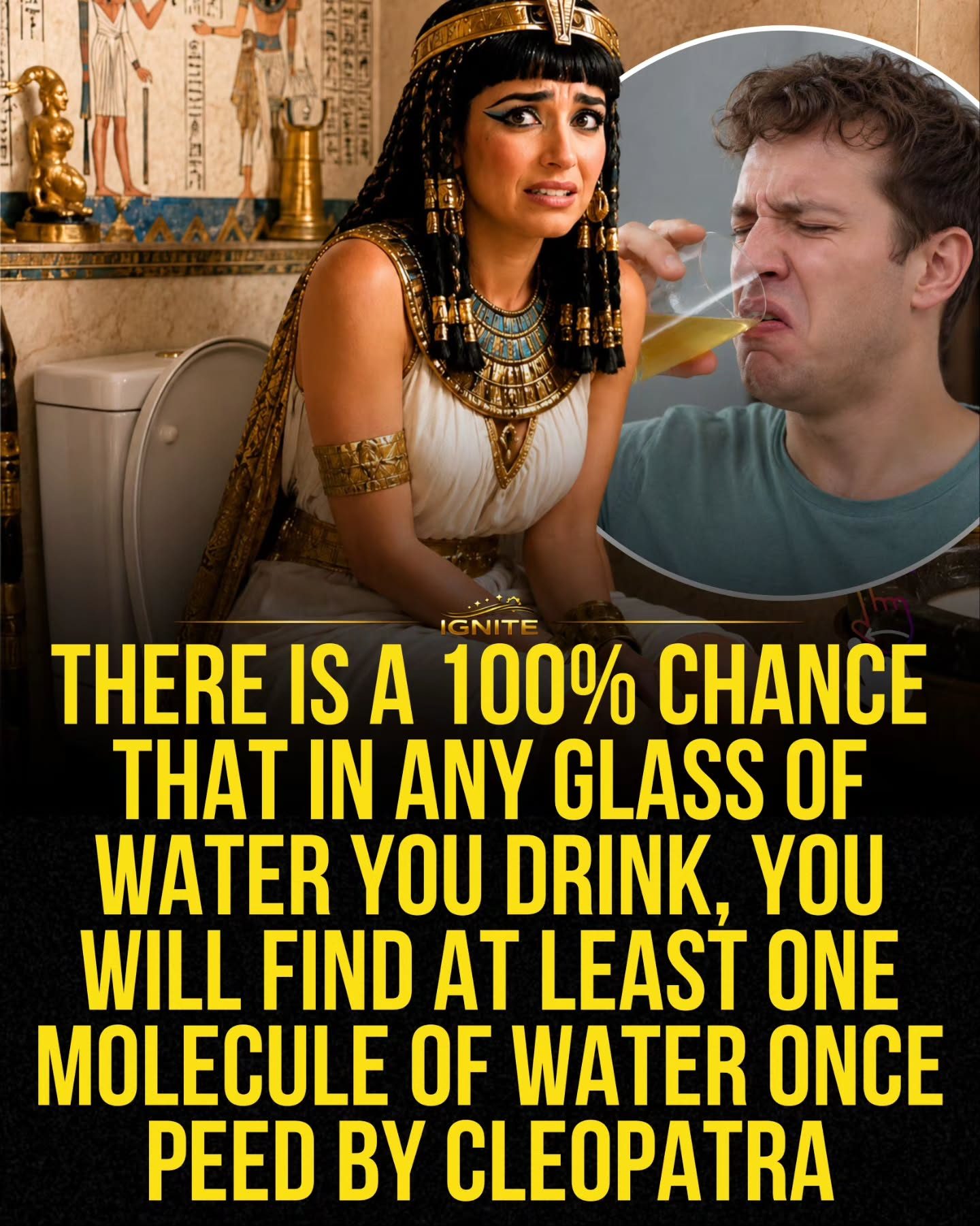
Humorous Fact about Water and Cleopatra
In any glass of water you drink, there's a surprisingly high chance you're consuming a molecule of water that once passed through Cleopatra. This is not a joke; it's a fascinating fact rooted in the vast and complex water cycle.
Context / Why This Matters
Understanding the water cycle helps put this humorous fact into perspective. Every drop of water on Earth has been here for billions of years, continuously recycled through evaporation, condensation, precipitation, and collection. This means that the water molecules we drink today have been part of the Earth's water cycle since its inception, circulating through various stages and forms.
This continuous recycling is what makes the claim about Cleopatra's water molecules true. The sheer volume of water on Earth and the continuous nature of the water cycle ensure that the molecules we consume today have likely passed through countless living organisms, including Cleopatra.
Main Discussion
The Water Cycle
The water cycle is a continuous process where water changes state and moves between different reservoirs: oceans, rivers, lakes, groundwater, and the atmosphere. The cycle consists of four main stages:
- Evaporation: Water from the Earth's surface (oceans, lakes, rivers, and soil) heats up and turns into water vapor, rising into the atmosphere.
- Condensation: As the water vapor rises, it cools and condenses to form clouds.
- Precipitation: When the water droplets in the clouds become too heavy, they fall back to the Earth's surface as rain, snow, or hail.
- Collection: The precipitation collects in bodies of water, such as oceans, lakes, and rivers, and also seeps into the ground to become groundwater.
The Science Behind the Claim
The claim that every glass of water contains a molecule once urinated by Cleopatra is grounded in the concept of hydrological continuity. This principle states that the total amount of water on Earth remains constant, even though its form and location may change.
Since the Earth's water supply has been continuously recycled for billions of years, the molecules we consume today have likely been part of countless cycles. Given that humans and other organisms contribute to the water cycle through excretion, it's statistically likely that a molecule of water once processed by Cleopatra could be in any given glass of water today. This is a result of the vast number of cycles and the concentration of water molecules in the environment, wherein water from historical times is incorporated into the ongoing cycles.
Historical Context
Cleopatra, the last active ruler of the Ptolemaic Kingdom of Egypt, lived from 69 to 30 BCE. During her reign, she was known for her intelligence, charm, and political acumen, but she was also human, like everyone else. As such, her bodily functions, including urination, contributed to the water cycle.
Practical Tips
While the concept of drinking Cleopatra's urine may seem unsettling, it's important to appreciate it in the context of the vast water cycle. This perspective can help you see the interconnectedness of all natural processes.
Instead, think about the everyday implications of this concept. Here are a few practical tips to keep in mind:
Appreciate the Water Cycle
Understanding the water cycle can foster a deeper appreciation for the natural world. Recognize that the water you drink today has been through countless transformations and has been part of various ecosystems over time.
Conserve Water
Given that the Earth's water supply is limited and continuously recycled, it is essential to conserve water. Simple actions like turning off the tap while brushing your teeth, fixing leaks promptly, and using water-efficient appliances can make a difference.
Purify Your Water
While the water cycle ensures that water is continuously recycled, it's crucial to purify the water you drink. Use water filters, boil water when necessary, and consider using water purification tablets when traveling to ensure your water is safe for consumption.
Educate Others
Share your knowledge about the water cycle and the interconnectedness of all natural processes. This can inspire others to appreciate and conserve water, leading to a more sustainable future.
Important Takeaways
- The water cycle ensures that water is continuously recycled through various stages and forms.
- The claim about Cleopatra's water molecules is rooted in the vast and complex water cycle.
- Understanding the water cycle fosters a deeper appreciation for the natural world and the importance of water conservation.
This humorous fact about Cleopatra and water molecules underscores the interconnectedness of all natural processes. By appreciating the water cycle and conserving water, you can contribute to a more sustainable future.
Questions readers ask
How does water get recycled on Earth?
Water is recycled through a continuous process called the water cycle. This involves evaporation, where water turns into vapor, condensation, where it forms clouds, and precipitation, where it falls back to the Earth's surface. This cycle ensures that the same water molecules have been circulating since Earth's early stages.
What does the water cycle have to do with Cleopatra?
The water cycle explains why there's a high chance that some of the water molecules in your glass today once passed through Cleopatra. Because water is continuously recycled, the molecules that were once part of ancient bodies of water, including those Cleopatra interacted with, are still present on Earth.
Why is the idea of drinking Cleopatra's water molecules amusing?
The idea is humorous because it illustrates the vast history of water on Earth in a relatable, unexpected way. It’s fascinating to consider that the simple act of drinking a glass of water connects us to historical figures and events, highlighting the extraordinary journey of ordinary water molecules.
How long have the water molecules on Earth been circulating?
The water molecules on Earth have been circulating for billions of years. This is due to the Earth's water cycle, which ensures that water is continuously recycled and redistributed, making it possible for some of the molecules in your glass to have been part of ancient bodies of water.
What are some fun facts about the water cycle?
The water cycle is a dynamic process that involves water changing states and moving through the environment. For example, a water molecule can spend time in the atmosphere as a vapor, in a cloud as a droplet, and then fall to the surface as rain or snow. This cycle shows how interconnected our world is, with water moving from oceans to clouds to rivers and back again.
How does the water cycle affect our daily lives?
The water cycle is crucial for maintaining life on Earth. It ensures that water is available for drinking, agriculture, and various other purposes. Understanding the water cycle can also help us appreciate the significance of water conservation and the interconnectedness of all water sources on the planet.
Related deep dives
Similar reads based on topic and creator.
Recent articles
Fresh deep dives from the latest Reels we unpacked.




Comments
Be the first to comment.