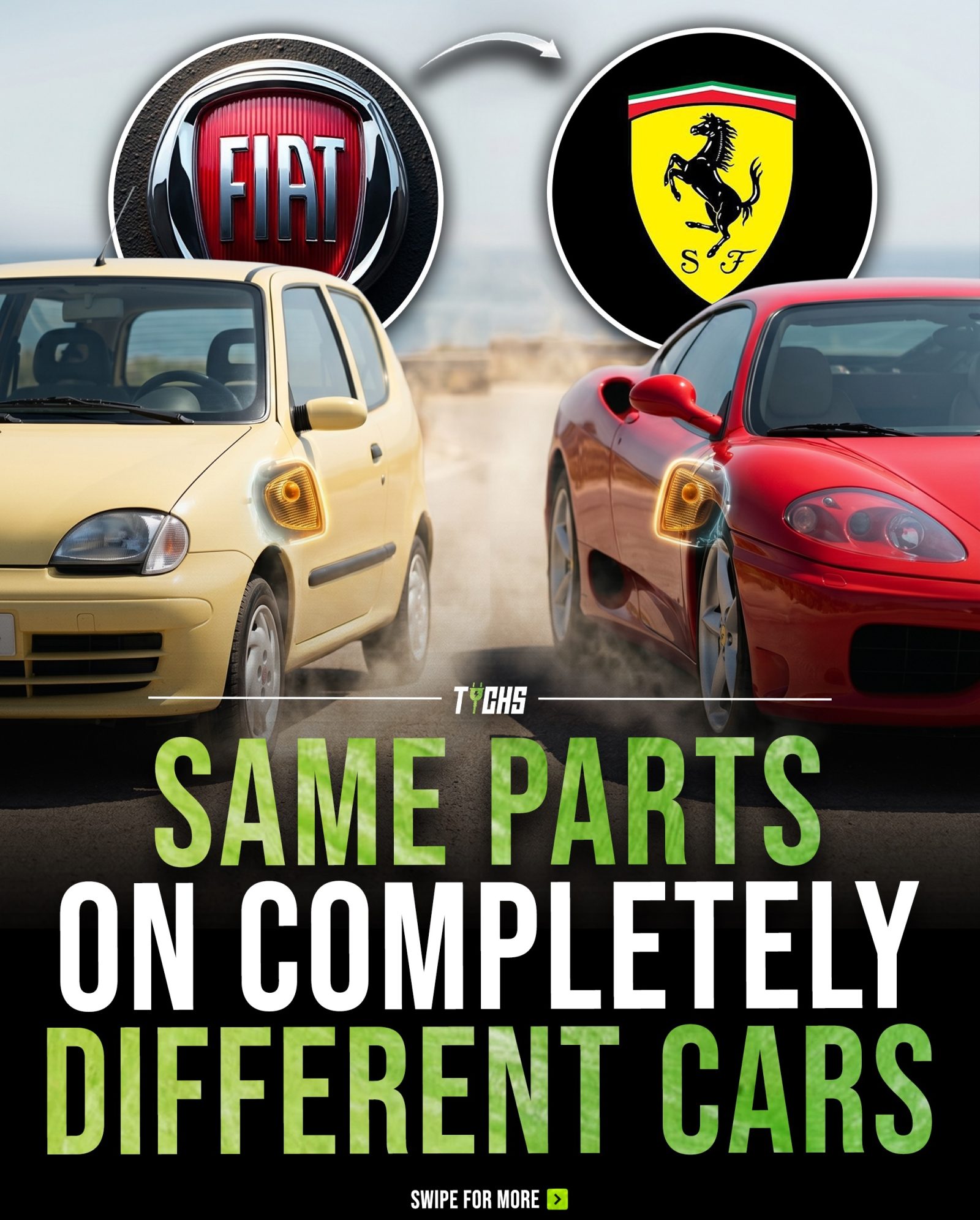
How Car Manufacturers Share Parts Across Different Models
Car enthusiasts often marvel at the unique designs and engineering marvels of different vehicle models. However, a lesser-known fact is that many cars, even those from different brands, share identical or nearly identical components. This practice, while not widely publicized, is a significant aspect of the automotive industry. Understanding this phenomenon can provide deeper insight into how car manufacturing works and why certain parts are common across various models.
Why This Matters
Sharing parts across different models is a strategic move by manufacturers to reduce costs, improve reliability, and speed up production. This practice is not limited to budget-friendly cars; even high-end and luxury vehicles often use components that are either identical or come from the same supplier. The SSC Ultimate Aero, for instance, uses Ford Focus headlights, while brands like Bugatti, Audi, and Volkswagen share engineering and supplier networks across models. This interconnectedness highlights the efficiency and cost-saving measures in the automotive industry.
Main Discussion
The Benefits of Shared Components
One of the primary reasons for sharing parts is cost reduction. Developing new components from scratch can be incredibly expensive. By reusing existing parts, manufacturers can cut down on research and development costs, which ultimately makes the vehicle more affordable for consumers. Additionally, using proven components from reliable suppliers ensures that the parts are of high quality, thereby improving the reliability of the vehicle.
Examples of Shared Components
Several examples illustrate how different car models share components. For instance, a FIAT and a Ferrari might share the same headlight assembly, or a Mini Cooper and a Morgan Aero might have identical headlights. Similarly, a Fiat Coupe and an MG Xpower SV might share taillights. These examples show that even cars that are vastly different in terms of design and performance can share similar components under the hood.
The Impact on Design and Performance
While sharing parts can save costs and improve reliability, it also raises questions about how this practice affects the design and performance of vehicles. Manufacturers often modify the appearance of shared parts to fit the design language of the vehicle. For example, headlights and taillights might be restyled to match the aesthetic of a particular model. This ensures that the vehicle maintains its unique identity while benefiting from the cost savings and reliability of shared components.
The Role of Suppliers
Suppliers play a crucial role in the sharing of components. Many automotive suppliers provide parts to multiple manufacturers, allowing for economies of scale. This means that a single supplier can produce a component in large quantities, reducing per-unit costs and ensuring high-quality parts. For example, a supplier might provide a specific type of headlight to multiple brands, leading to the appearance of shared parts across different vehicle models.
Practical Tips
If you're a car enthusiast or even a casual driver, knowing about shared components can provide a new perspective on the vehicles you drive or admire. Here are some practical tips:
- Look Beyond the Surface: When admiring a car, don't just focus on the exterior design. Consider the shared components that might be under the hood.
- Research Components: If you're in the market for a new car, researching the shared components can give you an idea of the vehicle's reliability and cost-effectiveness.
- Engage in Forums and Communities: Online car forums and communities are great places to learn more about shared components and gain insights from other enthusiasts.
Important Takeaways
The sharing of components across different car models is a strategic move by manufacturers to reduce costs, improve reliability, and speed up production. This practice is not limited to budget-friendly cars and extends to high-end and luxury vehicles as well. Examples like the FIAT and Ferrari, Mini Cooper and Morgan Aero, and Fiat Coupe and MG Xpower SV highlight how different models can share identical or nearly identical parts.
Understanding this phenomenon can provide a deeper appreciation for the interconnectedness of the automotive world and the engineering behind the vehicles we drive. By recognizing that even high-end cars share components with more affordable models, you can gain a new perspective on the automotive industry.
Conclusion
The automotive industry's practice of sharing components across different models is a testament to the efficiency and cost-saving measures that manufacturers employ. From budget-friendly cars to luxury vehicles, the use of shared parts helps reduce costs, improve reliability, and speed up production. Understanding this interconnectedness can enhance your appreciation for the vehicles you drive and admire, offering a new perspective on the engineering and design behind modern cars.
Questions readers ask
Why do car manufacturers use identical parts across different models?
Car manufacturers use identical parts across different models primarily to reduce production costs and enhance reliability. This practice allows them to streamline their supply chain, negotiate better prices for bulk orders, and ensure that replacement parts are readily available for repairs.
Do luxury cars also share parts with budget vehicles?
Yes, luxury cars often share parts with budget vehicles. This is a common practice in the automotive industry, where even high-end brands may use similar components to cut costs without compromising performance or luxury features. For instance, you might find the same headlights or internal mechanisms in both budget and luxury models, though the finish or design might differ to match the vehicle's overall aesthetic.
What are some common car parts that are often shared across models?
Some common car parts that are often shared across different models include headlights, taillights, windshields, engine components, and even certain interior elements. Additionally, many vehicles share aero parts, like spoilers and mirrors, and certain mechanical components, such as brakes and suspension parts. This is particularly common in models from the same manufacturer or even within the same automotive group.
How does sharing parts across models enhance reliability?
Sharing parts across models enhances reliability by ensuring that these components are well-tested and proven in various driving conditions. When a part is used in multiple models, it undergoes rigorous testing, and any issues are quickly identified and resolved. This widespread use also means that replacement parts are more readily available, making repairs faster and more efficient.
Does sharing parts affect the performance of high-end vehicles?
Sharing parts does not necessarily affect the performance of high-end vehicles. While the same basic components may be used, luxury vehicles often feature enhancements, such as refined finishes, better materials, and advanced engineering, to ensure they meet the performance and luxury expectations of their target market. This means that the shared part might be the same, but the way it is integrated and the additional features surrounding it can significantly differ.
Why are some car enthusiasts surprised by the shared parts?
Some car enthusiasts are surprised by the shared parts because they expect each vehicle model to be unique, especially when it comes to high-end or luxury brands. However, this practice is deeply rooted in the industry's focus on efficiency and cost management, which benefits consumers by making cars more affordable and reliable. Plus, it ensures that the car's unique look and feel come from its design, paint, and accessories, not its functional parts.
How does Fiat, a well-known brand, fit into this shared parts phenomenon?
Fiat, like many other car manufacturers, utilizes shared parts across its models to optimize production processes and reduce costs. By doing so, they can focus resources on designing unique features and aspects of the car that impact the vehicle’s look and performance. For example, the same engine parts, or even some exterior parts, can be used in different Fiat models, while the vehicle design still offers a unique driving experience.
Recent articles
Fresh deep dives from the latest Reels we unpacked.




Comments
Be the first to comment.