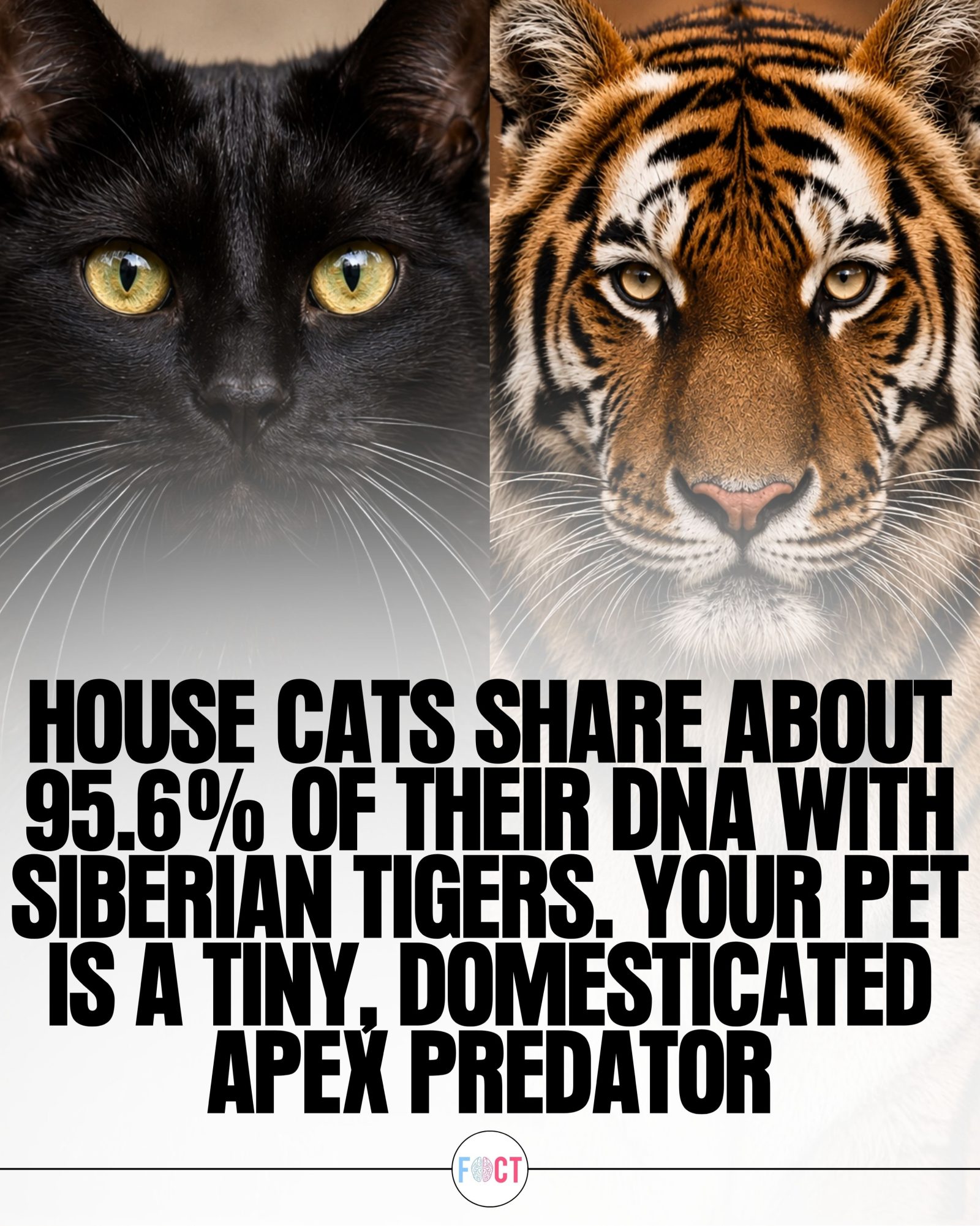
Cat and Tiger DNA: Uncovering the Surprising Connection
House cats and Siberian tigers might seem like worlds apart, but a closer look at their DNA reveals a fascinating story of shared ancestry. These two felines, despite their vast differences in size and lifestyle, share approximately 95.6% of their DNA. This genetic similarity is a testament to their common ancestry and explains many of the striking similarities in their anatomy and behavior. Understanding this connection sheds light on why domestic cats, though tiny, retain the characteristics of apex predators.
Why This Matters
The genetic link between house cats and Siberian tigers is more than just a curious fact; it has significant implications for understanding the evolution of predators and the domestication process. By examining this connection, we can gain insights into the behavioral and physiological traits that make felines such effective hunters. This knowledge can also inform efforts to conserve wild cat species and improve the welfare of domestic cats.
Main Discussion
Shared Ancestry and Genetic Similarity
Millions of years ago, house cats and Siberian tigers diverged from a common ancestor. Despite this long period of separation, they still share a remarkable 95.6% of their DNA. This high degree of genetic similarity is a result of their shared ancestry and explains why domestic cats retain many of the anatomical and neurological features of their wild relatives.
Both species belong to the family Felidae, which includes all cats, from the smallest to the largest. This family is known for its specialized adaptations that make felines highly efficient predators. One of the most notable adaptations is their hyper-carnivorous dentition, designed for tearing meat. This dental structure is essential for their hunting and feeding habits, allowing them to grip and tear flesh effectively.
Specialized Adaptations
In addition to their dentition, both house cats and Siberian tigers possess specialized night vision, acute hearing, and highly flexible skeletal structures. These adaptations are crucial for their hunting strategies, which often involve silent stalking and explosive pounce mechanics. The ability to see clearly in low light and detect the slightest sounds allows these predators to track and capture prey with remarkable precision.
Predatory Drive and Territorial Instincts
Even on a microscopic level, the brains of domestic cats and Siberian tigers share similarities. Both species have a predatory drive and territorial instincts, although these are scaled down in domestic cats to fit their lifestyle. This predatory drive is evident in the way house cats play, hunt, and interact with their environment. Understanding this drive can help pet owners provide enrichment activities that cater to their cats' natural instincts, enhancing their well-being.
Practical Tips
Understanding Your Cat's Behavior
Recognizing that your house cat shares genetic traits with apex predators can help you better understand and appreciate your pet's behavior. For example, scratching is a natural behavior for cats, as it helps them mark their territory and maintain their claws. Providing appropriate scratching posts and surfaces can satisfy this instinct and protect your furniture.
Enrichment Activities
Engaging your cat in activities that mimic hunting can help fulfill their predatory drive. Interactive toys, puzzle feeders, and play sessions that involve chasing and pouncing can keep your cat mentally and physically stimulated. These activities not only provide exercise but also help reduce behavioral issues that may arise from boredom or unmet predatory needs.
Health and Welfare
When you consider your house cat as a tiny, domesticated apex predator, it becomes clearer why certain health issues may arise. For instance, obesity can be a significant problem for indoor cats who lack the opportunity to engage in natural hunting behaviors. Ensuring a balanced diet and providing plenty of exercise can help keep your cat healthy and fit.
Important Takeaways
- House cats and Siberian tigers share approximately 95.6% of their DNA, highlighting their common ancestry.
- Both species possess specialized adaptations such as hyper-carnivorous dentition, night vision, acute hearing, and flexible skeletal structures.
- Understanding these similarities can help pet owners provide better care for their cats, including enrichment activities and health management.
Conclusion
The connection between house cats and Siberian tigers is a fascinating reminder of the intricate web of life and the deep genetic roots that bind different species. By recognizing the shared ancestry and adaptations of these two felines, we can gain a deeper appreciation for the complex and remarkable nature of cats. This knowledge also provides valuable insights into how to care for our feline companions, ensuring they lead happy and healthy lives.
Questions readers ask
How similar is the DNA of house cats and Siberian tigers?
House cats and Siberian tigers share approximately 95.6% of their DNA, indicating a strong genetic link between the two species. This high degree of similarity underscores their common ancestry and explains the many shared traits in their anatomy and behavior.
What are some of the similarities in anatomy and behavior between house cats and tigers?
Despite their differences in size and lifestyle, house cats and tigers share several anatomical and behavioral traits. These include similar body structures, hunting instincts, and social behaviors, all of which can be attributed to their shared genetic heritage.
Why is the genetic link between house cats and tigers important for understanding feline evolution?
The genetic link between house cats and tigers provides valuable insights into the evolution of felines. It helps scientists trace the lineage of modern cats back to their common ancestor, offering a clearer picture of how domestication and adaptation have shaped these species over time.
What can the DNA similarity between house cats and tigers tell us about the domestication process?
The high degree of genetic similarity between house cats and tigers suggests that domestication has not fundamentally altered the core genetic makeup of cats. This insight can help in understanding the processes that led to the taming of wild cats and the development of the modern house cat.
How does the genetic link between house cats and tigers relate to their common ancestor?
The genetic link between house cats and tigers indicates that they share a relatively recent common ancestor, which would have lived millions of years ago. This ancestor would have possessed many of the traits seen in modern felines, which have been passed down through the generations.
What are some of the key implications of studying the genetic similarities between cats and tigers?
Studying the genetic similarities between cats and tigers can provide insights into the broader field of feline genetics. It can help researchers understand the genetic basis for traits such as hunting behaviors, social structures, and adaptations to different environments. This knowledge can also aid in conservation efforts for wild felines.
Related deep dives
Similar reads based on topic and creator.



Recent articles
Fresh deep dives from the latest Reels we unpacked.




Comments
Be the first to comment.