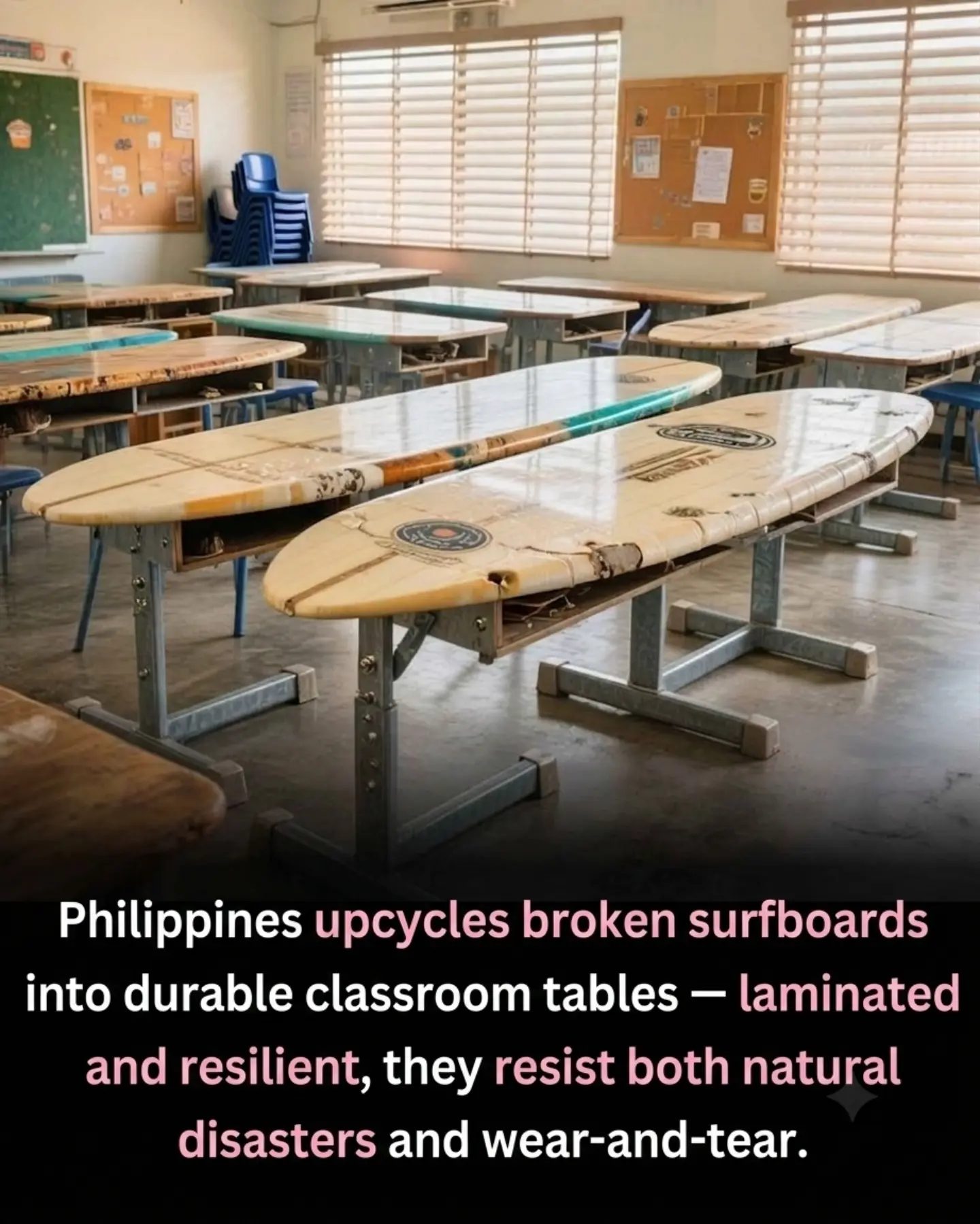
Upcycled Surfboard Tables
In coastal communities around the world, upcycled surfboard tables have become a popular and sustainable solution for classroom furniture. By transforming broken surfboards into durable classroom desks, these communities are not only reducing waste but also creating furniture that can withstand the rigors of daily use and natural disasters. This innovative approach to sustainability and classroom design offers numerous benefits and a unique story of eco-friendly innovation.
Why This Matters
Upcycled surfboard tables are more than just a creative solution to waste management; they are a tangible example of sustainable design. The Philippines, with its rich coastal culture and frequent exposure to natural disasters, has pioneered this approach. By repurposing broken surfboards, coastal communities are turning what would otherwise be waste into valuable resources.
This practice not only benefits the environment but also provides a cost-effective solution for schools. Traditional classroom furniture can be expensive, and in regions prone to natural disasters, this cost is often compounded by the need for frequent replacements. Upcycled surfboard tables, thanks to their sturdy construction, offer a durable and resilient alternative that can withstand both everyday wear and tear and the occasional typhoon.
Creative Solutions for Sustainable Classrooms
The Process of Upcycling
Creating classroom tables from discarded surfboards involves several steps. First, the surfboards are collected and cleaned. Next, they are laminated with a heavy-duty fiberglass and resin coating, which not only enhances their durability but also gives them a polished, modern look. This process ensures that the tables are both visually appealing and functionally robust.
Durability and Resilience
One of the standout features of these upcycled surfboard tables is their exceptional durability. The heavy-duty fiberglass and resin coating provides a tough exterior that can resist scratches, dents, and other forms of damage. This makes them ideal for classroom use, where furniture often has to endure the enthusiastic use of energetic students. Additionally, their design allows them to withstand natural disasters, making them a practical choice for regions prone to severe weather.
Environmental Benefits
The environmental benefits of upcycling surfboards into classroom furniture are substantial. By giving broken surfboards a new purpose, communities are reducing the amount of waste that ends up in landfills. This not only conserves natural resources but also reduces the demand for new materials, which can have significant environmental impacts. Furthermore, the repurposed surfboards help to preserve the coastal ecosystems by preventing the buildup of waste in marine environments.
Practical Tips for Implementing Upcycled Surfboard Tables
If you're considering implementing upcycled surfboard tables in your classroom or community, here are some practical tips to get you started:
Assess Your Resources
Start by assessing the available resources in your community. Do you have access to broken surfboards? Are there local artisans or craftspeople who can help with the laminating and construction process? Identifying these resources will help you determine the feasibility of your project.
Plan Your Design
Consider the specific needs of your classroom or community. Do you need tables that are easy to stack and store? Are there any particular design elements that would make them more functional for your users? Planning your design with these factors in mind will ensure that your upcycled tables are both beautiful and practical.
Collaborate with Local Experts
Work with local experts in the field of upcycling and sustainable design. They can provide valuable insights and guidance on the best materials and techniques to use. Collaborating with local artisans can also help foster a sense of community and shared purpose.
Promote Your Initiative
Spread the word about your upcycling initiative. Share your story with local media, educational institutions, and community organizations. The more people know about your project, the more support and resources you can attract. This will not only help you achieve your immediate goals but also inspire others to adopt similar practices.
Important Takeaways
The use of upcycled surfboard tables in classrooms offers a multitude of benefits, from environmental conservation to economic savings. By repurposing broken surfboards, communities are creating durable, sustainable, and visually appealing classroom furniture. This innovative approach not only reduces waste but also provides a practical solution for regions prone to natural disasters. Whether you're an educator, a community leader, or an advocate for sustainable design, embracing this eco-friendly solution can have a profound impact on your environment and community.
Conclusion
Upcycled surfboard tables represent a creative and effective way to address both waste management and the need for durable classroom furniture. By transforming broken surfboards into resilient and functional desks, coastal communities are setting a powerful example of sustainable design. This initiative not only benefits the environment but also provides a cost-effective and durable solution for educational settings. Whether you're in a coastal community or an inland area, the principles of upcycling and sustainable design can inspire innovative solutions that benefit both people and the planet.
Questions readers ask
How are upcycled surfboard desks beneficial for the environment?
Upcycled surfboard desks contribute to environmental sustainability by reducing waste. Instead of disposing of broken surfboards, they are repurposed into durable classroom furniture, which minimizes the amount of waste sent to landfills and decreases the demand for new resources.
What makes upcycled surfboard desks a cost-effective solution for schools?
Upcycled surfboard desks are a cost-effective solution because they are made from repurposed materials, reducing the need for expensive new furniture. Additionally, their durability means they can withstand daily use and natural disasters, which reduces the frequency of replacements and lowers long-term costs for schools.
How do upcycled surfboard desks help in natural disasters?
Upcycled surfboard desks are designed to be sturdy and durable, which makes them resistant to the impacts of natural disasters. This durability ensures that the desks can withstand harsh conditions, providing a stable and reliable piece of furniture for students even in disaster-prone areas like the Philippines.
What is the process of creating upcycled surfboard desks?
Creating upcycled surfboard desks involves repurposing broken surfboards by cleaning, cutting, and assembling them into sturdy, long-lasting desks. This process not only diverts waste from landfills but also provides communities with a unique, sustainable solution for classroom furniture, which can be customized to fit specific needs and sizes.
Why is the Philippines a pioneer in upcycled surfboard desks?
The Philippines is a pioneer in upcycled surfboard desks due to its rich coastal culture and frequent exposure to natural disasters. This unique combination has driven the need for sustainable and durable classroom solutions, making the repurpose of broken surfboards into sturdy desks an innovative approach for the region.
Related deep dives
Similar reads based on topic and creator.


Recent articles
Fresh deep dives from the latest Reels we unpacked.




Comments
Be the first to comment.