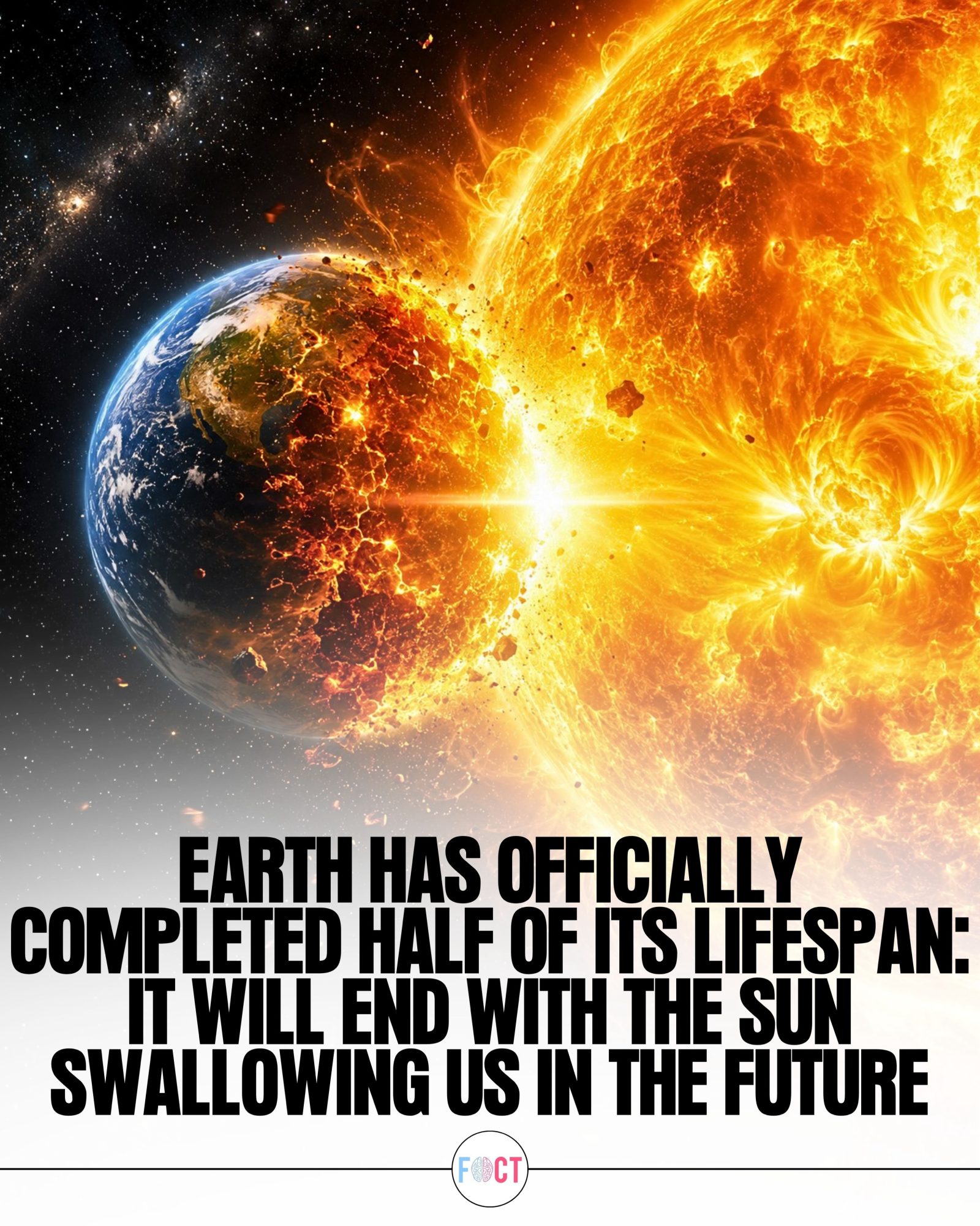
The Sun's Red Giant Phase and Earth's Fate
In around 5 billion years, the Sun will exhaust its hydrogen fuel, marking the beginning of its transformation into a red giant star. This phase will dramatically alter the solar system, with significant implications for Earth and its neighboring planets. Understanding this process offers valuable insights into our planet's future and the life cycle of stars.
Why This Matters
The Sun's red giant phase is a critical event in the solar system's timeline. As the Sun ages, it will undergo significant changes that will affect the habitability of Earth and other planets. This process is not just a distant astronomical event; it has profound implications for the long-term future of our planet and the search for life elsewhere in the universe. By understanding this phase, we can better appreciate the current conditions that support life on Earth and the potential for life on other planets.
The Sun's Evolution and Earth's Fate
The Sun's Current State
The Sun is currently in its main sequence phase, fusing hydrogen into helium in its core. This process releases a vast amount of energy, which supports life on Earth. However, the Sun's hydrogen fuel is not infinite, and it will eventually run out. This marks the beginning of the red giant phase.
The Red Giant Phase
When the Sun's hydrogen fuel is depleted, it will begin to fuse helium into heavier elements. This process will cause the Sun to expand dramatically, growing over 200 times its current size. During this phase, the Sun will become a red giant star, with a much larger and cooler surface. This expansion will have significant consequences for the planets in the solar system, particularly Earth.
The Future of Earth
As the Sun expands, it will engulf Mercury and Venus. Earth will also be at risk, potentially swallowed by the Sun's expanding envelope. However, long before this occurs, the increasing brightness of the Sun will trigger a runaway greenhouse effect on Earth. In about 1 billion years, the Sun is expected to become roughly 10 percent brighter, which could evaporate the oceans and make the planet uninhabitable. This means that life on Earth will disappear much earlier than the planet itself.
The Fate of Other Planets
The red giant phase will also affect other planets in the solar system. Mars, which is currently too cold for liquid water, could potentially enter a habitable zone as the Sun's outer layers expand. However, this period will be short-lived, and the planet will eventually become too hot to support life.
Practical Tips for Understanding Stellar Evolution
Understanding Stellar Lifecycles
Stellar evolution refers to the process by which stars change over time. Stars like the Sun go through several phases, including the main sequence, red giant, and white dwarf phases. Each phase is characterized by different nuclear fusion processes and structural changes. Understanding these phases helps us appreciate the dynamic nature of stars and their impact on surrounding planets.
Observing Stellar Evolution
Astronomers study stellar evolution by observing stars at different stages of their lifecycles. This can be done through telescopes, which allow us to see stars at various distances and ages. By analyzing the light and spectra from these stars, astronomers can determine their composition, temperature, and evolutionary stage. This information helps us predict the future evolution of stars like the Sun.
The Role of Telescopes
Telescopes are essential tools for observing stellar evolution. They allow us to see stars that are too far away or too faint to be seen with the naked eye. Different types of telescopes, such as optical, radio, and X-ray telescopes, provide different kinds of data about stars. This information helps astronomers build a comprehensive understanding of stellar evolution.
Important Takeaways
The Dynamic Nature of Stars
Stars are not static objects; they evolve over time, undergoing significant changes in their structure and energy output. The Sun's transition to a red giant star is a dramatic example of this dynamic nature. Understanding this process helps us appreciate the complex and ever-changing universe we live in.
The Impact on Earth
The Sun's evolution will have profound effects on Earth. The red giant phase will eventually lead to the planet being engulfed by the Sun, but long before that, increasing solar brightness will make Earth uninhabitable. This underscores the importance of understanding stellar evolution for appreciating the conditions that support life on our planet.
The Search for Extraterrestrial Life
Studying the Sun's red giant phase and its impact on Earth provides valuable insights into the search for extraterrestrial life. By understanding the conditions that lead to the habitability of planets, we can better identify potential candidates for life elsewhere in the universe.
Conclusion
The Sun's transition to a red giant star is a pivotal event in the solar system's timeline. This phase will dramatically alter the conditions on Earth and other planets, highlighting the dynamic and ever-changing nature of stars. By studying this process, we gain a deeper understanding of the conditions that support life on our planet and the potential for life elsewhere in the universe.
Questions readers ask
What triggers the Sun's transition to a red giant?
The Sun's transition to a red giant is triggered when it exhausts its core hydrogen fuel. This occurs because the Sun fuses hydrogen into helium in its core to produce energy. When the hydrogen runs out, the core begins to collapse under gravity, and the outer layers expand, marking the start of the red giant phase.
How will Earth's orbit be affected during the Sun's red giant phase?
During the Sun's red giant phase, Earth's orbit will not change significantly. However, the Sun's expanded size will engulf Mercury and Venus, and Earth will likely be engulfed as well. The increased solar radiation and heat will make Earth's surface uninhabitable long before it is actually swallowed by the Sun.
What is the expected duration of the Sun's red giant phase?
The Sun's red giant phase is expected to last for approximately 1 billion years. During this time, the Sun will expand significantly, engulfing the inner planets, and then it will shed its outer layers to form a planetary nebula, leaving behind a white dwarf star.
What will the solar system look like 5 billion years from now?
In 5 billion years, the solar system will be dramatically different. The Sun will have expanded into a red giant, engulfing the inner planets. The outer planets, such as Jupiter and Saturn, will likely remain, but their orbits may be affected by the Sun's expansion and subsequent mass loss.
What happens to the Sun after the red giant phase?
After the red giant phase, the Sun will shed its outer layers, forming a planetary nebula. The remaining core will then become a white dwarf, a dense and hot stellar remnant that will slowly cool down over trillions of years. This marks the Sun's final phase, where it will no longer produce energy through nuclear fusion.
Related deep dives
Similar reads based on topic and creator.


Recent articles
Fresh deep dives from the latest Reels we unpacked.




Comments
Be the first to comment.