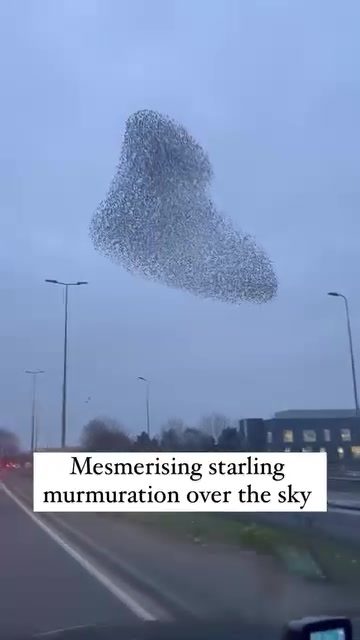
Starling Murmuration
Starling murmurations are awe-inspiring natural phenomena where large flocks of starlings fly in coordinated, mesmerizing patterns. This display, often compared to the fluid movements of water, is a breathtaking sight that can captivate anyone lucky enough to witness it. Murmuration involves thousands of birds moving in unison, creating complex shapes that shift rapidly and fluidly against the sky.
Why This Matters
Understanding and appreciating starling murmurations offers more than just visual delight. It provides insights into the intricate social behaviors and communication methods of these birds. While the exact reasons behind murmuration are not fully understood, scientists believe it serves multiple purposes, including protection from predators and facilitating social bonding and communication.
Main Discussion
The Beauty of Murmuration
The dynamic and mesmerizing shapes created by starlings during murmuration are a testament to the birds' incredible coordination. These flocks can form intricate patterns that change rapidly, creating a stunning visual display. The birds' movements are not just random; they are finely tuned to the activities of their flock mates, resulting in a harmonious and fluid dance in the sky.
The Mechanics of Murmuration
Murmuration is not a simple feat. It involves complex interactions between individual birds. Each starling adjusts its flight based on the movements of its neighbors, creating a self-organized system. This coordination is achieved through a combination of visual cues and responses to the movements of nearby birds, allowing the flock to move as a single unit. Scientists are still studying the precise mechanisms behind this remarkable coordination, but it is clear that each bird plays a crucial role in maintaining the flock's cohesion.
Common Misconceptions
One of the misconceptions about murmuration is that it is a rare occurrence. In reality, murmurations can be observed regularly in certain areas, especially during the winter months. Another misconception is that murmurations are solely for display purposes. While they are visually stunning, their primary functions are likely related to survival and communication.
Practical Tips
If you're fortunate enough to witness a murmuration, here are some tips to enhance your experience:
-
Find the Right Location: Murmurations often occur at dusk, when starlings gather to roost. Look for large open spaces, such as fields, wetlands, or near bodies of water, where starlings are known to congregate.
-
Be Patient and Quiet: Murmurations can last for several minutes, so give yourself plenty of time to observe. Keep noise to a minimum to avoid disturbing the birds.
-
Use Binoculars or a Camera: Binoculars can help you get a closer look at the intricate movements of individual birds. If you're into photography, a camera with a good zoom lens can capture the beauty of the murmuration.
-
Check Local Guides and Apps: There are local guides and bird-watching apps that can help you find the best times and places to see murmurations in your area.
Important Takeaways
-
Murmuration is a Complex Phenomenon: The precise reasons behind murmuration are still a subject of scientific study, but it is clear that it involves intricate social behaviors and communication.
-
Visual Cues and Responses: Each starling in a murmuration adjusts its flight based on the movements of its neighbors, creating a self-organized system that is both coordinated and fluid.
-
Best Viewing Times: Murmurations are often best seen at dusk, especially during the winter months, when starlings gather to roost.
Conclusion
Starling murmurations are a natural marvel, showcasing the beauty and complexity of avian behavior. Whether you are a bird enthusiast or simply someone who appreciates the wonders of nature, witnessing a murmuration is an experience that will leave you in awe. Understanding the mechanics and purposes behind this phenomenon can deepen your appreciation for these remarkable birds and their extraordinary abilities.
Questions readers ask
What triggers a starling murmuration?
Starling murmurations are typically triggered by the presence of predators, such as birds of prey. When a predator is spotted, starlings in the flock react by performing intricate flight movements. This collective response is believed to confuse the predator, making it difficult for them to target any single individual starling.
How do starlings coordinate their movements during a murmuration?
Starlings achieve coordinated movements by paying close attention to their nearest neighbors. Each bird adjusts its flight path based on the movements of the six to seven birds closest to it, allowing the group to create complex, fluid patterns. This local interaction enables the flock to respond quickly and harmoniously to changes in direction or speed.
What are some common patterns seen in starling murmurations?
Starling murmurations can take on a variety of shapes, including waves, spirals, and abrupt direction changes. These patterns emerge spontaneously as the birds react to one another and to external stimuli, such as predators or changes in wind. The dynamic and unpredictable nature of these formations is part of what makes them so captivating to observe.
Can starling murmurations be predicted?
Starling murmurations are challenging to predict due to their spontaneous nature. While certain conditions, such as the presence of predators or specific environmental factors, can increase the likelihood of a murmuration, there is no sure way to forecast when or where they will occur. However, starlings are more likely to exhibit these behaviors in the late afternoon, especially during winter and early spring.
Where can I find videos of starling murmurations?
There are numerous videos of starling murmurations available online, showcasing the mesmerizing aerial displays of these birds. You can find high-quality footage on platforms like YouTube, Vimeo, and other bird-watching websites. Some popular videos feature large flocks creating intricate, swirling patterns against dramatic landscapes, providing a visual feast for nature enthusiasts.
What is the largest recorded starling murmuration?
The largest recorded starling murmuration occurred in the United Kingdom in 2012, with an estimated 40,000 birds participating. This massive gathering took place at the Gannet Colony of Bempton, and was part of a 500,000 bird flock movement that was observed from the nearby village of Bridlington.
Related deep dives
Similar reads based on topic and creator.




Recent articles
Fresh deep dives from the latest Reels we unpacked.




Comments
Be the first to comment.