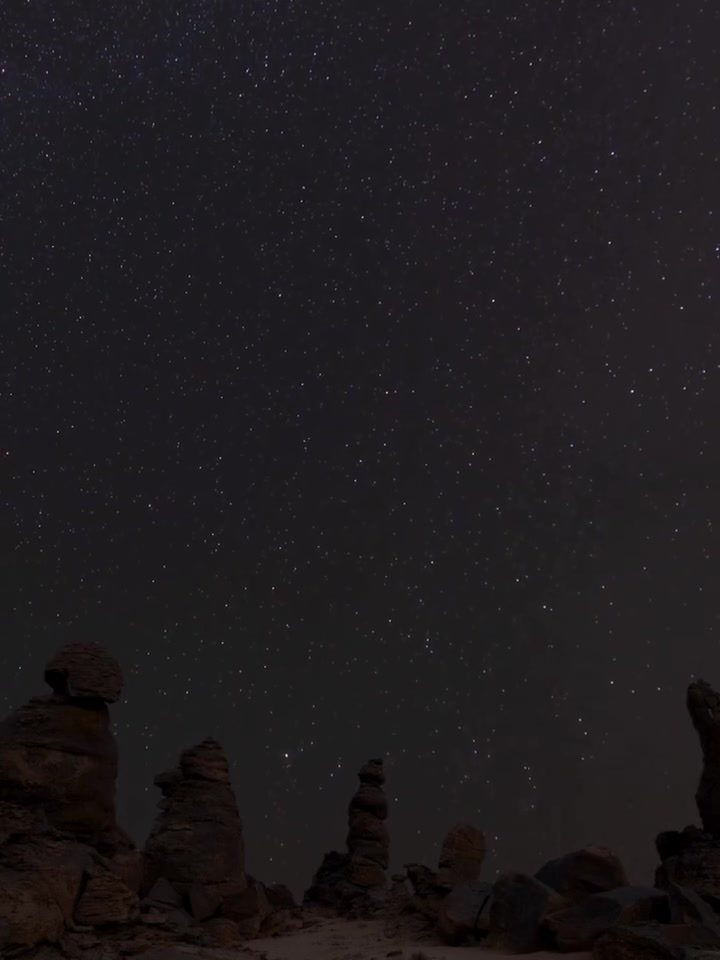
Nightscape Timelapse in AlUla, Saudi Arabia
The desert sky over Gharameel, AlUla, Saudi Arabia, offers a breathtaking display of the night sky. This remote location, far from city lights, provides one of the clearest views of the Milky Way in the world.
Context / Why this matters
In an era where light pollution obscures the night sky in many parts of the world, finding a place with minimal artificial light is a rare treat for astronomy enthusiasts and nature lovers alike. AlUla's designation as the first Dark Sky Park in the Middle East underscores its significance for both conservation and tourism.
The Magic of Gharameel
Gharameel, located in the AlUla region of Saudi Arabia, is a place where the desert meets the sky in a mesmerizing dance of cosmic proportions. The area's unique geology, with its striking rock formations, provides a dramatic foreground for the celestial spectacle above. These formations, silhouetted against the dark sky, create a stunning contrast that enhances the overall visual experience.
The Milky Way and Dark Sky Parks
The Milky Way, our home galaxy, is a swirling mass of stars, gas, and dust that stretches across the night sky. In areas with minimal light pollution, it appears with extraordinary clarity, revealing intricate details and structures that are otherwise invisible to the naked eye. Dark Sky Parks, like the one in AlUla, are designated areas that protect the night sky from artificial light pollution, preserving the natural darkness and providing optimal conditions for stargazing and astrophotography.
Main discussion
Timelapse Photography: Capturing the Magic
Timelapse photography is a technique that involves taking a sequence of photos at regular intervals and then compiling them into a video. This method allows photographers to capture the movement of stars, clouds, and other celestial phenomena over an extended period. In the case of the desert sky over Gharameel, timelapse photography brings to life the graceful trails created by the stars as they move across the night sky.
Long Exposure and Star Trails
Long exposure is a critical technique in nightscape photography. By keeping the camera shutter open for an extended period, photographers can capture the movement of stars, which appear as streaks of light in the final image. This effect, known as star trails, creates a sense of motion and dynamism in an otherwise static scene. In the timelapse video, these star trails form intricate patterns that evoke the sense of being part of the larger celestial dance.
Practical tips
How to Capture Star Trails
If you're keen on capturing star trails like those seen in the timelapse, there are a few key tips to keep in mind:
- Choose the Right Location: Find a dark sky location far from city lights. This ensures minimal light pollution and optimal viewing conditions.
- Use a Stable Camera: A sturdy tripod is essential to keep your camera steady during long exposures.
- Set Up Your Gear: Use a wide-angle lens for capturing the expansive night sky and set your camera to manual mode.
- Adjust Camera Settings: Start with a high ISO (like 1600 or 3200), a wide aperture (f/2.8 or lower), and a long exposure time (30 seconds or more). Adjust these settings based on the ambient light and star brightness.
Timelapse Photography Essentials
For timelapse photography, follow these steps:
- Plan Your Shot: Choose a composition with a compelling foreground, like the rock formations in Gharameel.
- Set Intervals and Duration: Depending on the movement you want to capture, set the interval between shots (e.g., 30 seconds) and the total duration of your shoot.
- Consistency Is Key: Ensure your camera remains in the same position and settings throughout the shoot.
- Use Intervalometers: These devices automate the shooting process, making it easier to capture consistent intervals and timelapse sequences.
Important takeaways
Night sky photography in places like Gharameel, AlUla, offers a unique opportunity to capture the beauty of the celestial world. Whether you're a professional photographer or an amateur enthusiast, the stunning views and clear skies make it an ideal location for both timelapse and long-exposure photography. The timelapse not only captures the movement of stars but also highlights the dramatic landscape, providing a comprehensive visual experience of the night sky over AlUla.
Conclusion
The night sky over Gharameel, AlUla, Saudi Arabia, is a testament to the beauty and wonder of the natural world. For those who appreciate the magic of the night sky, AlUla's Dark Sky Park offers an unparalleled experience. By combining timelapse photography with long exposure techniques, you can capture the mesmerizing movement of stars against the backdrop of the desert, creating a timeless and breathtaking image.
Questions readers ask
What makes AlUla an ideal location for stargazing?
AlUla is an ideal location for stargazing due to its remote desert landscape, which is far from city lights, allowing for a dark, unpolluted night sky. This absence of light pollution grants stargazers a clear view of celestial wonders, including the Milky Way.
What is the significance of AlUla being designated as the first Dark Sky Park in the Middle East?
AlUla's designation as the first Dark Sky Park in the Middle East signifies its commitment to preserving the natural night sky and promoting astronomy. The designation, from the International Dark Sky Association, also means it meets strict criteria for starry sky preservation, making it an exceptional site for stargazing. It also facilitates tourism related to astrophotography.
What can visitors expect to see at the Gharameel landscape?
Visitors to Gharameel can expect a mesmerizing experience with the desert landscape serving as a stunning backdrop to the night sky. The unique topography of the area enhances the view of the Milky Way and other celestial bodies, providing an unforgettable desert starry sky experience.
How does the timelapse feature enhance the stargazing experience in AlUla?
The timelapse feature in the video showcasing AlUla's night sky captures the dynamic movement of stars and celestial bodies, providing a unique perspective on the cosmos. This technique allows viewers to see the night sky come to life, highlighting the mesmerizing dance of the stars over the desert landscape.
What is the best time to visit AlUla for stargazing?
The best time to visit AlUla for stargazing is during the summer months or fall when the weather is clear and dry. The desert nights are cool, and the sky is particularly dark, providing optimal conditions for viewing the Milky Way.
What equipment is needed for astrophotography in AlUla?
For astrophotography in AlUla, you'll need a camera with manual settings, a sturdy tripod, and a wide-angle lens. A remote shutter release or intervalometer can also be helpful for capturing timelapse sequences. Additionally, a star chart or astronomy app can assist in identifying celestial objects.
Are there guided stargazing tours available in AlUla?
Yes, there are guided stargazing tours available in AlUla. Professional guides can offer insights into the night sky, helping you identify various constellations and celestial bodies. Some tours also provide equipment for a more immersive experience. These tours are a great way to learn about the night sky and take advantage of the exceptional stargazing conditions in the region.
Related deep dives
Similar reads based on topic and creator.




Recent articles
Fresh deep dives from the latest Reels we unpacked.



Comments
Be the first to comment.