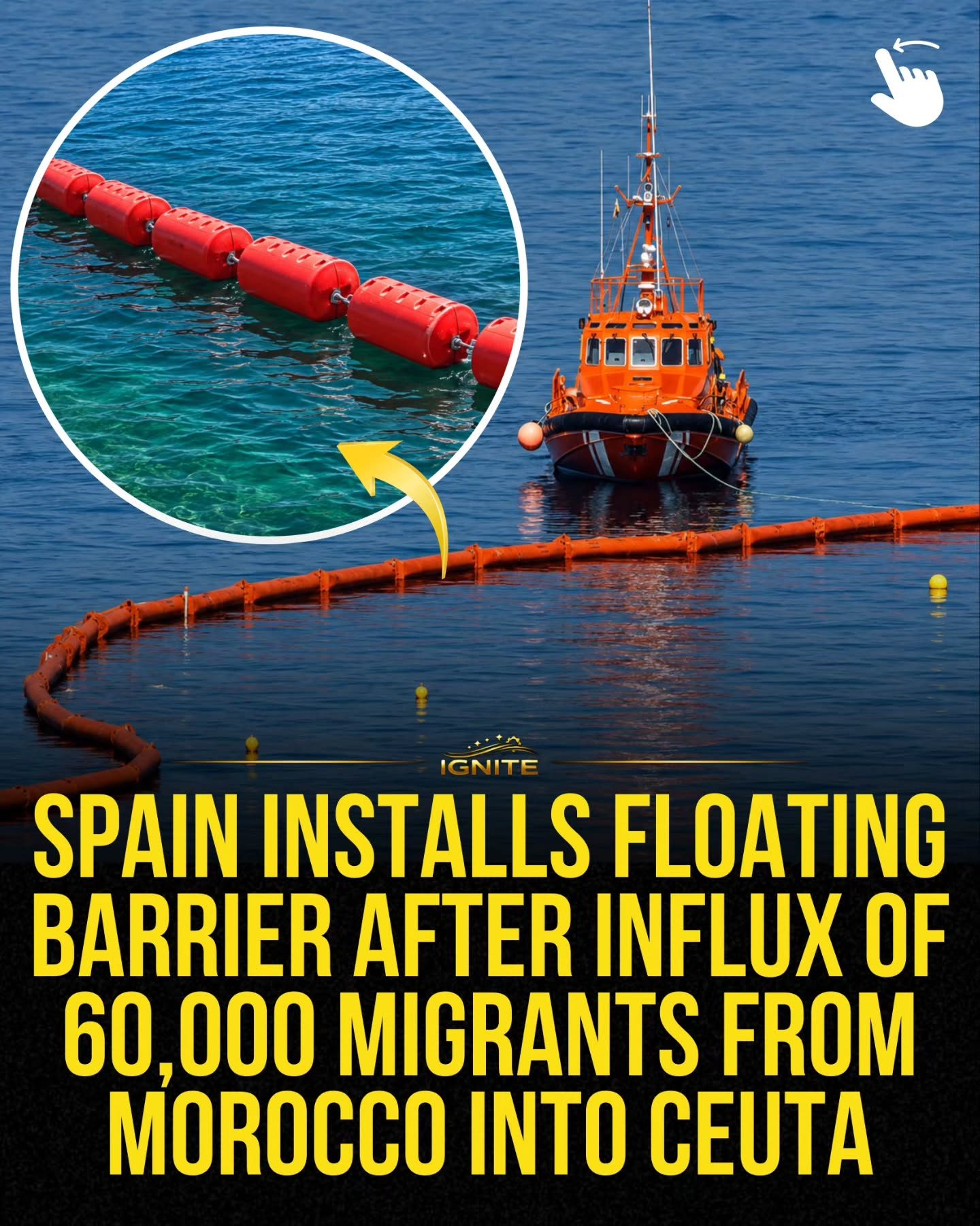
Spain Installs Floating Barrier in Response to Migration Influx
Spain has installed a large floating barrier in the Mediterranean Sea near Ceuta, a Spanish autonomous city located on the northern tip of Morocco. This installation comes as a response to a significant influx of migrants attempting to cross from Morocco into Ceuta, a growing concern for Spanish authorities.
Context / Why This Matters
Ceuta, along with Melilla, is one of Spain's two enclaves in North Africa. The city has long been a focal point for migrants seeking to enter Europe, often through treacherous journeys. The Mediterranean Sea bordering Ceuta is particularly hazardous, with many migrants risking their lives to reach Spanish shores.
The installation of this floating barrier highlights the ongoing challenges Spain faces in managing migration, particularly at its African borders. It also underscores the broader European migration crisis, where countries are grappling with how to handle the influx of migrants while balancing humanitarian concerns with border security.
Main Discussion
The Floating Barrier: A Deterrent or a Solution?
The floating barrier, installed in the Mediterranean Sea, serves as a physical deterrent aimed at preventing unauthorized crossings from Morocco. This measure is part of a broader strategy to manage the influx of migrants, which has seen approximately 60,000 individuals attempting to cross into Ceuta. The barrier acts as a barrier to entry, making it more difficult for migrants to reach Spanish territory.
The Geopolitical Context
The geopolitical context of Ceuta and Melilla is complex, as these enclaves are Spanish territories surrounded by Moroccan land. This unique situation complicates the management of borders and migration, as Spain must coordinate with Morocco to enforce security measures. The floating barrier is a visible manifestation of this geopolitical tension, reflecting the delicate balance between national security and international relations.
Humanitarian Concerns
While the barrier is designed to deter unauthorized crossings, it also raises humanitarian concerns. The Mediterranean Sea is known for its treacherous waters, and attempts to cross can be life-threatening, especially for those using unseaworthy vessels. The installation of the barrier could potentially force migrants into more dangerous and hidden routes, increasing the risk of fatalities.
Technological and Logistical Challenges
Installing and maintaining a large floating barrier in the Mediterranean Sea presents significant technological and logistical challenges. The barrier must withstand the sea's rough conditions, including strong currents and waves. Additionally, the ongoing maintenance and surveillance of the barrier require considerable resources and coordination between Spanish authorities and local law enforcement.
Public and Political Response
The installation of the floating barrier has sparked a range of responses from both the public and political spheres. While some advocate for stronger border controls, others argue for more comprehensive and compassionate approaches to migration. The barrier serves as a focal point for debates on migration policy, border security, and the ethical implications of deterrent measures.
Practical Tips
For those interested in understanding the broader context of migration and border control, consider the following practical tips:
- Stay Informed: Regularly follow updates from reliable news sources on the situation in Ceuta and Melilla. Understanding the evolving policies and challenges can provide a clearer picture of the region's current state.
- Engage in Dialogue: Participate in discussions about migration and border control. Engaging with diverse viewpoints can help develop a more nuanced understanding of the issues at hand.
- Support Organizations: Consider supporting organizations that work on migration and humanitarian issues. Contributions can help alleviate some of the challenges migrants face during their journeys.
Important Takeaways
- The installation of the floating barrier represents a significant measure to control migration in Ceuta.
- Ceuta's unique geopolitical position complicates border management and relations with Morocco.
- Humanitarian concerns remain a critical aspect of the migration debate.
- The barrier's installation reflects broader European efforts to manage migration while balancing security and ethical considerations.
Conclusion
Spain's installation of a floating barrier in the Mediterranean highlights the complex challenges of managing migration in a unique geopolitical context. While the barrier serves as a physical deterrent to unauthorized crossings, it also raises important questions about border security, humanitarian concerns, and the broader migration crisis. Understanding these issues is crucial for anyone interested in the evolving landscape of European migration policy.
Questions readers ask
What is the purpose of the floating barrier installed by Spain near Ceuta?
The floating barrier serves as a deterrent to migrants attempting to cross from Morocco into Ceuta, a Spanish autonomous city in North Africa. It aims to manage the influx of migrants and bolster border security amid the broader European migration crisis.
Why was Ceuta chosen as a location for the floating barrier?
Ceuta is one of Spain's two enclaves in North Africa and has historically been a hotspot for migrants trying to enter Europe. Its proximity to Morocco makes it a strategic point for managing migration flows across the Mediterranean Sea.
What challenges is Spain facing with migration along its African borders?
Spain is contending with a significant influx of migrants, many of whom risk their lives crossing the hazardous Mediterranean Sea. The migration crisis involves balancing humanitarian concerns with the need for stringent border security measures.
How does the floating barrier affect migration from Morocco to Spain?
The barrier is designed to physically impede migrants attempting to cross from Morocco, making the journey more difficult and potentially reducing the number of successful crossings. It is part of Spain's broader strategy to manage and deter migration in the region.
What role do migrant boat barriers play in Spain's migration strategy?
Migrant boat barriers, like the one near Ceuta, are a key component of Spain's strategy to control and manage migration along its borders. By installing these barriers, Spain aims to reduce the number of migrants attempting dangerous sea crossings and to strengthen overall border security.
How does Spain handle migrants who are detained after attempting to cross the barrier?
Migrants who are detained after attempting to cross the barrier are typically processed through Spain's migrant detention system. This includes identification, assessment of their asylum claims, and potential deportation or integration processes, depending on their individual circumstances and the legal framework.
What are the potential implications of the floating barrier on migrant journeys and border security?
While the barrier may reduce the number of successful crossings, it could also drive migrants to seek alternative, potentially more dangerous routes. Additionally, it raises questions about the balance between effective border control and the humane treatment of migrants, as well as Spain's relationship with Morocco in managing shared border challenges.
Recent articles
Fresh deep dives from the latest Reels we unpacked.




Comments
Be the first to comment.