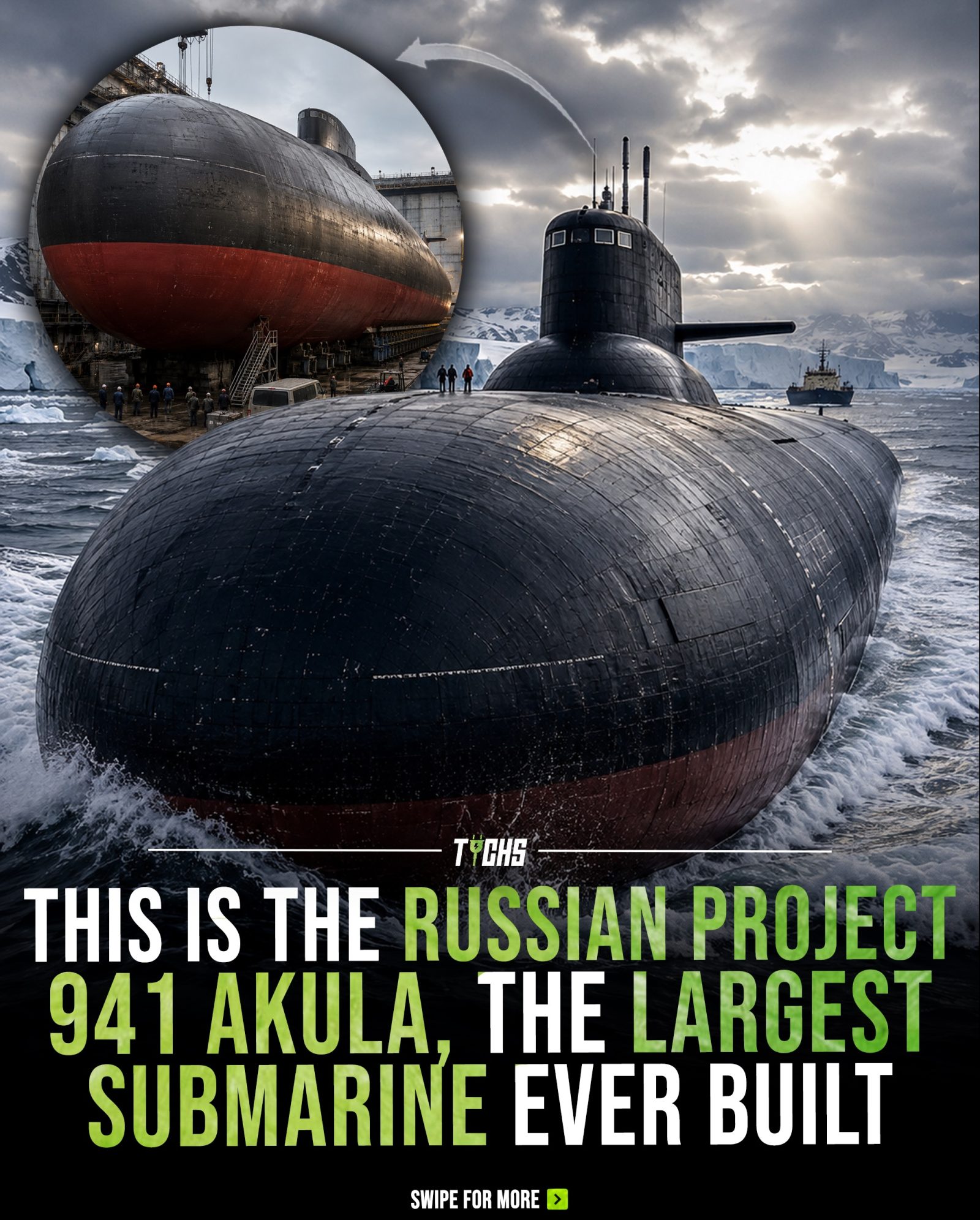
The Russian Akula Submarine: A Monument to Cold War Engineering
The Soviet Union's Project 941 Akula submarine, also known as the Typhoon class, stands as a testament to the engineering marvels of the Cold War era. Measuring an astonishing 175 meters in length and displacing nearly 48,000 tons when submerged, the Akula is not just a submarine; it is a floating underwater fortress. Designed to carry 20 nuclear ballistic missiles, this behemoth could remain submerged for over 120 days, making it one of the most formidable strategic submarines ever constructed. Even decades after its introduction, the Akula remains the largest submarine ever built, a stark reminder of the global race for nuclear deterrence during the Cold War.
Why This Matters
The Project 941 Akula submarine is more than just a historical artifact; it is a symbol of the technological and strategic arms race that defined the latter half of the 20th century. Understanding the Akula provides insights into the geopolitical tensions of the Cold War, the advancements in military technology, and the engineering feats that pushed the boundaries of what was possible underwater.
The Engineering Marvel of the Akula
Size and Dimensions
The Akula's sheer size is one of its most striking features. At 175 meters in length, it is longer than many aircraft carriers and significantly larger than any other submarine ever built. Its massive size allows it to carry a substantial payload of 20 nuclear ballistic missiles, each capable of striking targets thousands of miles away. The submarine's displacement of nearly 48,000 tons when submerged adds to its formidable presence, making it a true behemoth of the seas.
Mission and Capabilities
The Akula was designed with a specific mission in mind: to act as a strategic deterrent during the Cold War. Its ability to remain submerged for extended periods—over 120 days—made it nearly undetectable, reducing the risk of interception or detection. This capability was crucial for ensuring that the Soviet Union maintained a credible nuclear deterrent, capable of launching a retaliatory strike even if surface facilities were compromised.
Design and Layout
The Akula's design is a testament to Soviet engineering at its peak. The submarine features a unique double-hull structure, which not only enhances its buoyancy but also provides an additional layer of protection against collisions and underwater threats. The submarine's layout is optimized for long-term operations, with ample space for crew accommodations, missile systems, and life support systems.
Propulsion and Stealth
Powered by a nuclear reactor, the Akula could travel vast distances without the need for refueling, making it ideal for long-range patrols. The reactor's compact size allowed for a more streamlined design, enhancing the submarine's maneuverability and stealth capabilities. The Akula's powerful propulsion system, combined with advanced noise-reduction technologies, made it one of the quietest submarines of its time, further adding to its stealth capabilities.
The Legacy of the Akula
Strategic Significance
The Akula's strategic significance cannot be overstated. Its mere existence served as a powerful deterrent, forcing adversaries to take it into account in their strategic planning. The submarine's ability to remain undetected for extended periods made it a critical asset in maintaining a balance of power during the Cold War.
Technological Advancements
The Akula's development spurred numerous technological advancements in submarine design and engineering. Innovations in nuclear propulsion, stealth technologies, and underwater navigation systems paved the way for future submarine designs, both in the Soviet Union and around the world. The experience gained from building and operating the Akula has influenced modern submarine design, contributing to the development of more advanced and capable submarines.
Historical Context
The Akula submarine is a product of the Cold War, a period marked by intense geopolitical tensions and a relentless pursuit of technological superiority. The Soviet Union's investment in the Akula reflected its commitment to maintaining a strategic advantage in the naval arms race. The submarine's development and deployment were part of a larger strategy to ensure Soviet dominance in the underwater domain, a critical theater of operations during the Cold War.
Modern Relevance
Even in the post-Cold War era, the Akula remains a subject of interest for military strategists and engineers. The lessons learned from its development and operation continue to inform modern submarine design and operational strategies. The Akula's legacy serves as a reminder of the importance of continuous innovation and adaptation in the face of evolving threats and challenges.
Takeaways
The Project 941 Akula submarine is a monument to Cold War engineering, embodying the technological and strategic advancements of the era. Its sheer size, extended submerged capabilities, and strategic significance have left a lasting impact on naval warfare and submarine design. Understanding the Akula provides valuable insights into the geopolitical dynamics of the Cold War and the enduring importance of technological innovation in maintaining military superiority.
Conclusion
The Akula submarine stands as a testament to the engineering prowess and strategic foresight of the Soviet Union during the Cold War. Its unparalleled size, stealth capabilities, and strategic significance continue to influence modern submarine design and operational strategies. The Akula’s legacy serves as a reminder of the relentless pursuit of technological superiority and the importance of continuous innovation in the face of evolving threats.
Questions readers ask
What was the primary purpose of the Project 941 Akula submarine during the Cold War?
The primary purpose of the Project 941 Akula submarine, or Typhoon class, was to serve as a strategic deterrent. Its ability to carry 20 nuclear ballistic missiles and remain submerged for extended periods made it a key component of the Soviet Union's nuclear triad, ensuring a constant undersea presence and enhancing its nuclear capabilities.
How does the size of the Project 941 Akula compare to other submarines?
The Project 941 Akula is the largest submarine ever built, measuring 175 meters in length and displacing nearly 48,000 tons when submerged. This size is significantly larger than other submarines, both during the Cold War and in modern times.
What was the significance of the Project 941 Akula's ability to remain submerged for over 120 days?
The ability of the Project 941 Akula to remain submerged for over 120 days was crucial for its strategic role. This capability allowed the submarine to evade detection and launch nuclear strikes from a hidden underwater position, making it a formidable part of the Soviet Union's nuclear deterrent strategy.
What kind of technology did the Soviet Union utilize to achieve such a massive submarine design?
The Soviet Union employed advanced engineering and substantial technological resources to build the Project 941 Akula, including powerful reactors and quiet propulsion systems. The submarine's massive size was a result of combining cutting edge submarine engineering with the need to house a large number of nuclear missiles and support systems.
How many Project 941 Akula submarines were built, and what happened to them after the Cold War?
Six Project 941 Akula submarines were built during the Cold War, with construction beginning in the late 1970s. After the Cold War, two were decommissioned and dismantled, while the remaining four were modernized and are currently still in service with the Russian Navy.
What challenges did the Soviet Union face while operating the Project 941 Akula submarines?
Operating the Project 941 Akula submarines presented several challenges, including maintenance of their size and complexity, as well as the need for extensive training for crews. Additionally, the submarines' large size made them more difficult to maneuver and conceal, requiring strategic deployment plans.
What role did the Project 941 Akula play in the broader context of the Cold War?
The Project 941 Akula played a significant role in the broader context of the Cold War by embodying the global arms race and nuclear deterrence strategies. Its development and deployment served as a powerful symbol of the Soviet Union's military capabilities and commitment to maintaining a strong nuclear deterrent.
Recent articles
Fresh deep dives from the latest Reels we unpacked.




Comments
Be the first to comment.