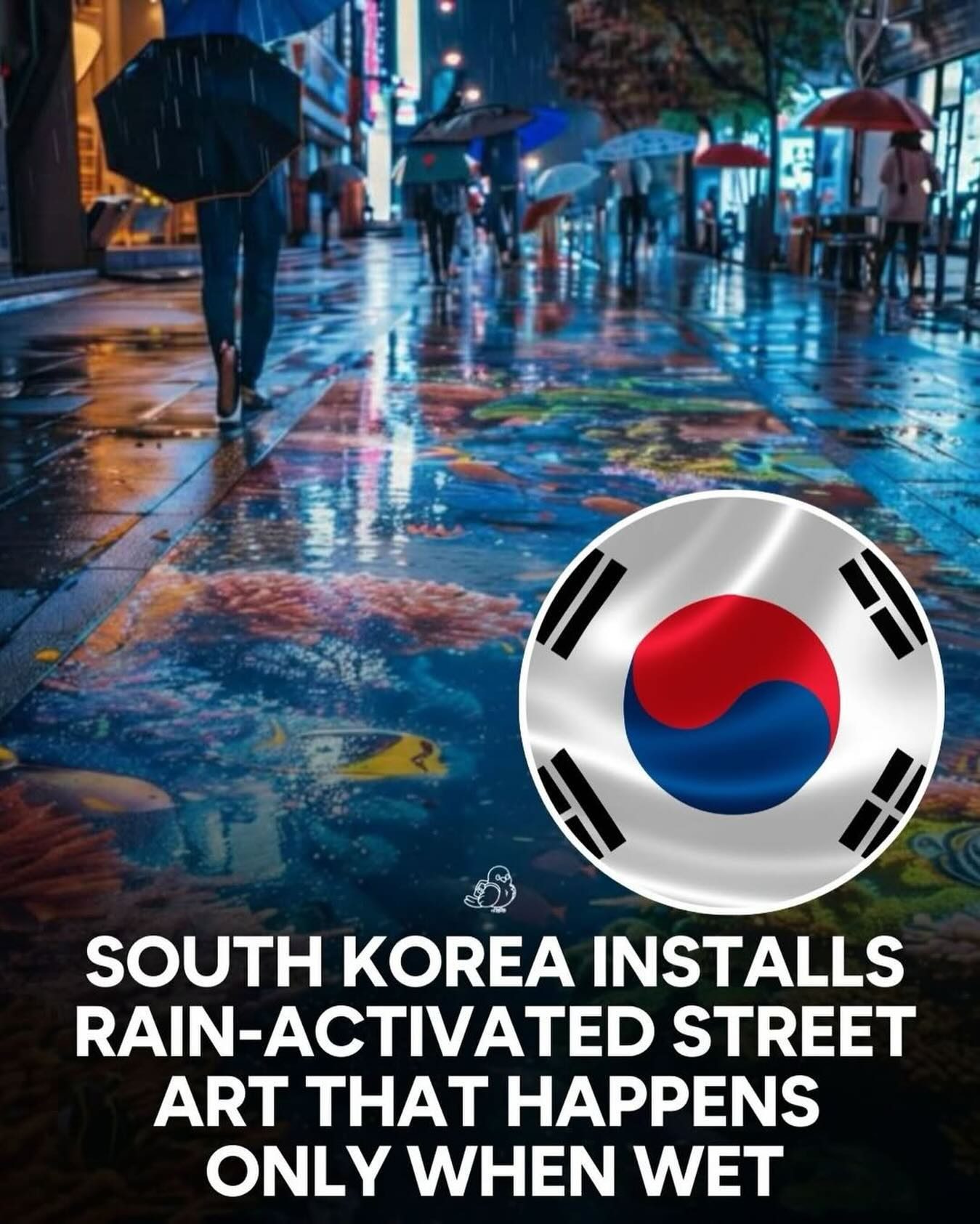
Rain-Activated Street Art
When the rain starts to fall on the streets of South Korea, something remarkable happens. A vibrant street art installation, part of Project Monsoon, transforms the urban landscape. These artistic murals emerge only during wet weather using water-reactive paint and are inspired by marine life and Korean cultural imagery. The result is a dynamic and emotive public art experience that brings color and vibrancy to otherwise gloomy monsoon days.
Context/Why This Matters
Rain-activated street art is more than just a visually stunning addition to the urban environment. It represents a unique intersection of art, science, and nature. This form of public art can enhance urban spaces by turning them into dynamic canvases. It invites people to engage with their surroundings in a new way, making even mundane activities like walking in the rain a source of surprise and delight. By incorporating the elements, artists create a living, breathing piece of art that evolves with the weather.
Main Discussion
The Science Behind Rain-Activated Art
To create these remarkable rain-activated murals, artists use a special water-reactive paint. This paint remains invisible under dry conditions, only revealing its true colors when it comes into contact with water. The chemical properties of the paint allow it to react to moisture, making it a perfect medium for rain-activated art.
The way these murals are created involves precise planning and execution. Since the paint only becomes visible when wet, artists must carefully design their pieces, ensuring that the layout and colors will have the desired impact once the rain begins to fall. This requires a deep understanding of both the artistic and scientific aspects of the project.
The Concept of Project Monsoon
Project Monsoon is a creative initiative that aims to bring art and weather together in innovative ways. Inspired by the seasonal monsoons, South Korean artists designed murals that are specifically activated by rain. These murals are not only aesthetically pleasing but also serve as a symbol of resilience and transformation, especially relevant in a country where monsoon rains are a significant part of the landscape.
The project is particularly meaningful in urban environments, where nature is often overlooked. By integrating public art with natural phenomena, Project Monsoon encourages people to appreciate the beauty in everyday occurrences, like a simple rain shower. The artworks often depict themes of marine life and Korean cultural imagery, adding layers of meaning and cultural significance.
Unique Installation: The South Korean Flag
One of the standout installations of Project Monsoon is a large-scale depiction of the South Korean flag. The flag, which is a prominent symbol of the country, becomes visible only when it rains. This installation is not just a piece of public art; it is a statement about national pride and the resilience of the Korean people. The flag's vibrant colors and intricate design are a testament to the country's rich cultural heritage and artistic talent.
Practical Tips
If you're an aspiring artist interested in creating your own rain-activated street art, here are some tips to get you started:
Choose the Right Materials
Start by sourcing water-reactive paint. This paint is specially formulated to react to moisture, making it ideal for rain-activated art. There are various brands and types available, so choose one that best fits your project's needs.
Plan Your Design
Since the artwork will be activated by rain, you need to plan your design carefully. Consider how the piece will look once it is wet and ensure that the design remains cohesive and impactful. Sketch out your design on paper first to get a sense of how it will translate onto a larger scale.
Select the Right Location
Choose a location where the art will be visible to many people and where it will receive enough rainfall to be activated regularly. Public spaces, parks, and busy streets are ideal locations for street art. Ensure that you have permission to install the artwork in the chosen location.
Consider the Environment
Be mindful of the environment where you install the artwork. It should complement the surroundings and not be overly disruptive. The artwork should enhance the space, not detract from it.
Important Takeaways
Rain-activated street art is a dynamic and innovative form of public art that brings color and life to urban spaces. The use of water-reactive paint and the integration of natural elements like rain create a unique and engaging experience for viewers. Projects like Monsoon in South Korea demonstrate the potential of this art form to transform urban landscapes and engage communities in new ways.
Conclusion
By leveraging the natural occurrences of rain to activate vibrant and evocative murals, rain-activated street art represents a unique fusion of art and nature. This innovative form of public art not only enhances urban environments but also encourages viewers to see the beauty in everyday events. Whether you're an artist looking to explore new mediums or a viewer appreciating the beauty of rain-activated art, this trend is a testament to the creativity and ingenuity of modern artists.
Questions readers ask
How does rain-activated street art work in South Korea?
Rain-activated street art in South Korea uses specialized water-reactive paint. When it rains, the paint absorbs the water and changes color, revealing vibrant murals inspired by marine life and Korean cultural themes.
When can I see the rain-activated street art in South Korea?
These artworks are designed to be visible only during the monsoon season, which typically occurs from June to September in South Korea. During this period, rainy days will bring these artworks to life and remain visible for as long as it continues to rain.
What is the purpose of the rain-activated street art in South Korea?
The purpose of this artwork is to bring color and vibrancy to urban landscapes during the rainy monsoon season. South Korea’s rain-activated street art transforms ordinary streets into dynamic and emotive canvases, enhancing public spaces, and fosters a deeper connection between art, science, and nature.
What are the main themes of the rain-activated street art in South Korea?
The rain-activated street art in South Korea is primarily inspired by marine life and traditional Korean cultural imagery. These themes not only enhance the visual appeal of the art but also create a sense of cultural identity and connection to nature.
Where can I find rain-activated street art in South Korea?
The rain-activated street art is part of Project Monsoon and can be found in various urban areas across South Korea. These installations are specifically designed to enhance public spaces in cities, making them accessible to a wide audience during the monsoon season.
How long does the rain-activated street art last?
The duration of the rain-activated street art depends on the duration of the rain. Once the rain stops, the artworks will gradually fade and become less visible. However, they will reappear as soon as the rain returns, making each monsoon season a new opportunity to experience the art.
What is the significance of rain-activated street art in South Korea?
Rain-activated street art in South Korea holds cultural and artistic significance by turning rainy days into a celebration of art and nature. It encourages people to engage with their environment in a new way, fostering a sense of community and appreciation for the intersection of art and natural phenomena.
Related deep dives
Similar reads based on topic and creator.




Recent articles
Fresh deep dives from the latest Reels we unpacked.



Comments
Be the first to comment.