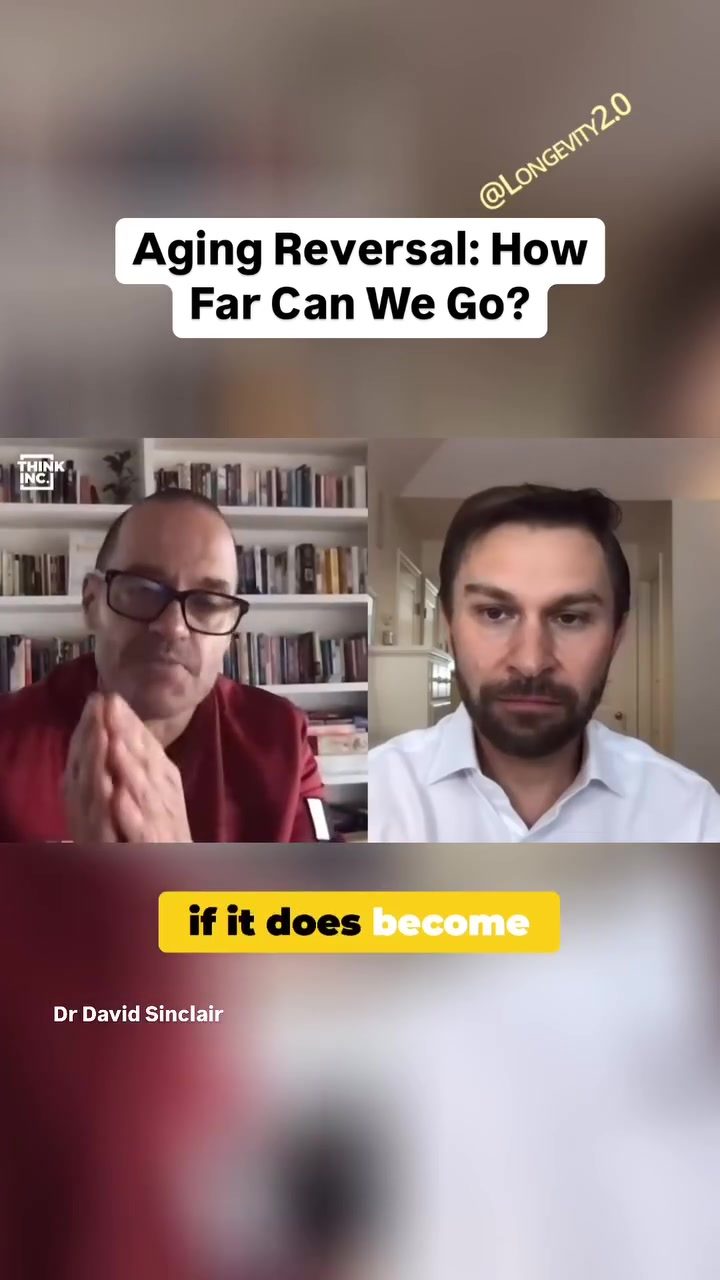
Reversing Biological Aging: Exploring the Boundaries and Benefits
Reversing biological aging is a subject that has captivated scientists and enthusiasts alike. Dr. David Sinclair, a prominent figure in this field, delves into the fascinating possibilities and challenges of reversing aging. Unlike the Nobel Prize-winning Yamanaka factors, which reset cells completely, Sinclair's method offers a more controlled approach. This approach carefully rolls cells back to a youthful state and then stops them before they become too young.
The potential of reversing biological aging raises numerous questions. How far can we push someone’s biological age back? What are the risks and benefits of this technology? Dr. Sinclair's method provides essential insights into these critical questions.
Why This Matters
The quest to reverse aging is not just about extending lifespan; it's about enhancing the quality of life. As we age, our cells undergo changes that can lead to various diseases and health issues. Reversing these changes could potentially delay or even prevent age-related conditions such as cancer, heart disease, and neurodegenerative disorders. Understanding the boundaries and benefits of reversing aging is crucial for unlocking the full potential of this groundbreaking technology.
The Science Behind Aging Reversal
Understanding Cellular Reprogramming
One of the key technologies in aging reversal is cellular reprogramming. This process involves turning back the clock on cells, making them younger and more functional. However, not all methods of cellular reprogramming are created equal. The Yamanaka factors, which won the Nobel Prize, reset cells completely, effectively erasing their memory and making them behave like embryonic stem cells. While this method is powerful, it comes with significant risks. It's like brushing your teeth and ripping them out—it's that strong.
Dr. Sinclair's method, on the other hand, takes a more nuanced approach. It carefully rolls cells back to a youthful state and then stops them before they become too young. This controlled process reduces the risk of issues like cancer, which can occur if cells revert to a state that is too young.
The Natural Barrier to Rejuvenation
One of the fascinating aspects of Dr. Sinclair's research is the concept of a natural barrier to rejuvenation. There seems to be a limit to how far cells can be turned back without causing harm. This barrier ensures that cells do not revert to a state that is too young, which could lead to cancer and other health issues. Dr. Sinclair’s research has shown that this natural barrier effectively 'stops' the cells from going too far back. This discovery is crucial for developing safe and effective aging reversal technologies.
The Longevity20 Approach
Longevity20, the organization behind Dr. Sinclair's research, has engineered this controlled rejuvenation process for both mice and humans. The process works by activating the reset for just 3-4 weeks. This short duration is enough to reverse the aging process significantly while minimizing the risks associated with complete cellular reprogramming.
The Role of NMN
NMN, or nicotinamide mononucleotide, plays a crucial role in this process. NMN is a precursor to NAD+, a molecule essential for cellular energy and metabolism. By supplementing NMN, researchers have found that they can enhance the effects of cellular reprogramming, making the process more effective and safer.
Main Discussion
How Far Can We Go?
The question of how far we can push biological aging back is complex. Dr. Sinclair's research suggests that there is a natural limit to how young cells can become before they start to cause harm. This limit is essential for developing safe aging reversal technologies. The controlled approach taken by Longevity20 ensures that cells are rejuvenated to a youthful state without becoming too young, thereby reducing the risk of health issues.
Potential Risks and Benefits
The potential benefits of reversing biological aging are enormous. Enhanced cellular function, delayed onset of age-related diseases, and improved quality of life are just a few of the possible benefits. However, there are also risks to consider. Complete cellular reprogramming, as seen with the Yamanaka factors, can lead to cancer and other health issues. Dr. Sinclair's approach minimizes these risks by carefully controlling the rejuvenation process.
Applications in Humans
Longevity20 has successfully tested this controlled rejuvenation process in mice and is now applying it to humans. The short duration of the reset process (3-4 weeks) makes it practical and minimizes the risks. The organization's research has shown promising results, suggesting that this technology could be a breakthrough in aging reversal.
Practical Tips
Staying Informed
Staying informed about the latest research and developments in aging reversal is crucial. Following reputable sources and experts in the field, such as Dr. David Sinclair and Longevity20, can provide valuable insights into the latest advancements and their potential implications.
Considering Supplementation
Supplementing with NMN and other precursors to NAD+ can enhance cellular energy and metabolism. While more research is needed, early findings suggest that NMN supplementation may have potential benefits for cellular health and longevity.
Important Takeaways
Reversing biological aging is a complex and multifaceted field. Dr. David Sinclair's research, supported by Longevity20, offers a controlled and safe approach to cellular reprogramming. The natural barrier to rejuvenation and the short duration of the reset process are critical for minimizing risks. The potential benefits of this technology are enormous, but it is essential to stay informed and consider the risks and benefits carefully.
Conclusion
The quest to reverse biological aging is an exciting and rapidly evolving field. Dr. David Sinclair's research at Longevity20 offers a promising approach to controlled cellular reprogramming. This approach minimizes the risks associated with complete cellular reprogramming while maximizing the benefits. The potential to enhance cellular function, delay age-related diseases, and improve the quality of life is enormous. Staying informed, considering supplementation, and carefully weighing the risks and benefits are essential steps in this journey. The future of aging reversal holds immense promise, and the work of Dr. Sinclair and Longevity20 is at the forefront of this groundbreaking field.
Questions readers ask
What is the main difference between Dr. David Sinclair's approach and the Yamanaka factors?
Dr. David Sinclair's approach differs from the Yamanaka factors by offering a more controlled method of reversing aging. While the Yamanaka factors reset cells completely, Sinclair's technique rolls cells back to a youthful state and then halts the process to avoid potential risks associated with cells becoming too young.
How does Dr. Sinclair's method aim to enhance the quality of life?
Dr. Sinclair's method aims to enhance the quality of life by potentially delaying or preventing age-related diseases. By carefully rejuvenating cells to a more youthful state, the approach can mitigate the onset of conditions commonly associated with aging, thus improving overall health and well-being.
What are the potential risks of reversing biological aging?
The potential risks of reversing biological aging, as noted by Dr. Sinclair, could involve the cells becoming too young or reverting to an unhealthy state. To mitigate these risks, his method focuses on a controlled approach that halts the rejuvenation process at an optimal point, balancing the benefits of youthful cells with the stability of mature cells.
What are the potential benefits of Dr. Sinclair's controlled approach to aging reversal?
Dr. Sinclair's controlled approach to aging reversal offers several potential benefits. These include extending lifespan and enhancing the quality of life by delaying or preventing age-related diseases. This method aims to rejuvenate cells to a youthful state while ensuring they remain stable and functional, thus promoting better health outcomes.
How does Dr. Sinclair's technique work in reversing biological aging?
Dr. Sinclair’s technique works by carefully rolling cells back to a more youthful state and then halting the process at a controlled point. This method ensures that cells are rejuvenated but not reverted to an excessively young state, which could pose risks. The goal is to achieve the benefits of younger cells while maintaining the stability and functionality of mature cells.
What challenges does Dr. Sinclair's method address in the context of aging reversal?
Dr. Sinclair's method addresses several challenges in aging reversal, including the potential risks of cells becoming too young and the need for controlled rejuvenation. By carefully managing the rejuvenation process, this approach aims to provide a safer and more predictable method of reversing biological aging, thereby improving both lifespan and the quality of life.
How does Dr. Sinclair's approach contribute to the broader field of aging reversal technology?
Dr. Sinclair's approach contributes to the broader field of aging reversal technology by introducing a more controlled and measured method. This approach builds on existing knowledge and provides a safer alternative to complete cell resetting, offering valuable insights into how to manage the rejuvenation process more effectively.
Related deep dives
Similar reads based on topic and creator.


Recent articles
Fresh deep dives from the latest Reels we unpacked.




Comments
Be the first to comment.