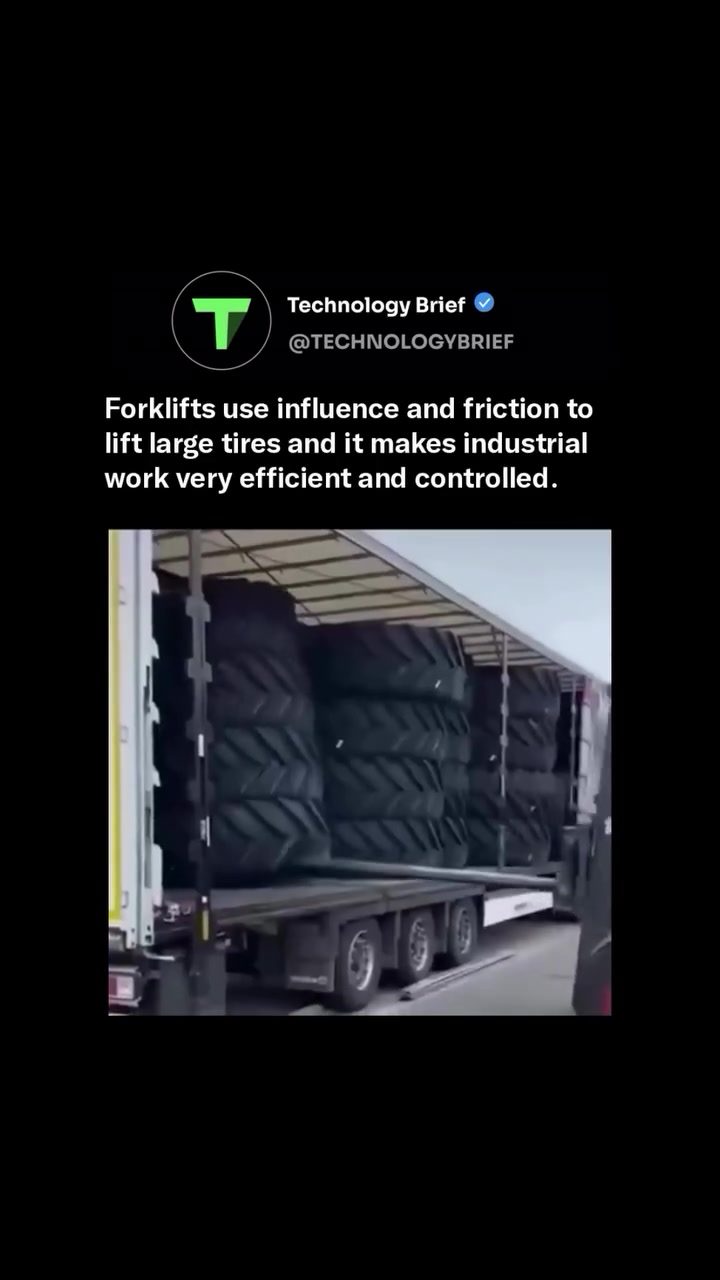
Forklifts and Industrial Tire Handling
Forklifts are essential tools in industrial settings, particularly for lifting and moving heavy loads, including large tires. These machines rely on two primary systems to perform their tasks: hydraulic cylinders and a roller chain pulley system. The combination of these systems enables forklifts to lift loads to impressive heights with precision and stability, making them invaluable in various industrial environments.
Why This Matters
In industries such as ports, mines, and construction yards, the ability to handle and move extremely heavy items, like industrial tires that can weigh thousands of pounds, is crucial. Forklifts offer a reliable and efficient solution, thanks to their advanced lifting mechanisms and robust design. Understanding how forklifts operate and the techniques used for handling large tires can enhance operational efficiency and safety in these settings.
How Forklifts Lift and Move Heavy Loads
Hydraulic Cylinders and Roller Chain Pulley Systems
Forklifts use a combination of hydraulic cylinders and a roller chain pulley system to lift and move heavy loads. The hydraulic cylinders are filled with pressurized fluid, which pushes the mast upward. Simultaneously, roller chains and gears work in tandem to lift the forks even higher than the cylinders could achieve alone. This combination allows standard forklifts to raise loads to significant heights without requiring much taller, heavier, or more dangerous equipment.
Handling Large Industrial Tires
When handling large industrial tires, operators employ a specific technique to ensure stability and precision. They slide the fork tips under or around the tire to support it from the outside. The forks act as a cradle, utilizing the tire’s own weight and the contact pressure to keep it stable during movement. This method is a standard practice in tire handling at ports, mines, and construction yards. The forklift’s design, with rear-wheel steering, allows the front drive wheels to stay fixed and fully support the load, preventing tipping and ensuring stability.
Weight Distribution and Rear-Steer Layout
Forklifts are designed with rear-wheel steering, which allows the front drive wheels to remain stationary and fully support the load. This design is particularly important when lifting very heavy items, as it ensures stability and prevents tipping. Heavy-duty forklift models can lift anywhere from 1.5 tons up to over 90,000 pounds, depending on their design and capabilities. The combination of hydraulic systems, smart weight distribution, and a rear-steer layout makes forklifts one of the most reliable tools for moving loads in industrial work.
Practical Tips for Effective Forklift Operation
Proper Loading and Unloading Techniques
When loading or unloading heavy items, it is essential to distribute the weight evenly across the forks. This practice ensures stability and prevents the load from shifting during movement. Operators should also ensure that the load is centered and balanced to maintain control and safety.
Regular Maintenance
Regular maintenance of the hydraulic cylinders, roller chains, and gears is crucial for the efficient operation of forklifts. This includes checking for leaks, ensuring proper lubrication, and inspecting for any signs of wear and tear. Regular maintenance can prevent costly breakdowns and ensure the longevity of the equipment.
Training and Safety
Proper training is essential for operators to handle forklifts safely and efficiently. Training should cover the correct techniques for lifting and moving loads, as well as safety procedures to prevent accidents. Operators should also be trained in emergency procedures and how to handle unexpected situations.
Using Forklifts in Various Environments
Forklifts are versatile and can be used in various industrial environments, including ports, mines, and construction yards. Understanding the specific challenges and requirements of each setting can help optimize the use of forklifts. For example, in a port setting, operators may need to handle large and heavy containers, while in a mine, they may need to navigate uneven terrain and narrow spaces.
Important Takeaways
- Forklifts use a combination of hydraulic cylinders and a roller chain pulley system to lift and move heavy loads.
- The forks act as a cradle, utilizing the tire’s own weight and contact pressure to keep it stable during movement.
- Rear-wheel steering allows the front drive wheels to stay fixed and fully support the load, ensuring stability.
- Proper loading and unloading techniques, regular maintenance, and operator training are essential for effective forklift operation.
- Forklifts are versatile and can be used in various industrial environments, including ports, mines, and construction yards.
Conclusion
Forklifts are indispensable in industrial settings, particularly for lifting and moving heavy loads, including large tires. Understanding their lifting mechanisms, handling techniques, and safety procedures can enhance operational efficiency and safety. Regular maintenance and proper training are also crucial for the effective use of forklifts. By leveraging the unique capabilities of forklifts, industries can handle even the most challenging tasks with precision and control.
Questions readers ask
How do hydraulic cylinders contribute to forklift tire lifting?
Hydraulic cylinders in forklifts use fluid pressure to generate the force needed to lift heavy items, like industrial tires. They enable precise control over the lifting process, ensuring that the tire is lifted smoothly and steadily, even at great heights. This precision is crucial for maintaining stability and safety in industrial settings.
What is the role of roller chain pulley systems in forklifts?
Roller chain pulley systems work in tandem with hydraulic cylinders to lift and move heavy items. They help to distribute the weight evenly, ensuring that the load is lifted and moved smoothly. This system is essential for maintaining precision and stability, especially when handling extremely heavy tires.
What are the key factors to consider for efficient forklift tire handling?
To handle tires efficiently with a forklift, consider the load's weight, dimensions, and center of gravity. Ensure the forklift's tires are correctly maintained, and the load is balanced. Additionally, use appropriate attachments to secure the tire, and follow safe operating procedures to prevent accidents.
What safety measures should be taken when lifting heavy tires with a forklift?
Always inspect the forklift and tires before use to ensure they are in good condition. Keep the load centered and balanced, and drive at a safe speed with the load. Use proper forklift attachments, and ensure the operator is trained and certified. Always follow safety protocols to prevent accidents and injuries.
How can forklift operators improve their tire-handling techniques?
Operators can improve their techniques by receiving proper training and practicing regularly. Understanding the load's center of gravity, using the right attachments, and maintaining balance and stability are essential. Regularly inspecting the forklift and tires, and following safety protocols can also enhance operational efficiency and safety.
What industries benefit the most from forklift tire lifting capabilities?
Industries such as ports, mines, and construction yards greatly benefit from forklift tire lifting capabilities. These sectors often handle extremely heavy items, like industrial tires, which require reliable and efficient lifting solutions. Forklifts provide the precision and stability needed to safely and efficiently move these heavy loads.
Why is it important to maintain forklift tires in good condition?
Maintaining forklift tires in good condition is crucial for safe and efficient operation. Well-maintained tires ensure stability and traction, reducing the risk of accidents. Regular inspections and timely replacements can prevent unexpected downtime and extend the lifespan of the forklift, improving overall productivity in industrial settings.
Recent articles
Fresh deep dives from the latest Reels we unpacked.




Comments
Be the first to comment.