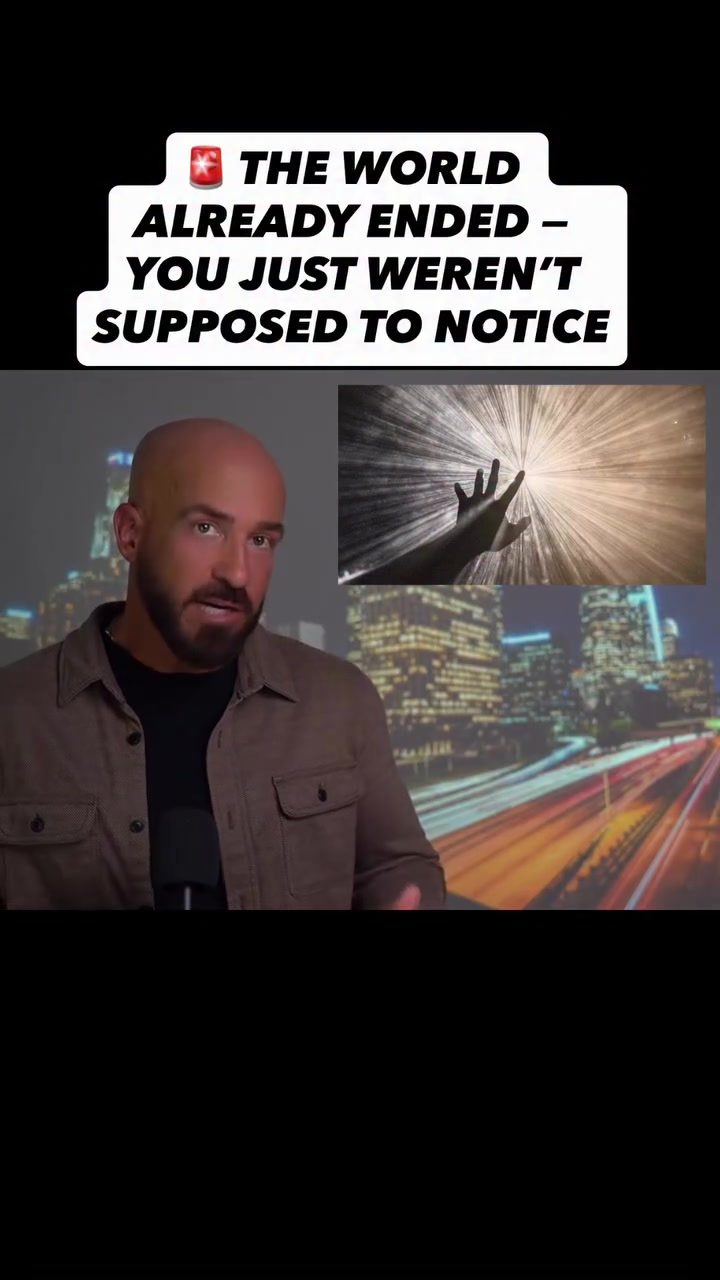
The Theory That the World Already Ended
The idea that the world has already ended, but most people haven't noticed, is a fascinating and unsettling conspiracy theory. This theory suggests that reality as we know it shifted dramatically around 2012, and we are now living in a simulated or manipulated timeline. Let's delve into the details of this theory, its origins, and the evidence presented by its proponents.
Why This Matters
Understanding this theory provides insight into how some people perceive reality and the underlying anxiety that drives such beliefs. It also sheds light on the intersecting themes of near-death experiences, simulation theory, and the concept of timelines converging.
The Origins of the Theory
The theory that the world already ended in 2012 is rooted in a combination of near-death experiences, simulation theory, and the idea of a timeline bottleneck. Dr. Orson Wedgwood, a New Zealand-based scientist and author, has conducted research into near-death experiences and their connection to the simulation theory. According to Dr. Wedgwood, people from vastly different backgrounds often describe the same terrifying details when they report visions of the afterlife. These details include dark figures, a horrible stench, violence, and a place many believe is hell.
The Simulation Theory
Dr. Wedgwood believes that these near-death experiences may be more than just hallucinations. He proposes that reality itself could be a designed system, a simulation created to test human souls. This idea is not new; prominent figures like Elon Musk, Nick Bostrom, and Ray Kurzweil have openly discussed the possibility that reality may not be what it seems. The simulation theory suggests that our universe could be an artificial construct, possibly created by an advanced civilization or an artificial intelligence.
The Timeline Bottleneck
According to the Looking Glass conspiracy, humanity entered a timeline bottleneck around 2012. This theory posits that every possible future began converging into a single outcome. Proponents of this theory argue that the chaos, division, and growing sense of unreality since 2012 are not signs of societal collapse but rather indicators that we are approaching the end of the script. In other words, our choices no longer change the outcome because the timeline has been fixed.
The Evidence
Near-Death Experiences
Dr. Orson Wedgwood's research highlights the consistent details reported by people who have had near-death experiences. These details often include dark entities, a foul odor, and violent scenes. The consistency of these reports across different cultures and backgrounds lends credibility to the idea that these experiences are not merely hallucinations but something more profound.
The Stargate and Looking Glass Projects
Some proponents of the theory point to the Stargate and Looking Glass projects as evidence of government or secret agency involvement in manipulating reality. These projects, which were purportedly aimed at exploring remote viewing and controlling time, add to the conspiracy theory's mystique. The Stargate project, for instance, was a U.S. government-funded program that explored the potential of psychic abilities, including remote viewing.
The Mayan Calendar
While the theory does not originate from the Mayan calendar, some believers point to the calendar's end in 2012 as a coincidental marker. However, the theory is more rooted in the idea of a reality shift rather than a physical cataclysm. Instead of fireballs and explosions, proponents suggest that reality itself shifted, and we are now living in a manipulated timeline.
Practical Tips for Exploring This Theory
While it's important to approach this theory with a critical eye, there are practical ways to explore these ideas further:
Research Near-Death Experiences
Delve into the scientific literature on near-death experiences. Look for studies that document the consistent details reported by people from different backgrounds. Understanding these experiences can provide insights into the human psyche and the nature of consciousness.
Explore Simulation Theory
Read works by prominent figures like Nick Bostrom and Elon Musk on simulation theory. These authors offer thought-provoking arguments about the possibility that our reality is an artificial construct. Engaging with these ideas can broaden your perspective on the nature of reality.
Study the Stargate and Looking Glass Projects
Investigate the historical and scientific aspects of the Stargate and Looking Glass projects. While these projects were real, their involvement in manipulating reality is purely speculative. Understanding the context and findings of these projects can help you separate fact from fiction.
Reflect on Personal Experiences
Consider any strange or unexplained feelings you may have had, such as the sense that time is moving faster or that reality doesn't feel quite right. Reflecting on these experiences can provide personal insights into the nature of reality and how you perceive it.
Important Takeaways
The theory that the world already ended in 2012 is a complex and multifaceted conspiracy theory that draws on near-death experiences, simulation theory, and the idea of a timeline bottleneck. While it may seem far-fetched, the underlying questions about the nature of reality and the consistency of near-death experiences make it a fascinating subject to explore.
Conclusion
Whether you believe in the theory that the world already ended or not, it serves as a reminder of the mysterious and often unsettling nature of reality. By exploring these ideas, we can deepen our understanding of consciousness, the nature of time, and the boundaries of human perception.
Questions readers ask
Who is Dr. Orson Wedgwood and how is he involved in the 'world already ended' theory?
Dr. Orson Wedgwood is a key figure in the development of the theory that the world ended around 2012. He has explored and analyzed near death experiences, simulation theory, and the convergence of timelines, providing a framework for understanding this complex idea. His work has sparked interest and debate among those intrigued by this conspiracy theory.
What does 'timeline convergence' mean in the context of this theory?
Timeline convergence, in this context, refers to the idea that multiple timelines or realities may have merged or intersected around 2012. Proponents of this theory suggest that this convergence resulted in a shift in reality, leaving many people unaware of the change.
How do near-death experiences factor into the 2012 world ended theory?
Near-death experiences are cited as a key component of this theory. Some proponents believe that individuals who have experienced near-death events may have glimpsed the 'true' reality or an alternate timeline, providing insights into the idea that our current reality is a manipulated or simulated one.
What is the 'dark world' theory and how is it related to the 2012 theory?
The 'dark world' theory is an extension of the idea that the world ended in 2012. It suggests that the reality we now inhabit is a darker, more sinister version of our previous existence. This concept is often linked to the 2012 theory, as both propose a significant and unnoticed shift in reality around that time.
Why do some people believe in the simulation theory, as it relates to the 2012 theory?
Simulation theory, in this context, suggests that our reality is an artificial construct, possibly created by advanced beings or future humans. Some people believe that the world ended in 2012 and we are now living in a simulated reality, which explains the perceived anomalies and inconsistencies in our world.
What kind of evidence do proponents of this theory present to support their claims?
Proponents of the theory that the world ended in 2012 often cite personal anecdotes, near-death experiences, and supposedly unexplained phenomena as evidence. They also point to perceived inconsistencies in historical records, and shifts in societal norms and technologies as indicators of a simulated or manipulated reality.
How does this theory influence people's perception of reality?
This theory encourages individuals to question the nature of their reality and consider the possibility that their perceptions may be manipulated or simulated. It also highlights underlying anxieties and encourages a deeper examination of one's beliefs and experiences, particularly those related to near-death events and the convergence of timelines.
Related deep dives
Similar reads based on topic and creator.

Recent articles
Fresh deep dives from the latest Reels we unpacked.




Comments
Be the first to comment.