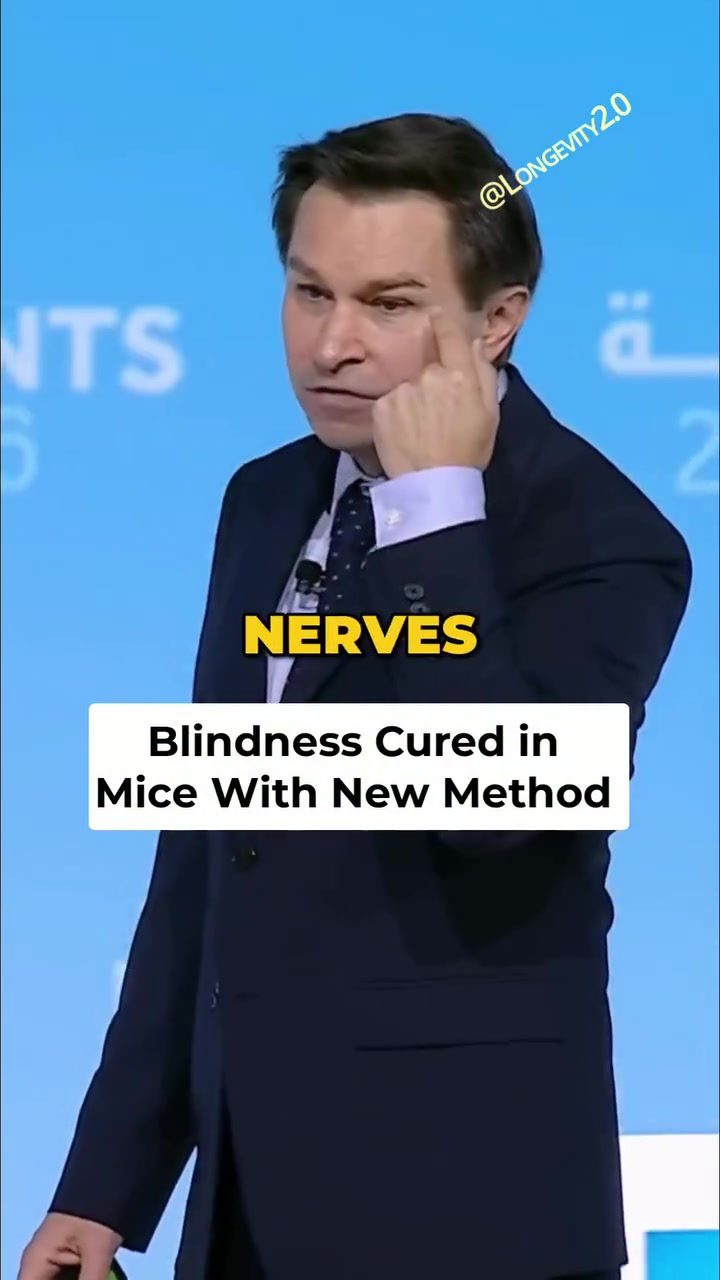
Cellular Reprogramming and Blindness Cure
Recent advancements in cellular reprogramming have opened new possibilities for curing blindness. Researchers have successfully rejuvenated damaged optic nerves in mice, leading to nerve regeneration and restored vision. This breakthrough, conducted by scientists including Dr. David Sinclair, primarily focused on the eye for a critical reason: if optic nerves can regenerate, it demonstrates that aging cells can be made biologically younger, thus restoring their ability to repair themselves.
Why this Matters
The implications of this research extend far beyond treating vision loss. If the same approach can be applied to humans, it could revolutionize longevity science. The ability to make aged cells biologically younger has the potential to address various age-related conditions, not just blindness.
Cellular reprogramming works by resetting the cell's age to an earlier, more youthful state. This process involves altering the cell's epigenetic state, which is the set of chemical modifications that control how genes are expressed. By doing so, damaged cells can regenerate and repair themselves effectively, demonstrating the potential for broader applications.
Understanding the Research
Optic Nerve Regeneration
The research focused on optic nerves in mice, which were damaged and then rejuvenated using cellular reprogramming. The visual representations showed two optic nerves: one damaged and one that had been rejuvenated and made young again. The rejuvenated nerve successfully grew back, restoring vision in the mice. This was a significant milestone, showing that blindness could be cured in animals for the first time.
The Science Behind Cellular Reprogramming
Cellular reprogramming, also known as cellular rejuvenation, involves converting an aging cell into a younger, more functional state. This process typically involves introducing genes that are active in embryonic stem cells, effectively turning back the cell’s biological clock. The goal is to restore the cell’s capacity to repair and regenerate, which declines with age.
Initial Outcomes
Researchers did not choose the eye for its technical ease; they chose it to test whether blindness, one of the most challenging conditions to treat, could be cured. The success in rejuvenating damaged optic nerves suggests that it is possible to make aged cells biologically younger, thus restoring their ability to repair themselves. This opens the door to treating a multitude of age-related conditions, not just blindness.
Future Implications
The study, published in Nature, highlights the potential of cellular reprogramming in longevity science. If this approach can be safely translated to humans, it could have far-reaching implications. The ability to regenerate aged tissues and organs could revolutionize how we treat age-related diseases, potentially extending human healthspan and lifespan.
Practical Tips for Staying Informed
Staying updated on the latest research in cellular reprogramming and longevity science is crucial. Here are some practical tips:
Follow Credible Sources
Rely on research published in reputable scientific journals, such as Nature, for the most accurate and updated information.
Engage with Experts
Scientists like Dr. David Sinclair provide valuable insights and actionable strategies to live longer, healthier lives. Following their work and staying informed about their latest findings can be beneficial.
Participate in Community Discussions
Join online forums, webinars, and conferences where experts and enthusiasts discuss the latest advancements in longevity science. This can help you stay informed and connected with the broader community.
Important Takeaways
-
Optic Nerve Regeneration: Researchers have successfully rejuvenated damaged optic nerves in mice, demonstrating the potential of cellular reprogramming in restoring vision.
-
Biological Rejuvenation: The ability to make aged cells biologically younger has significant implications for treating age-related conditions.
-
Future Research: The success in animals paves the way for potential applications in humans, which could revolutionize longevity science.
Conclusion
The advancements in cellular reprogramming, as demonstrated in the research on blindness cure in mice, offer a promising future for treating age-related conditions. While the research is still in its early stages, the potential implications for longevity science are vast. By staying informed and engaged, we can better understand and potentially benefit from these groundbreaking developments.
Questions readers ask
What is cellular reprogramming and how does it relate to curing blindness in mice?
Cellular reprogramming involves reverting mature cells to a more youthful, stem cell-like state, allowing them to regenerate damaged tissues, including optic nerves in mice. The process has been shown to enable nerve regeneration, restoring vision in mice that previously had optic nerve damage.
Who were the key scientists involved in this breakthrough?
A notable scientist involved in this research is Dr. David Sinclair. He was part of the team that focused on rejuvenating damaged optic nerves in mice, leading to nerve regeneration and restored vision, which could potentially revolutionize longevity science.
Can the same method used in mice be applied to humans to restore vision?
While the research on mice is promising, applying the same method to humans is still in the exploratory stages. It will require extensive study and clinical trials to confirm the efficacy and safety of the treatment.
How does rejuvenating optic nerves in mice demonstrate the potential for age-related blindness treatment in humans?
By successfully rejuvenating optic nerves in mice, scientists have shown that aging cells can be made biologically younger, which is key for treating age-related blindness. If this process works in humans, it could revolutionize how we approach various age-related conditions.
Why is the optic nerve a critical focus in this research?
The optic nerve was a critical focus because it is a complex, central nervous system structure that, if successfully regenerated, would demonstrate the potential to rejuvenate aging cells and regenerate other types of damaged tissues in the body.
What are the broader implications of this research beyond treating vision loss in mice?
The implications go beyond vision loss. Rejuvenating optic nerves in mice suggests that aging cells can be made biologically younger, opening new avenues for addressing various age-related conditions, and potentially revolutionizing longevity science. This could lead to more effective treatments for a range of degenerative diseases.
How does making aging cells biologically younger help in treating blindness and other age-related conditions?
By making aging cells biologically younger, the cell's ability to repair and regenerate is restored. This is crucial for treating blindness, as damaged optic nerves can be repaired. The same principle could be applied to other age-related conditions, potentially offering new hope for various degenerative diseases.
Recent articles
Fresh deep dives from the latest Reels we unpacked.




Comments
Be the first to comment.