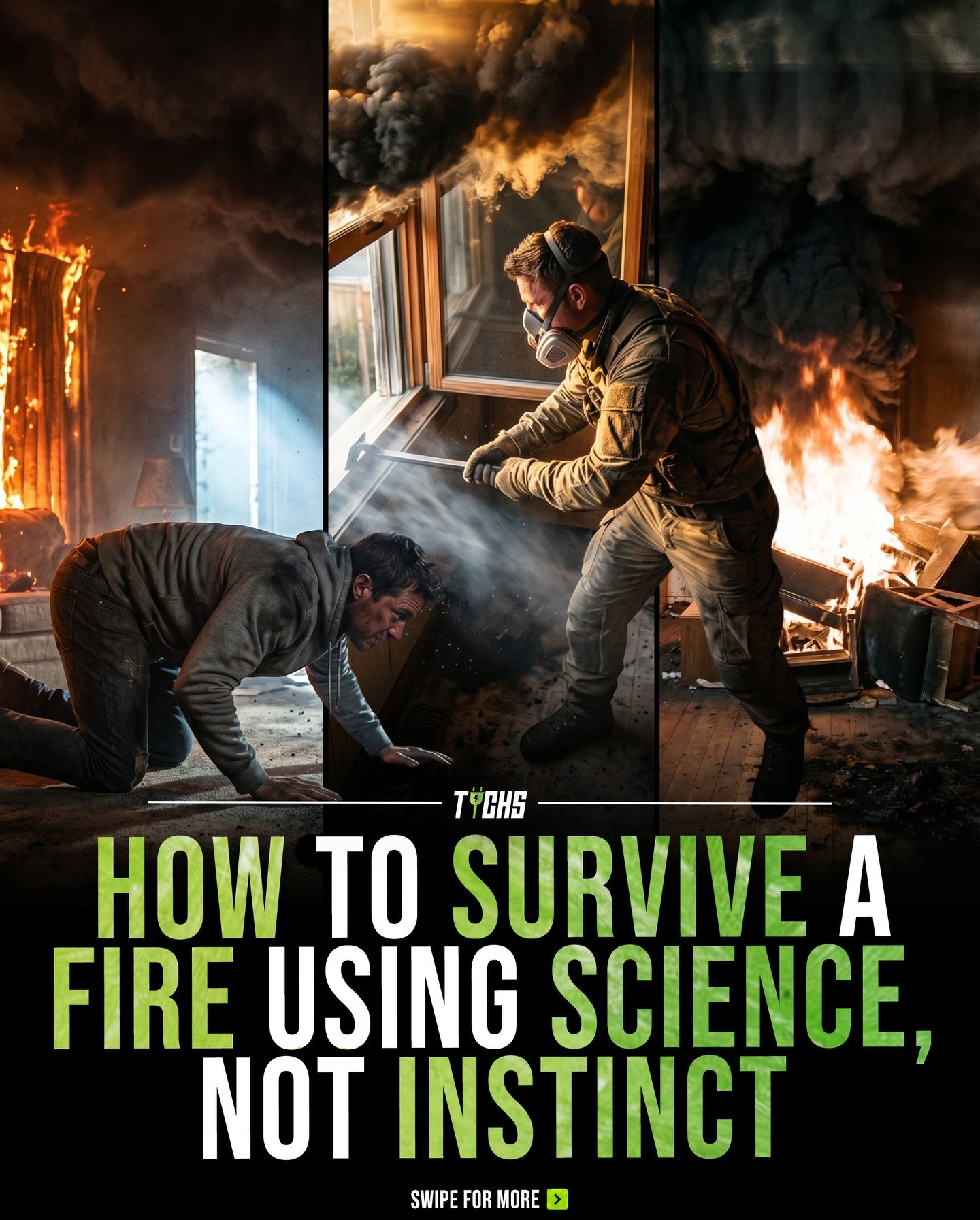
Fire Survival Techniques Using Science
Fire survival hinges on understanding the behavior of heat, smoke, and airflow. This knowledge can be more effective than relying on instinct alone. By grasping the scientific principles at play, you can make informed decisions that enhance your safety and increase your chances of survival.
Why This Matters
Fire emergencies are unpredictable and often chaotic. Instincts can fail in such high-stress situations. However, understanding the science of fire can provide a clearer path to safety. Knowing how fire spreads and behaves allows you to anticipate risks and react more effectively. This survival guide is grounded in proven strategies that focus on the physics of fire.
Main Discussion
Understanding Fire Behavior
Fire spreads through three main mechanisms: conduction, convection, and radiation. Understanding these processes can help you predict the fire's movement and plan your escape route more intelligently.
Conduction
Conduction is the transfer of heat through direct contact. This means that if one part of a material is heated, the surrounding area will also gradually heat up. For instance, if a wall is on fire, the heat will travel through the wall and warm the materials on the opposite side. This knowledge can help you avoid areas that are likely to be hotter.
Convection
Convection involves the movement of heat through the air. Hot air rises and displaced, forming currents that can spread fire rapidly. This is why smoke rises and why it's crucial to stay low during a fire. The cooler, more breathable air is near the floor, where the risers are fewer.
Radiation
Radiation is the transfer of heat through electromagnetic waves. This means that surfaces exposed to a fire will absorb heat, even if they are not in direct contact with the flames. This can be particularly dangerous in enclosed spaces, where heat can build up quickly. Understanding radiation allows you to avoid areas with high heat radiation, such as open doors and windows exposed to flames.
Practical Fire Survival Techniques
Crawling Low
Hot smoke rises, and the air closer to the floor is cooler and cleaner. Crawling on your hands and knees can help you reach safer air. Additionally, crawl towards the nearest exit or a location where you can call for help. Crawling also keeps you below the level of rising heat and smoke, reducing the risk of burns and smoke inhalation.
Checking for Heat
Before opening any doors or windows, check for heat. Place the back of your hand against the door or window frame. If it feels warm, there may be fire on the other side. Use this technique to navigate safely through a building, especially in unfamiliar areas.
Sealing Door Gaps
Sealing gaps around doors with wet cloths can slow the entry of smoke and heat. This is a crucial technique to buy time in an emergency. Wet cloths act as a barrier, helping to keep smoke and heat at bay. This simple action can significantly improve your chances of survival by providing a safer environment to wait for rescue.
Covering Your Mouth
Covering your mouth and nose with a damp cloth can help filter out smoke particles and reduce irritation. This is important because inhaling smoke can cause severe respiratory issues, impairing your ability to move and think clearly. The wet cloth acts as a simple but effective filter, keeping harmful particles out of your lungs.
Ventilation
While ventilation is generally used to clear smoke from confined spaces, it's crucial to understand when and how to use it in a fire emergency. If the fire is contained in a specific area, opening a window or door can sometimes improve visibility by allowing fresh air in. However, this should only be done if it’s safe and does not expose you to more immediate danger.
Staying Near Windows
Staying low near windows can help rescuers locate you faster. Windows provide a clear view of your location, making it easier for emergency services to find and help you. Additionally, if trapped, breaking a window can alert rescuers to your presence and allow for a rescue.
Scientific Principles in Action
By applying scientific principles to fire survival, you can make more informed decisions. For example, understanding that fire spreads through different mechanisms can help you predict its behavior and plan your escape route accordingly. This approach emphasizes practical actions—such as crawling low, checking for heat, and sealing door gaps—based on sound scientific knowledge.
Enhancing Safety with Knowledge
Knowledge is your best ally in a fire emergency. Understanding the behavior of heat, smoke, and airflow can provide a clear path to safety. By focusing on scientific methods, you can navigate through a fire emergency more effectively than relying on instinct alone. This knowledge includes recognizing the importance of ventilation, sealing gaps, and staying low near windows.
Practical Tips
- Know Your Escape Routes: Always have a clear understanding of multiple escape routes in case one becomes blocked.
- Practice Fire Drills: Regular fire drills can help you and your family react more quickly and effectively in an emergency.
- Keep Fire Extinguishers Accessible: Ensure that fire extinguishers are readily available and that everyone in your household knows how to use them.
- Install Smoke Detectors: Smoke detectors can provide early warnings and give you more time to escape.
- Stay Calm and Act Quickly: Panic can cloud judgment. Staying calm and acting quickly based on your knowledge can save lives.
Important Takeaways
Understanding the science behind fire behavior can significantly enhance your survival chances. By focusing on practical techniques grounded in scientific principles, you can navigate through a fire emergency more effectively. Always prioritize evacuation and call emergency services immediately. Staying calm and acting quickly based on your knowledge can save lives.
Conclusion
Fire survival is about making informed decisions based on understanding the science of fire. By knowing how heat, smoke, and airflow behave, you can navigate through an emergency more effectively. Techniques such as crawling low, checking for heat, and sealing door gaps are grounded in sound scientific principles. Always prioritize safety and seek professional help in case of a fire emergency. With the right knowledge, you can significantly enhance your chances of survival.
Questions readers ask
What are the three main ways heat and smoke spread during a fire?
Heat and smoke spread through conduction (direct contact), convection (rise of hot air), and radiation (infrared waves). Understanding these processes can help you anticipate the movement of fire and smoke, allowing you to make safer decisions in an emergency.
Why is it crucial to seal doors against smoke during a fire?
Sealing doors against smoke can slow the spread of smoke, providing you with more time to escape. Smoke is dangerous because it can cause disorientation, suffocation, and even death, and smoke inhalation is a leading cause of fire fatalities. By sealing doors, you can help delay the arrival of smoke.
How can understanding the science of fire help during an emergency?
Understanding the science of fire helps you make informed decisions under stress. Knowing how fire spreads and behaves can help you anticipate risks, react more effectively, and increase your chances of survival in unpredictable and chaotic situations.
How does fire spread in a room, and why is this important to know in a fire survival situation?
Fire typically spreads from low to high, meaning it moves upwards as it burns. This is crucial to know, as it can help you determine the safest path to escape. For example, if you are trapped in a room, you might be safer staying low to the ground to escape through a window, rather than attempting to leave through a door where the smoke and flames may be more intense.
What is the best way to protect your mouth and nose during a fire, and why is this important?
Covering your mouth and nose with a wet cloth during a fire can help filter out smoke and reduce the risk of inhalation. This is important because smoke inhalation is a leading cause of death in fires, and protecting your airways can increase your chances of survival.
Related deep dives
Similar reads based on topic and creator.

Recent articles
Fresh deep dives from the latest Reels we unpacked.




Comments
Be the first to comment.