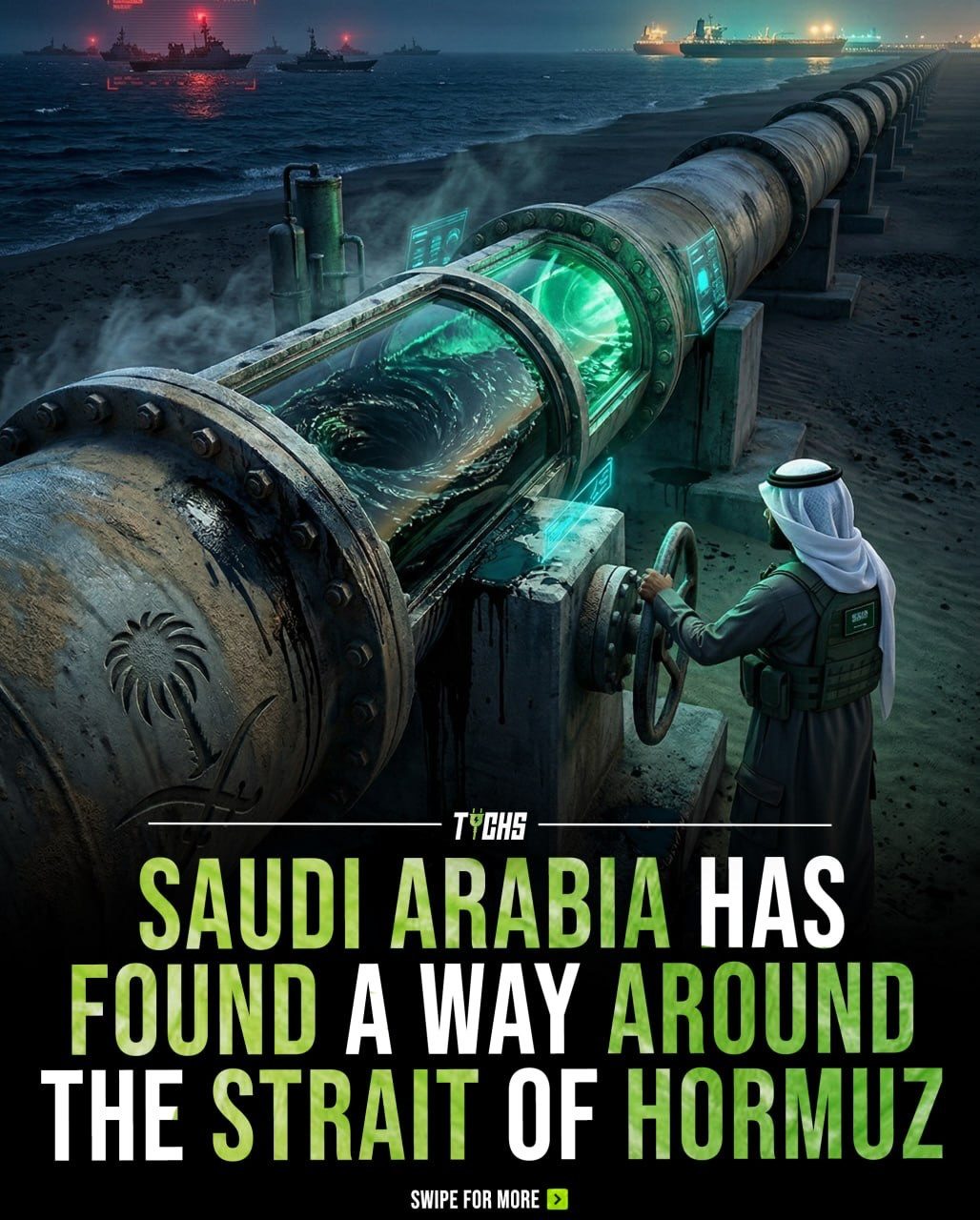
Saudi Arabia's Strategic Pipeline: A Bulwark Against Geopolitical Disruptions
Saudi Arabia's 1,200 km oil pipeline is a testament to the country's forward-thinking approach to energy security. This infrastructure marvel, built to circumvent the Strait of Hormuz, stands as a critical asset in maintaining global oil stability.
Context / Why This Matters
The Strait of Hormuz is one of the world's most vital energy corridors, with a significant portion of global oil exports passing through it daily. Any disruption in this strait can send shockwaves through global energy markets, impacting economies worldwide. Saudi Arabia's pipeline provides a strategic alternative, ensuring that oil exports can continue uninterrupted, even if the Strait of Hormuz is blocked or disrupted.
The Pipeline: A Closer Look
Route and Capacity
Stretching 1,200 kilometers, the pipeline transports oil from Saudi Arabia's eastern fields to ports on the Red Sea. This route not only avoids the Strait of Hormuz but also significantly reduces transit time, enhancing operational efficiency. The pipeline's capacity is impressive, operating at full capacity to carry 7 million barrels per day. This substantial capacity ensures that Saudi Arabia can maintain its role as a reliable global energy supplier, even in times of geopolitical tension.
Engineering and Construction
The pipeline, built decades ago, is a testament to Saudi Arabia's engineering prowess. Its construction involved overcoming numerous technical and logistical challenges, from traversing diverse terrains to ensuring the pipeline's integrity in extreme weather conditions. The use of advanced materials and construction techniques has made the pipeline resilient and capable of operating at peak capacity for extended periods.
Strategic Importance
The pipeline's strategic significance lies in its ability to provide a reliable alternative to the Strait of Hormuz. By transporting oil across the country, it ensures that Saudi Arabia can continue its exports even if the strait faces disruptions due to geopolitical tensions. This redundancy is crucial for maintaining supply stability and mitigating the impact of potential disruptions on global energy markets.
Operational Efficiency
The pipeline's operational efficiency is a key factor in its success. It operates at full capacity, carrying 7 million barrels per day, which keeps oil flowing without relying entirely on a single chokepoint. This operational efficiency is achieved through meticulous maintenance, regular inspections, and the use of advanced monitoring systems that ensure the pipeline's smooth operation.
Practical Tips
Diversifying Energy Routes
For countries dependent on energy imports, diversifying supply routes is crucial. Investing in alternative pipelines or transportation methods can help mitigate the risk of disruptions and ensure a steady energy supply. Saudi Arabia's 1,200 km pipeline serves as a practical example of how such diversification can be achieved.
Infrastructure Investment
Building robust infrastructure is essential for energy security. Governments and energy companies should prioritize infrastructure investment to build resilient and efficient transportation systems. This includes not only pipelines but also ports, storage facilities, and distribution networks.
Strategic Partnerships
Forming strategic partnerships with other nations can enhance energy security. Collaborative efforts in building and maintaining energy infrastructure can provide mutual benefits, ensuring a stable energy supply and reducing the risk of disruptions.
Important Takeaways
The Saudi Arabia 1,200 km pipeline is more than just a piece of infrastructure; it is a strategic asset that plays a critical role in global energy security. Its ability to transport oil across the country, avoiding the Strait of Hormuz, ensures that Saudi Arabia can continue its exports even in times of geopolitical tension. By operating at full capacity and carrying 7 million barrels per day, the pipeline not only maintains supply stability but also highlights the importance of infrastructure in energy security.
Saudi Arabia's approach to energy security serves as a model for other nations. By diversifying energy routes, investing in robust infrastructure, and forming strategic partnerships, countries can enhance their energy security and mitigate the risks of disruptions. The pipeline's success underscores the importance of forward-thinking strategies and innovative solutions in addressing global energy challenges.
Conclusion
The Saudi Arabia 1,200 km pipeline is a prime example of how strategic planning and robust infrastructure can enhance energy security. By providing an alternative to the Strait of Hormuz, the pipeline ensures that Saudi Arabia can continue its oil exports even in times of geopolitical tension. This infrastructure marvel not only highlights the importance of diversifying energy routes but also underscores the significance of operational efficiency and strategic partnerships in maintaining global energy stability. As energy demands continue to grow, the lessons from Saudi Arabia's pipeline offer valuable insights into securing a stable and reliable energy supply for the future.
Questions readers ask
What is the significance of Saudi Arabia's 1,200 km pipeline?
The 1,200 km pipeline is significant because it provides an alternative route for Saudi Arabia's oil exports, bypassing the Strait of Hormuz. This reduces reliance on a single transit point, enhancing Saudi Arabia's energy security and contributing to global oil supply stability.
How does the pipeline enhance global oil supply stability?
By offering an alternative route, the pipeline ensures that Saudi Arabia's oil exports can continue even if the Strait of Hormuz is disrupted. This helps to prevent global oil supply shocks, which can lead to market fluctuations and economic impacts.
What makes the Strait of Hormuz a vulnerable route for oil exports?
The Strait of Hormuz is vulnerable due to its geographic location and the volume of oil that passes through it. It is a narrow waterway with potential for geopolitical tensions, piracy, and accidents, all of which can disrupt oil transit and cause significant disruptions in global energy markets.
Why is Saudi Arabia's pipeline considered a strategic asset?
The pipeline is a strategic asset because it offers a secure and reliable route for oil transport. It reduces the risk of oil supply disruptions, ensures continuous oil flow to global markets, and provides Saudi Arabia with a strategic advantage in global energy dynamics.
How long is the pipeline and what is its purpose?
The pipeline spans 1,200 kilometers (approximately 200 miles) and its purpose is to bypass the Strait of Hormuz. This allows Saudi Arabia to transport oil without relying on the strait, providing a more secure and stable route for global oil exports.
What are the benefits of the pipeline for Saudi Arabia's energy security?
The pipeline strengthens Saudi Arabia's energy security by diversifying oil export routes. It minimizes the risk of supply disruptions, ensures continuous oil flow, and shields Saudi Arabia from potential threats or disruptions in the Strait of Hormuz.
How does the pipeline affect global oil export routes?
The pipeline introduces a new, alternative route for global oil exports, reducing dependency on the Strait of Hormuz. This change can lead to more stable and predictable oil flows, benefiting global energy markets and economies that rely on steady oil supplies.
Recent articles
Fresh deep dives from the latest Reels we unpacked.




Comments
Be the first to comment.