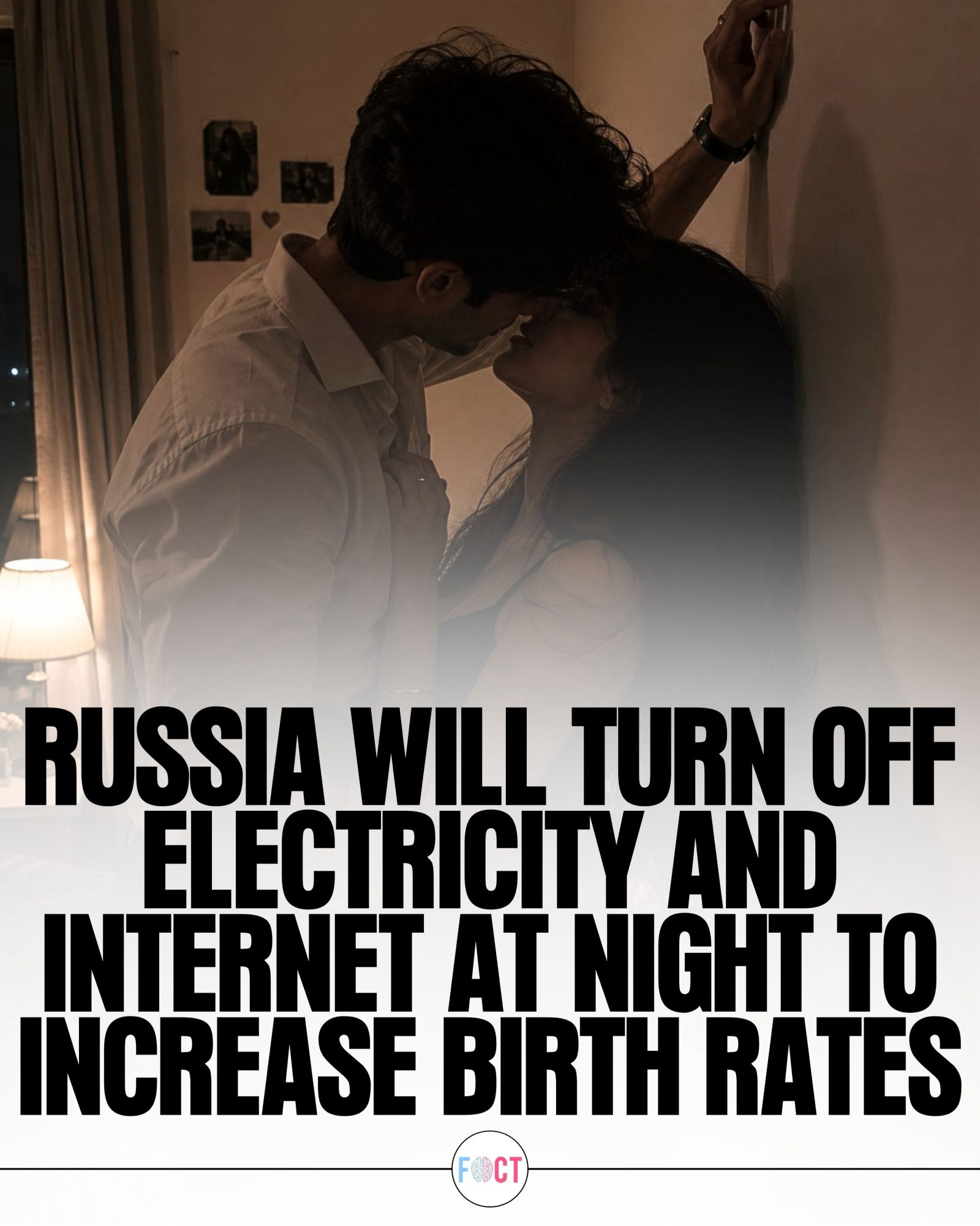
Russia's Proposed Nighttime Internet and Electricity Shutdown
Russia has proposed an unconventional approach to tackle its declining birth rates: limiting access to electricity and internet services at night in specific regions. The idea is that by reducing digital distractions, couples might spend more quality time together, potentially leading to an increase in birth rates. This proposal has sparked international debate, with opinions ranging from appreciation for its creativity to criticism of excessive government intrusion.
Context / Why This Matters
Russia, like many developed countries, faces a demographic challenge. Declining birth rates pose significant long-term economic and social issues, including an aging population and potential labor shortages. Governments around the world are exploring various measures to address these challenges, and Russia's proposal is a unique addition to this global conversation.
Main Discussion
The Proposed Policy
The suggested measure involves shutting down electricity and internet services at night in certain regions. The goal is to limit distractions from television, phones, and social media, encouraging couples to spend more time together offline. This policy, if implemented, would be a radical step in addressing demographic challenges through environmental manipulation.
The Rationale Behind the Proposal
The underlying assumption is that reducing digital distractions could lead to more face-to-face interaction between couples. The idea is that by forcing people to disconnect from their devices, they might engage in more intimate and meaningful activities, potentially leading to higher birth rates. This approach intersects with broader discussions on the impact of technology on social interactions and family life.
International Reactions
The proposal has elicited a range of reactions from international observers. Some view it as a creative and somewhat daring policy experiment. They see it as a bold attempt to tackle a complex issue through unconventional means. Others, however, criticize it as an excessive form of government intervention in private life. They argue that such measures infringe on personal freedoms and could be seen as an overreach by the state.
Potential Impact on Birth Rates
It remains unclear whether limiting access to electricity and internet services at night would have any measurable impact on birth rates. Demographic trends are influenced by a multitude of factors, including economic conditions, cultural attitudes, and individual choices. The success of this policy would likely depend on various socio-economic factors and the willingness of couples to respond to the changes.
Broader Implications
The policy proposal highlights the broader discussion on how governments are responding to demographic challenges. Various countries are experimenting with different strategies, from financial incentives for having children to policies aimed at improving work-life balance. Russia's approach, while unique, is part of a larger global effort to find effective solutions to declining birth rates.
Practical Tips
For those interested in similar policy discussions:
- Explore Comparative Policies: Look at other countries' policies aimed at addressing demographic challenges. Compare and contrast these with Russia's proposal to gain a broader perspective.
- Engage in Policy Debates: Participate in discussions about government intervention in social and personal issues. Consider the ethical and practical implications of such policies.
- Monitor Policy Outcomes: Keep an eye on how these policies unfold and their impact on birth rates. This can provide valuable insights into what works and what doesn't in addressing demographic issues.
Important Takeaways
This debate underscores the importance of addressing demographic challenges through various means. While the effectiveness of Russia's proposed policy remains uncertain, it adds a new dimension to the global conversation on how to tackle declining birth rates. It also highlights the need for balanced and informed discussions on the role of government intervention in personal and social matters.
Conclusion
The proposal by Russia to limit access to electricity and internet services at night to boost birth rates is a bold and unconventional approach. While it has garnered mixed reactions, it underscores the urgency and complexity of addressing demographic challenges. As governments continue to explore various strategies, this proposal serves as a reminder of the need for innovative and thoughtful solutions to ensure long-term population stability.
Questions readers ask
What is the main goal of Russia's proposed nighttime internet and electricity shutdown?
The primary objective is to encourage couples to spend more quality time together, with the hope that this increased intimacy will lead to a rise in birth rates, addressing Russia's declining birth rate.
Which services does Russia plan to restrict during nighttime hours?
Russia's proposal involves shutting down both internet and electricity services at night in specific regions. The aim is to create an environment that promotes couples to engage in more face-to-face interactions.
Why is Russia considering such a radical plan?
Russia is facing significant demographic challenges, including an aging population and potential labor shortages. This plan is one of the proposed solutions to combat the country's declining birth rates and their long-term economic and social impacts.
What are some of the criticisms surrounding this proposal?
The proposal has faced criticism for being too intrusive. Critics argue that the government should not dictate how couples spend their time and that such measures infringe on personal liberties. Some also question its effectiveness, believing that other factors contribute to declining birth rates.
How does Russia's plan aim to affect family planning?
By limiting digital distractions and encouraging couples to spend more time together, the plan indirectly aims to influence family planning. The hope is that increased togetherness will lead to more families deciding to have children.
Are there any similar initiatives in other countries?
There are no known initiatives exactly like Russia's proposal in other countries. However, some governments offer financial incentives, paid parental leave, and other benefits to encourage higher birth rates. These approaches are generally less invasive and more focused on providing support to families.
How might the proposed internet and electricity shutdowns impact daily life in affected regions?
The shutdowns could significantly impact daily routines. Residents may face challenges with communication, entertainment, and even basic tasks that rely on electricity. Businesses might also experience disruptions, potentially leading to economic repercussions.
Recent articles
Fresh deep dives from the latest Reels we unpacked.




Comments
Be the first to comment.