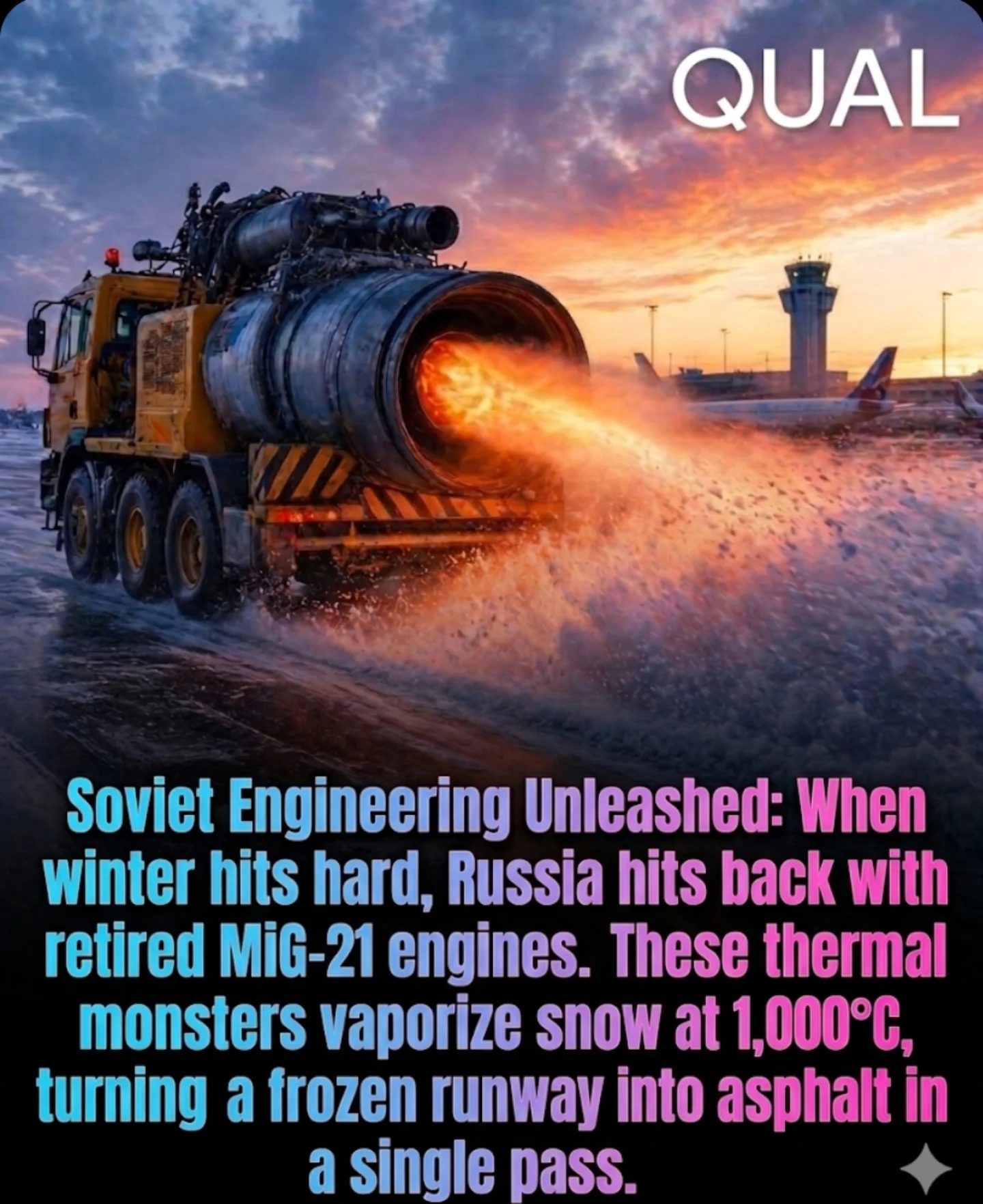
Thermal Snow Removal: Repurposing Military Jet Engines for Civilian Use
Winter poses significant challenges for aviation infrastructure, particularly in regions with harsh, snowy climates. Traditional snow removal methods, such as plows and de-icing chemicals, often fall short in extreme conditions. Russia has developed an innovative solution: repurposing retired MiG-21 jet engines for high-velocity snow clearing.
Why This Matters
In cold climates, keeping runways clear of snow and ice is crucial for aviation safety and operational efficiency. Traditional snow removal methods can be slow and inefficient, especially in extreme weather conditions. The innovative use of thermal snow removal not only addresses these challenges but also showcases the potential for military technology to be adapted for civilian use, enhancing infrastructure resilience.
The Engineering Behind Thermal Snow Removal
The MiG-21 Engine
The MiG-21 is a Soviet-era fighter jet known for its simplicity, durability, and high performance. Retired MiG-21 engines are repurposed for snow removal, leveraging their raw jet thrust to "blast" runways clear of ice and debris. The engines are mounted on specialized vehicles designed for this unique task.
Thermal Power and Mechanism
The key to this method lies in the thermal power of the engines. These engines can produce exhaust temperatures exceeding 1,000°C. This intense heat, combined with the high-velocity kinetic displacement of the jet thrust, effectively vaporizes snow and ice. Simultaneously, the high-velocity airflow physically displaces any remaining debris, leaving the runway clear and safe for immediate use.
Operational Trade-offs
While this method is unmatched in speed and effectiveness for critical operations, it is not without its drawbacks. The high thermal output and noise levels make it unsuitable for continuous or widespread use. The intense heat can potentially damage runway surfaces, and the fuel consumption is significantly higher than traditional methods. Therefore, this technique is reserved for high-priority scenarios where immediate runway availability is crucial, such as during emergencies or heavy snowstorms.
Practical Tips for Implementing Thermal Snow Removal
Assess Environmental Impact
Before implementing thermal snow removal, it is essential to assess the environmental impact. The high temperatures and fuel consumption can have significant environmental implications, so it is crucial to weigh the benefits against potential drawbacks.
Ensure Proper Training
Operating a vehicle equipped with a repurposed MiG-21 engine requires specialized training. Personnel should be well-versed in handling high-velocity and thermal equipment to ensure safety and efficiency.
Monitor Runway Surface
Due to the extreme heat generated, it is crucial to monitor the runway surface for any signs of damage. Regular inspections can help prevent long-term degradation and ensure the runway's structural integrity.
Important Takeaways
Efficiency in Extreme Conditions
The thermal snow removal method is particularly effective in extreme climates where traditional plows and de-icing chemicals fail. The combination of thermal melting and high-velocity kinetic displacement ensures that runways can be cleared rapidly, even in the harshest conditions.
Military Technology in Civilian Infrastructure
This adaptation exemplifies how military technology can be successfully transitioned into specialized civilian infrastructure solutions. The repurposing of retired MiG-21 engines for snow removal not only solves a critical problem but also provides a valuable example of innovation in engineering.
Trade-offs and Considerations
While the method is highly effective, it comes with significant operational trade-offs. The technique is fuel-intensive and produces extreme noise and heat, making it unsuitable for routine use. It is essential to consider these factors and use this method judiciously.
Conclusion
Repurposing military jet engines for thermal snow removal is a groundbreaking approach to winter maintenance. By leveraging the raw power of retired MiG-21 engines, Russia has developed a highly effective method for clearing runways in extreme climates. While this technique has its trade-offs, it serves as a prime example of how military technology can be adapted for civilian use, enhancing infrastructure resilience and operational efficiency in challenging conditions.
Questions readers ask
How does thermal snow removal using jet engines work?
Thermal snow removal involves using the intense heat and high-velocity jet thrust from retired MiG-21 engines to melt and vaporize snow and ice on runways. The engines are positioned to direct their output onto the runway surface, effectively clearing it in a matter of minutes.
What are the benefits of using jet engines for snow clearing?
Jet engines provide a rapid and efficient method for snow clearing, especially in extreme winter conditions. They can clear runways quickly, reducing downtime and ensuring that flights can operate safely and on schedule. Additionally, this method minimizes the use of de-icing chemicals, which can be environmentally beneficial.
Why are MiG-21 engines specifically used for this purpose?
MiG-21 engines are chosen for their powerful thrust and heat output, making them well-suited for melting and vaporizing snow and ice. Additionally, the availability of retired MiG-21 engines makes them a cost-effective option for repurposing.
How does this method compare to traditional snow removal techniques?
Traditional methods like plows and de-icing chemicals can be slow and less effective in extreme conditions. Thermal snow removal using jet engines is faster and more efficient, particularly in harsh winter environments, ensuring runways are clear and safe for aircraft operations.
What are the environmental impacts of using jet engines for snow removal?
While jet engines do produce emissions, the reduction in the use of de-icing chemicals and the overall efficiency of snow removal can mitigate some environmental impacts. The method is particularly beneficial in areas where chemical runoff is a concern.
Can this technology be adapted for use in other cold-climate regions?
Yes, the thermal snow removal system can be adapted for use in other cold-climate regions. It is particularly useful in areas with harsh winters where traditional methods may struggle. The technology can be implemented in airports and other critical infrastructure to ensure safe and efficient operations during winter.
What safety measures are in place when using jet engines for snow clearing?
Safety measures include ensuring that the engines are properly maintained and operated by trained personnel. Additionally, the engines are positioned to direct their output away from personnel and other sensitive areas, and controlled zones are established to minimize risks during the snow clearing process.
Recent articles
Fresh deep dives from the latest Reels we unpacked.




Comments
Be the first to comment.