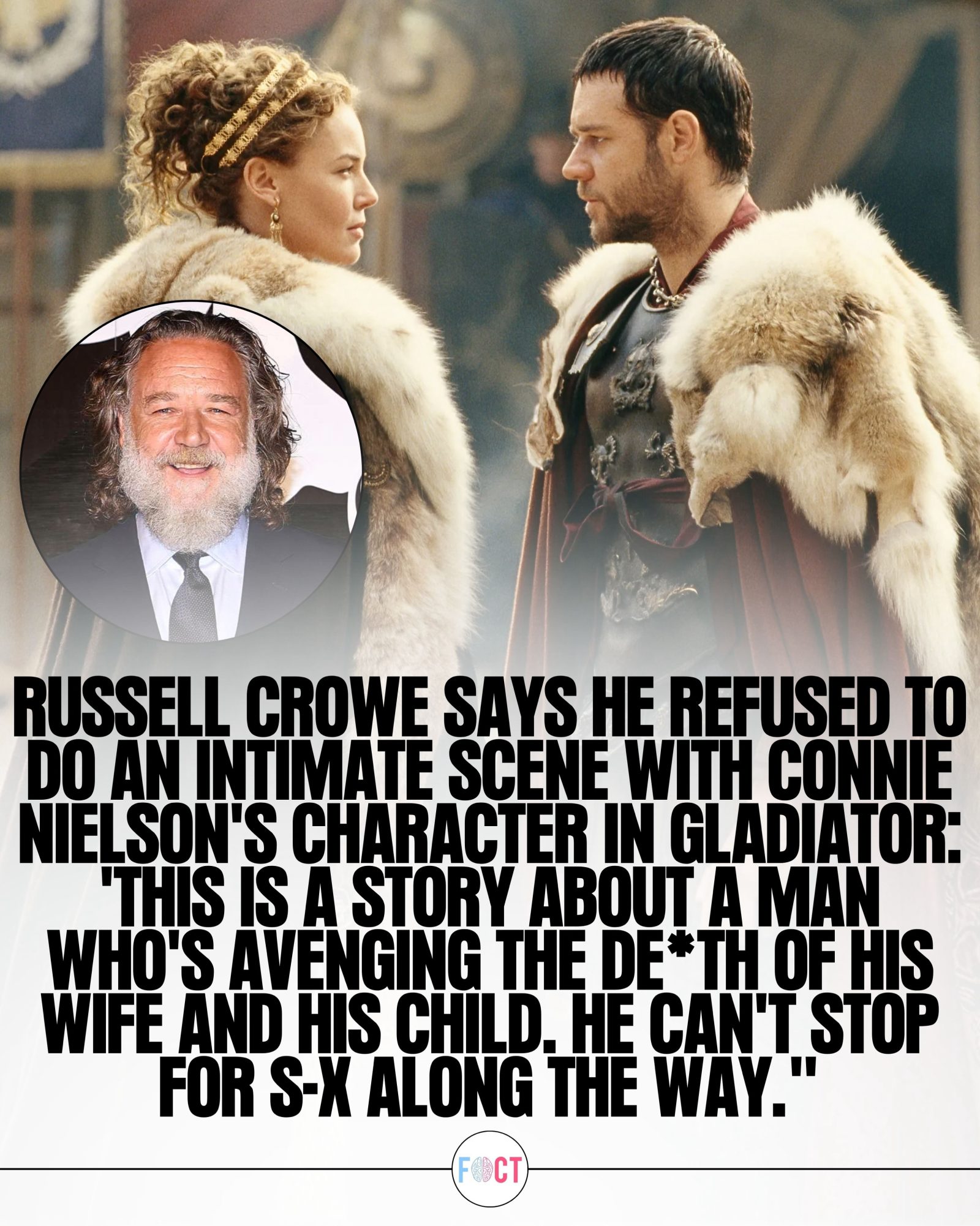
The Controversial Scene in "Gladiator": Russell Crowe's Stance on Intimacy and Plot Integrity
In 2000, during the production of "Gladiator," there was significant pressure from the studio and producers to include an intimate scene between Russell Crowe’s character, Maximus, and Connie Nielsen’s character, Lucilla. Crowe consistently refused, drawing a line that would ultimately shape the film’s narrative and moral integrity.
Why This Matters
The decision to omit this scene was not merely a matter of personal preference for Crowe. It went to the heart of the film’s narrative core. "Gladiator" is a story of revenge, centered around Maximus, a Roman general who seeks vengeance for the murder of his wife and son. Introducing an intimate scene would have disrupted this narrative flow, undermining the character’s single-minded pursuit of justice.
Crowe's Perspective
Crowe’s reasoning was straightforward: the inclusion of such a scene would have derailed the emotional and narrative trajectory of the film. "This is the story of a man avenging the death of his wife and his child,” he explained. "There cannot be a moment in that journey where he stops and has sex with somebody. It doesn’t make any sense because that destroys the journey." This perspective shows a deep commitment to maintaining the psychological and emotional integrity of the character, ensuring that the audience remains invested in his quest for revenge.
Studio Pressure
The studio and producers, however, saw things differently. They believed that an intimate scene would add a layer of complexity to Maximus’s character, making him more relatable. However, Crowe’s unyielding stance held firm. This decision was not made in isolation; it was a result of careful consideration of the story’s core themes.
Behind the Scenes: Crowe's Stand and Ridley Scott's Agreement
Director Ridley Scott eventually agreed with Crowe’s perspective, understanding the importance of maintaining the film’s narrative integrity. This alignment between Crowe and Scott played a crucial role in shaping "Gladiator" into one of the most successful films of its time. The film’s success can be attributed to its unyielding moral core, which resonated with audiences worldwide.
The Gladiator Sequel: A Failed Attempt at Continuing the Legacy
Fast forward to 2024, with the release of the "Gladiator" sequel. Unfortunately, the sequel failed to capture the essence of the original film. One of the key reasons for this failure, according to Crowe, was the lack of understanding of the original film’s core themes. The sequel retconned Maximus as having a secret affair with Lucilla, producing a son who becomes the main character. This twist was not only untrue to the original narrative but also undermined the character’s integrity.
Crowe was not consulted during the production of the sequel, finding out about the plot twist the same way everyone else did—through public release. This disregard for the original narrative and character development highlights the disconnection between the sequel and the moral core of the original film.
Maintaining Narrative Integrity
The story behind "Gladiator" and its sequel underscores the importance of maintaining narrative and emotional integrity in filmmaking. The original film’s success was built on a foundation of psychological depth and an unyielding moral core. The sequel’s failure to replicate this integrity resulted in a less impactful and less successful film.
In the film industry, it is common to face pressure to include elements that might seem commercially viable but could potentially undermine the film’s core themes. Crowe’s stance in "Gladiator" serves as a reminder that staying true to the narrative vision is paramount for a film’s success.
Practical Tips for Filmmakers
For aspiring filmmakers and industry professionals, there are several takeaways from this behind-the-scenes account:
- Stay True to the Narrative: The narrative and emotional integrity of a film are crucial for its success. Deviating from the core themes can undermine the overall impact of the film.
- Respect Character Development: Characters should evolve naturally within the story. Forced plot twists or out-of-character decisions can disrupt the audience’s immersion in the narrative.
- Collaboration and Communication: Effective communication between the director, cast, and producers is essential. Understanding and respecting each other’s vision can lead to a more cohesive and impactful film.
- Avoid Commercial Compromises: While commercial viability is important, it should not come at the cost of the film’s artistic integrity. Balancing commercial needs with artistic vision is key to creating a successful film.
Important Takeaways
The behind-the-scenes story of "Gladiator" offers valuable insights into the filmmaking process and the importance of narrative integrity. The decisions made during the production of "Gladiator" highlight the need for a strong moral core and a commitment to the character’s journey. The failure of the "Gladiator" sequel serves as a reminder of the consequences of deviating from this core.
Conclusion
The story of "Gladiator" and its sequel provides a fascinating look into the complexities of filmmaking. The original film’s success was built on a foundation of narrative and emotional integrity, a lesson that remains relevant today. For filmmakers, staying true to the narrative vision and respecting character development is paramount for creating impactful and successful films.
Questions readers ask
Why did Russell Crowe refuse to film the intimate scene in 'Gladiator'?
Russell Crowe refused to film the intimate scene because he wanted to maintain the integrity of Maximus' character and the film's narrative. He believed that an intimate scene would distract from the story of revenge and emotional depth that the film explores.
How did the studio and producers react to Russell Crowe's refusal?
The studio and producers exerted significant pressure on Russell Crowe to include the intimate scene. However, Crowe remained steadfast in his decision, which was ultimately supported by director Ridley Scott.
What impact did Russell Crowe's decision have on the film's narrative?
Crowe's decision to omit the intimate scene helped preserve the film's focus on Maximus' quest for revenge and his emotional journey. This choice ensured that the story remained centered around the core themes of loss, vengeance, and honor.
Who played the character of Lucilla in 'Gladiator' and what was her role in the story?
Connie Nielsen played the character of Lucilla in 'Gladiator'. She was a key figure in the story, serving as a political pawn and a potential romantic interest for Maximus, but her role was ultimately shaped by the decisions that maintained the narrative's integrity.
How did Ridley Scott support Russell Crowe's decision to refuse the intimate scene?
Ridley Scott, the director of 'Gladiator', supported Russell Crowe's decision to refuse the intimate scene. Scott understood the importance of maintaining the narrative's focus on revenge and emotional integrity, and he appreciated Crowe's commitment to his character's integrity and the story’s core themes.
What was the significance of the intimate scene in the context of the film's plot?
The intimate scene was seen as a potential disruption to the narrative flow of 'Gladiator'. The film centers around Maximus' quest for vengeance following the murder of his wife and son. The inclusion of an intimate scene could have diluted the emotional and narrative focus of the story.
How did Russell Crowe's decision influence the direction of his character, Maximus?
Russell Crowe's decision to refuse the intimate scene allowed him to maintain the character of Maximus as a man driven by revenge and personal loss. This choice enhanced Maximus' character development, as it kept the narrative firmly rooted in his emotional journey and quest for vengeance.
Recent articles
Fresh deep dives from the latest Reels we unpacked.




Comments
Be the first to comment.