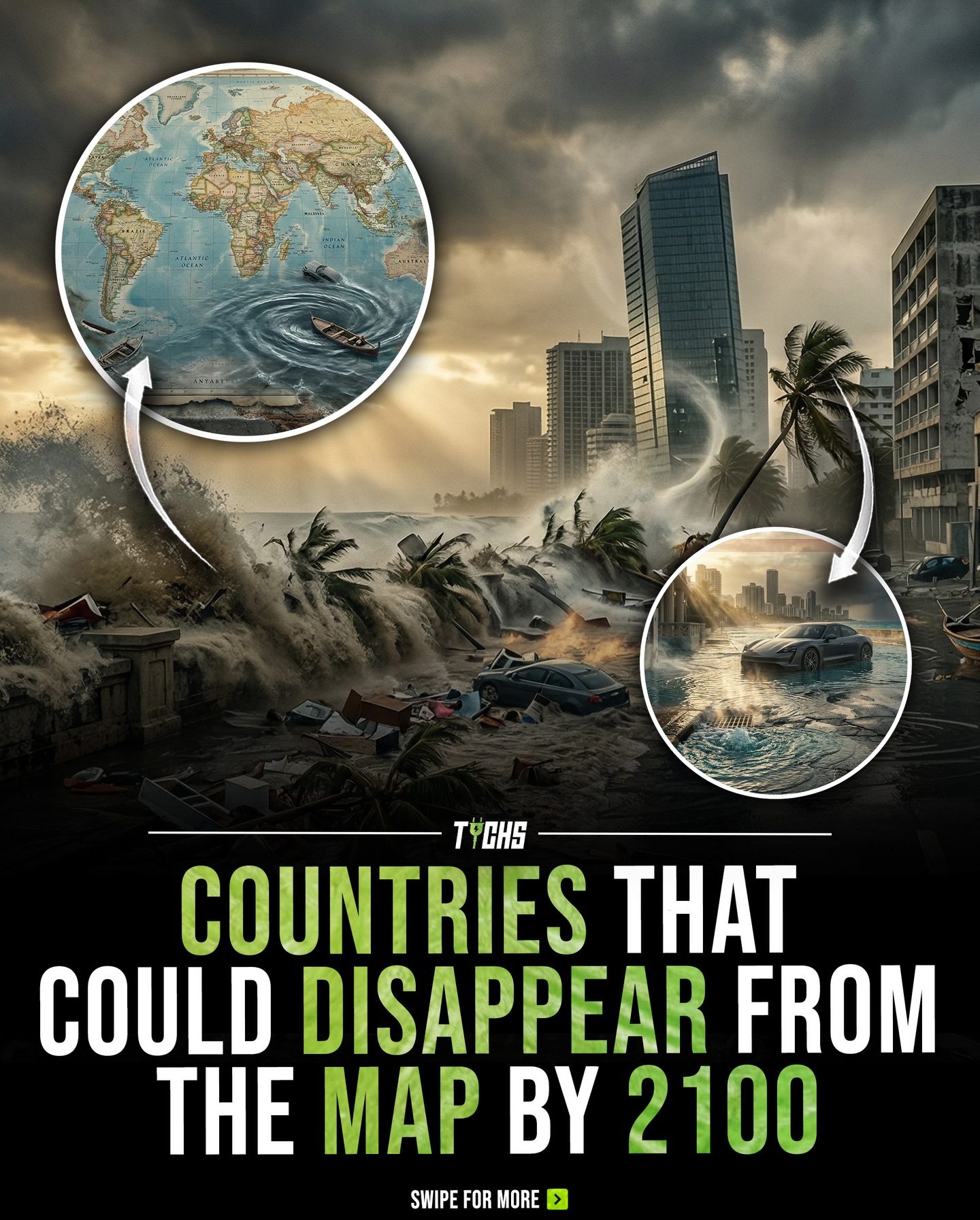
Countries at Risk from Rising Sea Levels
Rising sea levels pose a significant threat to many countries worldwide, with the potential to reshape coastlines and endanger entire nations by 2100. The impact is particularly severe for low-lying nations, where millions of people and critical infrastructure are at risk. Understanding which countries are most vulnerable and the measures they are taking is crucial for grasping the global scale of this issue.
Why This Matters
Climate change is driving sea levels higher, and the consequences are far-reaching. Entire nations are at risk of disappearing, while others face significant challenges in protecting their coastlines and populations. The economic, social, and environmental impacts are profound, affecting everything from agriculture and infrastructure to human migration and national security. This crisis is not confined to remote or developing regions; even developed countries are feeling the effects, highlighting the global nature of the problem.
Impact on Low-Lying Countries
Bangladesh
Bangladesh is one of the most vulnerable countries to rising sea levels. Up to 17% of its land could be lost, which would potentially displace around 20 million people. This massive displacement would strain resources, disrupt communities, and create a humanitarian crisis on an unprecedented scale. The country's deltaic region, where the Ganges, Brahmaputra, and Meghna rivers meet the Bay of Bengal, is particularly at risk.
Tuvalu and Maldives
Tuvalu and the Maldives are among the smallest and lowest-lying countries in the world. Both nations face existential threats from rising sea levels. Tuvalu, an island nation in the Pacific, could be entirely submerged if sea levels continue to rise. The Maldives, an archipelago in the Indian Ocean, is similarly at risk, with some of its islands already experiencing increased flooding and erosion.
Kiribati
Kiribati, another Pacific Island nation, has already begun planning for relocation. The country has purchased land in Fiji as a future refuge for its citizens, recognizing that staying put is no longer a viable option. This proactive approach highlights the urgency and severity of the situation, as well as the need for international cooperation and support.
Risk in the Marshall Islands
The Marshall Islands are already experiencing the effects of rising sea levels. Flooding and gradual coastline erosion are ongoing issues, posing significant challenges to the islands' infrastructure and way of life. The government and local communities are working to adapt, but the long-term outlook remains uncertain.
Threats to Developed Regions
Even developed countries are not immune to the risks posed by rising sea levels. The Netherlands, for example, relies heavily on flood defenses to protect its low-lying coastal regions. While these defenses are robust, they are not foolproof, and the cost of maintaining and upgrading them is substantial.
Venice and Miami
Venice, Italy, and Miami, USA, are iconic cities under threat from rising sea levels. Venice, built on a series of islands in a lagoon, is particularly vulnerable to flooding. Miami, known for its beaches and vibrant urban culture, faces increasing flood risks due to its low elevation and porous limestone foundation. Both cities are investing in flood mitigation strategies, but the long-term sustainability of these efforts is a subject of ongoing debate.
What the Future Holds
The future for countries at risk from rising sea levels is uncertain, but it is clear that adaptation and mitigation strategies will be crucial. This includes both short-term measures, such as building sea walls and improving flood defenses, and long-term strategies, such as relocating populations and reshaping infrastructure.
The Role of International Cooperation
International cooperation is essential for addressing the global challenge of rising sea levels. This includes financial and technical support from developed countries, as well as collaboration on research and policy development. Global initiatives and agreements, such as the Paris Agreement, are steps in the right direction, but more needs to be done to ensure that vulnerable countries have the resources and support they need to adapt and survive.
Innovative Solutions
Innovative solutions are also emerging, from floating cities and sustainable urban planning to advanced weather forecasting and climate modeling. These approaches offer hope for the future, but they require significant investment and collaboration between governments, scientists, and communities.
Practical Tips: What You Can Do
Understanding the risks and challenges posed by rising sea levels is the first step. But there are practical steps you can take to contribute to solutions and support affected communities:
Stay Informed
Stay informed about the latest developments and research in climate science and sea-level rise. This includes following reliable sources and participating in local and global discussions on climate action.
Support Policy Changes
Advocate for policies that address climate change and support vulnerable communities. This can include lobbying for stronger climate regulations, supporting renewable energy initiatives, and promoting sustainable urban planning.
Volunteer and Donate
Volunteer and donate to organizations working on climate change and sea-level rise. Many nonprofit organizations are dedicated to supporting affected communities and promoting sustainable development.
Practice Sustainable Living
Adopt sustainable living practices in your daily life. This includes reducing your carbon footprint, conserving water, and supporting eco-friendly products and services.
Important Takeaways
Rising sea levels pose a significant threat to many countries worldwide, from low-lying island nations to developed coastal cities. The impact is far-reaching, affecting everything from infrastructure and agriculture to human migration and national security. While the challenges are daunting, there are also opportunities for innovation and international cooperation. By staying informed, supporting policy changes, volunteering, and adopting sustainable living practices, you can contribute to solutions and support affected communities.
Conclusion
The threat of rising sea levels by 2100 is real and urgent. It affects not just remote or developing regions but also developed countries, highlighting the global scale of the problem. While low-lying countries like Bangladesh, Tuvalu, the Maldives, and the Marshall Islands face existential threats, even developed regions like the Netherlands, Venice, and Miami are at risk. The future is uncertain, but with international cooperation, innovative solutions, and practical steps, there is hope for mitigating and adapting to this global challenge.
Questions readers ask
Which countries are most at risk from rising sea levels by 2100?
Countries like Bangladesh, Tuvalu, and the Maldives are particularly vulnerable to rising sea levels. These low-lying nations face potential submersion and mass displacement due to the projected sea level rise by the end of the century.
What causes rising sea levels?
Rising sea levels are primarily caused by two factors: the thermal expansion of ocean water as it warms, and the melting of land-based ice such as glaciers and polar ice sheets. Climate change, driven by human activities, is the underlying force behind these phenomena.
How will rising sea levels impact coastal erosion?
Rising sea levels exacerbate coastal erosion by increasing the energy and reach of waves and storm surges. This leads to accelerated loss of land and infrastructure along coastlines, further endangering communities and ecosystems.
What are the future sea level projections for the next century?
By 2100, global sea levels are projected to rise between 0.3 to 2.5 meters, depending on various factors such as greenhouse gas emissions and ice sheet stability. This range highlights the uncertainty and potential severity of future sea level rise.
What measures can vulnerable countries take to mitigate the impacts of sea level rise?
Vulnerable countries can implement a range of measures. These include constructing coastal defenses, improving infrastructure and early warning systems, and developing climate-resilient planning and policies. Additionally, international support and cooperation are crucial for these countries to adapt effectively.
How does sea level rise affect agriculture in low-lying countries?
Sea level rise can lead to increased soil salinity, making land unsuitable for agriculture. This is particularly problematic for low-lying countries where agriculture is a significant part of the economy and food supply.
What are the potential social and economic impacts of sea level rise?
The potential social and economic impacts are vast. Mass displacement of populations, loss of land, and damage to infrastructure can lead to economic instability and social unrest in vulnerable communities and nations. A significant portion of the world’s population lives in coastal areas, exacerbating the impact.
Related deep dives
Similar reads based on topic and creator.

Recent articles
Fresh deep dives from the latest Reels we unpacked.




Comments
Be the first to comment.