Retaining Wall Drainage and Structural Integrity
Proper drainage is a critical factor in maintaining the structural integrity of masonry retaining walls. Without an effective drainage system, water accumulation can lead to significant issues, including hydrostatic pressure, cracking, and even catastrophic failure. Understanding the components and benefits of a well-designed drainage system is essential for ensuring the longevity and stability of your retaining wall.
Why This Matters
Retaining walls serve a vital function in landscaping and construction projects, providing support to soil and preventing erosion. However, the stability of these structures can be severely compromised by water buildup. When water pools against the back of a retaining wall, it creates hydrostatic pressure. This pressure can force water through mortar joints, leading to cracking, bowing, and eventual failure. A properly engineered drainage system mitigates these risks, ensuring the long-term durability of the wall.
Main Discussion
The Importance of Drainage in Retaining Walls
Retaining walls are designed to hold back soil and prevent it from shifting or eroding. However, the presence of water can significantly compromise the wall’s integrity. Water accumulation behind the wall creates hydrostatic pressure, which pushes against the masonry and can cause structural damage over time. A well-designed drainage system effectively channels water away from the wall, reducing this pressure and preventing potential damage.
Components of an Effective Drainage System
A properly engineered drainage system for a retaining wall typically includes several key components:
- Gravel Backfill: A layer of gravel placed behind the wall to facilitate water flow.
- Geotextile Filter Fabric: This fabric wraps around the gravel backfill, allowing water to pass through while preventing fine soil particles from clogging the system.
- Perforated Drainage Pipe: Positioned at the base of the wall, this pipe collects the accumulated water and directs it away from the structure.
How Drainage Systems Work
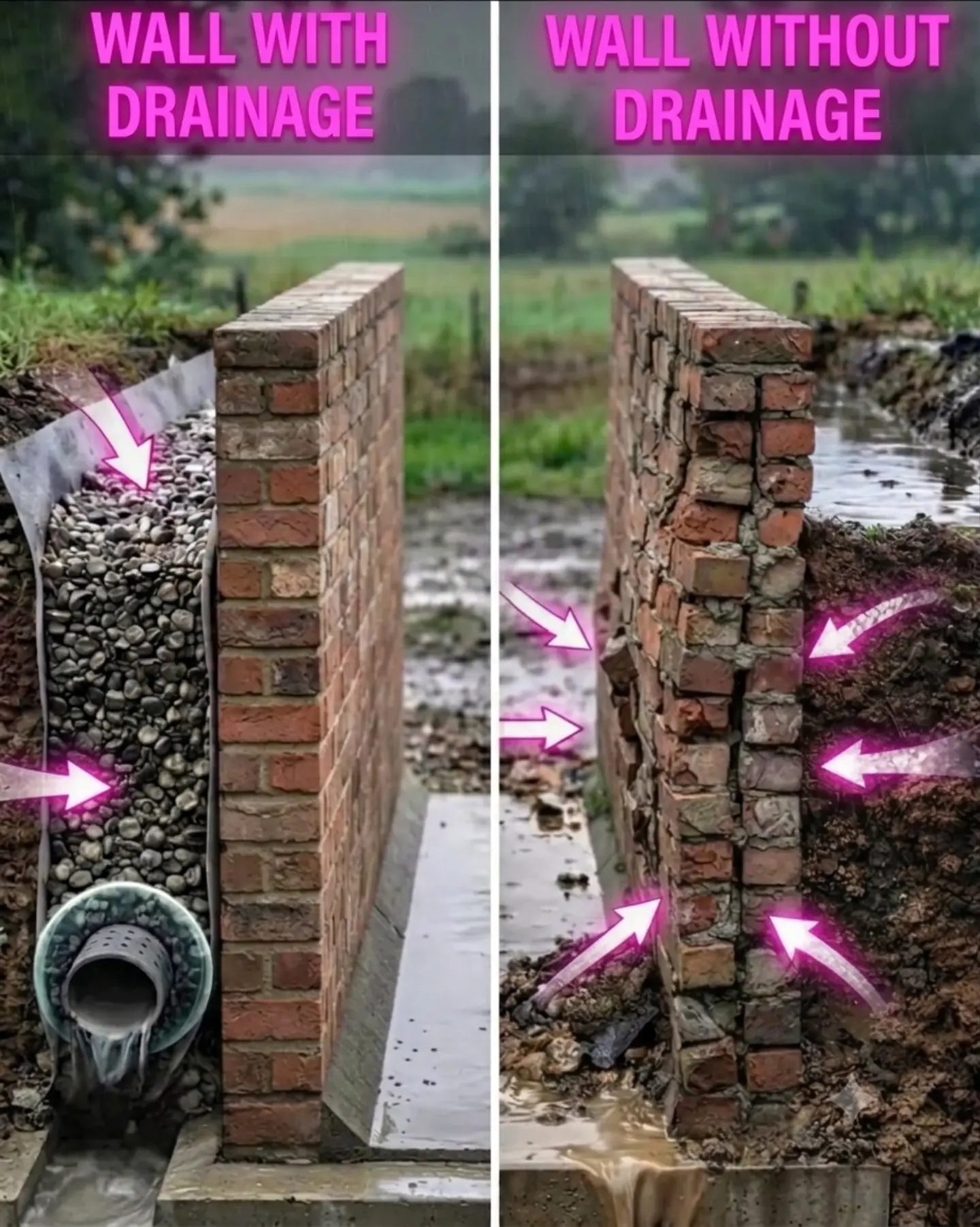
In a wall with a drainage system, water that enters the backfill flows freely downward through the gravel. The geotextile fabric ensures that soil particles do not clog the drainage path. The perforated pipe at the base collects this water and channels it away from the wall, preventing it from pooling and creating hydrostatic pressure. This setup effectively eliminates the water pressure, ensuring the wall remains stable and durable over time.
The Consequences of Poor Drainage
Without a drainage system, water can pool in the backfill behind the wall. This pooling creates immense hydrostatic pressure against the masonry. The pressure forces water through the mortar joints, leading to cracking and bowing. Over time, this relentless pressure can cause the wall to fail catastrophically, posing a significant risk to the surrounding area and structures.
Practical Tips
Designing a Drainage System
When designing a drainage system for a retaining wall, consider the following tips:
- Assess Water Flow: Determine the typical water flow and accumulation patterns in the area. This will help you design a system that can effectively manage the expected water volume.
- Choose Quality Materials: Use high-quality gravel, geotextile fabric, and perforated drainage pipes to ensure durability and effectiveness.
- Proper Installation: Ensure the system is installed correctly, with the gravel backfill and geotextile fabric properly wrapped and the drainage pipe positioned at the base of the wall.
- Regular Maintenance: Conduct regular inspections and maintenance to ensure the drainage system remains unclogged and functional.
Key Takeaways
- Proper Drainage is Crucial: A well-designed drainage system prevents water buildup and hydrostatic pressure, ensuring the structural integrity of the retaining wall.
- System Components: Essential components include gravel backfill, geotextile fabric, and a perforated drainage pipe.
- Consequences of Poor Drainage: Without a drainage system, water accumulation can lead to cracking, bowing, and eventual wall failure.
Conclusion
Retaining walls are a crucial part of many landscaping and construction projects, providing essential support and preventing erosion. However, their structural integrity relies heavily on effective drainage. By incorporating a properly engineered drainage system, you can mitigate the risks associated with water buildup and hydrostatic pressure. This ensures the long-term stability and durability of your retaining wall, protecting both the structure and the surrounding area. Always prioritize proper drainage design and installation for the best results.
Questions readers ask
Why is retaining wall drainage so important for maintaining structural integrity?
Retaining wall drainage is vital because it helps to manage water buildup, which can otherwise exert hydrostatic pressure on the wall. This pressure can lead to cracking, tilting, and even collapse if not properly addressed.
What happens if there is no drainage behind a retaining wall?
Without proper drainage, water can accumulate and exert pressure on the retaining wall, causing it to crack, move, or even fail. This can compromise the wall's stability and potentially lead to costly repairs or replacement.
How does a well-designed drainage system benefit retaining wall longevity?
A well-designed drainage system channels water away from the retaining wall, reducing hydrostatic pressure and preventing water-related damage. This helps to maintain the wall's structural integrity and prolongs its lifespan.
What are common components of an effective drainage system for retaining walls?
Common components include perforated pipes, gravel backfill, and geotextile fabric. These elements work together to collect and redirect water away from the wall, ensuring proper drainage and maintaining structural stability.
How does hydrostatic pressure affect retaining walls?
Hydrostatic pressure occurs when water accumulates behind a retaining wall, pushing against it. This pressure can cause the wall to bow, crack, or even collapse, making it crucial to have a effective drainage system in place to channel water away.
What is the role of backfill drainage in retaining wall construction?
Backfill drainage involves placing permeable materials, like gravel, behind the retaining wall to allow water to drain away. This helps to minimize water buildup and reduces the risk of hydrostatic pressure, contributing to the wall's overall stability.
Can proper drainage prevent retaining wall failure?
Yes, proper drainage is a critical factor in preventing retaining wall failure. By effectively managing water and reducing hydrostatic pressure, a well-designed drainage system helps to maintain the wall's structural integrity and minimizes the risk of catastrophic failure.
Recent articles
Fresh deep dives from the latest Reels we unpacked.




Comments
Be the first to comment.