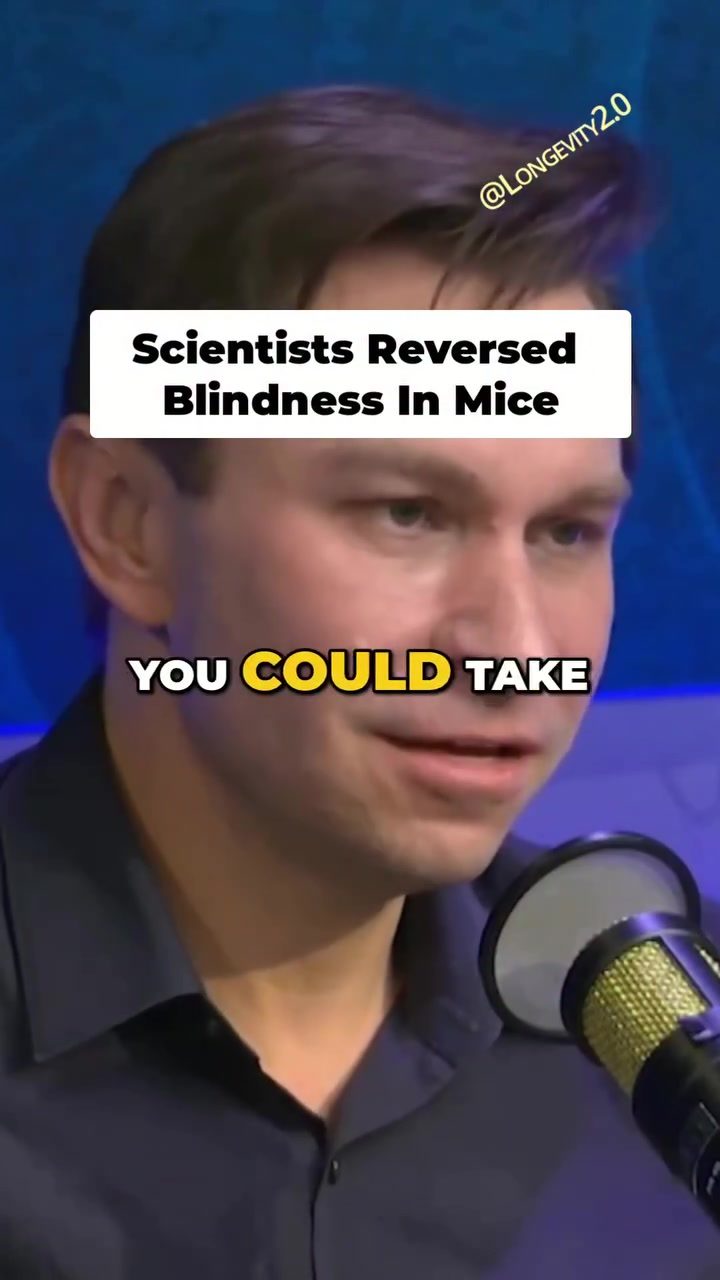
Reversing Blindness in Mice
Aging has long been considered an irreversible process. However, recent groundbreaking research challenges this notion, offering new hope for age-related conditions. Scientists at LONGEVITY2.0 have made significant strides in reversing blindness in mice, providing insights into the possibility of restoring youthful function in aged cells.
Why This Matters
The implications of this research extend far beyond the laboratory. If scientists can successfully reverse aging in complex tissues like the eye, it opens the door to potential treatments for a wide range of age-related diseases. This could revolutionize our approach to aging, shifting the focus from merely slowing down the process to potentially reversing it.
Understanding the Research
The Background
For decades, the prevailing belief was that aging was a one-way street. Cells and tissues degrade over time, and this process was thought to be irreversible. However, recent research by David Sinclair and his team at LONGEVITY2.0 has challenged this long-held belief. Published in the prestigious journal Nature, their findings suggest that aging cells may retain the biological information needed to become youthful again.
The Study
Sinclair's team focused on old mice that had lost their vision due to aging. Instead of treating the symptoms, they took a more ambitious approach. They used three specific genes, known as OSK, to reset the epigenetic age of the cells in the mice's retinas. The epigenetic age refers to the changes in gene expression that occur over time, leading to aging.
The Results
The results were astonishing. The aged retinal cells in the mice regained youthful function, and the mice were able to recover much of their vision. This suggests that aging cells do not permanently lose their ability to function. Instead, they may retain the biological information needed to become youthful again.
Main Discussion
The "Reset Switch"
Sinclair describes this process as a kind of "reset switch." The exciting part is that this wasn't about creating new cells. It was about helping existing cells recover a more youthful state. This approach could potentially be applied to other tissues, including the brain, heart, muscles, and other age-related diseases.
The Genes Involved
The three genes used in the study—OSK—play a crucial role in the reprogramming process. These genes are known to influence epigenetic changes, which in turn affect how genes are expressed. By manipulating these genes, scientists were able to turn back the clock on the aged retinal cells, restoring their youthful function.
Potential Applications
The success in mice raises the question: Could this approach be applied to humans? Researchers are now exploring this very possibility. If successful, it could lead to new treatments for a wide range of age-related conditions, from blindness to heart disease and beyond.
The Road Ahead
While the findings are promising, it's important to note that this research is still in its early stages. The studies conducted so far have been preclinical, meaning they were done on animals rather than humans. Human clinical trials are ongoing, and these therapies remain experimental. However, the potential is undeniable, and the field of aging research is poised for exciting developments in the coming years.
Practical Tips
Stay Informed
If you're interested in the latest advancements in longevity research, consider subscribing to newsletters like LONGEVITY2.0's private Longevity Newsletter. This newsletter provides updates on the latest anti-aging breakthroughs, longevity research, and practical strategies to help you stay healthier for longer.
Healthy Living
While research into reversing aging holds promise, it's also important to focus on healthy living practices. Regular exercise, a balanced diet, and stress management can all contribute to overall health and longevity.
Consult Professionals
If you're considering any experimental therapies or treatments, always consult with healthcare professionals. They can provide the most up-to-date information and guidance tailored to your specific needs.
Important Takeaways
- Aging cells may retain the biological information needed to become youthful again.
- The study used three specific genes (OSK) to reset the epigenetic age of retinal cells in mice.
- The success in mice opens the door to potential treatments for a wide range of age-related diseases.
- Human clinical trials are ongoing, and these therapies remain experimental.
Conclusion
The research by LONGEVITY2.0 represents a significant step forward in our understanding of aging. By demonstrating that it's possible to reverse age-related blindness in mice, scientists have provided a glimpse into a future where aging may no longer be an irreversible process. As research continues, the potential for groundbreaking treatments for age-related diseases becomes increasingly likely. The future of medicine is on the cusp of exciting advancements, and this research is at the forefront of that frontier.
Questions readers ask
What specific breakthrough did LONGEVITY2.0 achieve in their research on aging mice?
LONGEVITY2.0 successfully reversed blindness in aging mice, demonstrating that youthful function can be restored in aged cells. This breakthrough challenges the long-held belief that aging is an irreversible process.
How does this research impact potential treatments for age-related conditions in humans?
The success in reversing blindness in mice suggests that similar methods could be applied to other age-related conditions in humans. If these findings translate to human trials, it could lead to innovative treatments for a wide range of diseases associated with aging.
What makes the eye a significant focus in aging research?
The eye is a complex tissue that is particularly sensitive to aging effects, making it a crucial area of study. Successful rejuvenation in the eye could pave the way for similar treatments in other tissues and organs, offering a broader impact on age-related conditions.
What are the implications of restoring youthful function in aged cells?
Restoring youthful function in aged cells means that the biological information for youthful performance can be reactivated, potentially leading to the reversal of age-related decline. This could revolutionize how we approach and treat aging, focusing on rejuvenation rather than just slowing down the process.
How does this research relate to the work of Sinclair and other longevity researchers?
The findings align with the ongoing efforts of researchers like David Sinclair, who focuses on reversing and managing age-related decline. This research adds to the growing body of knowledge that supports the idea of rejuvenating aged cells and tissues, pushing the boundaries of what is possible in longevity research.
What are the next steps for LONGEVITY2.0 following this breakthrough?
LONGEVITY2.0 will likely continue to refine their methods and explore how these findings can be applied to other tissues and organs. The next steps may involve further animal studies and eventually human trials, aiming to translate these promising results into practical treatments for age-related conditions.
Related deep dives
Similar reads based on topic and creator.


Recent articles
Fresh deep dives from the latest Reels we unpacked.




Comments
Be the first to comment.