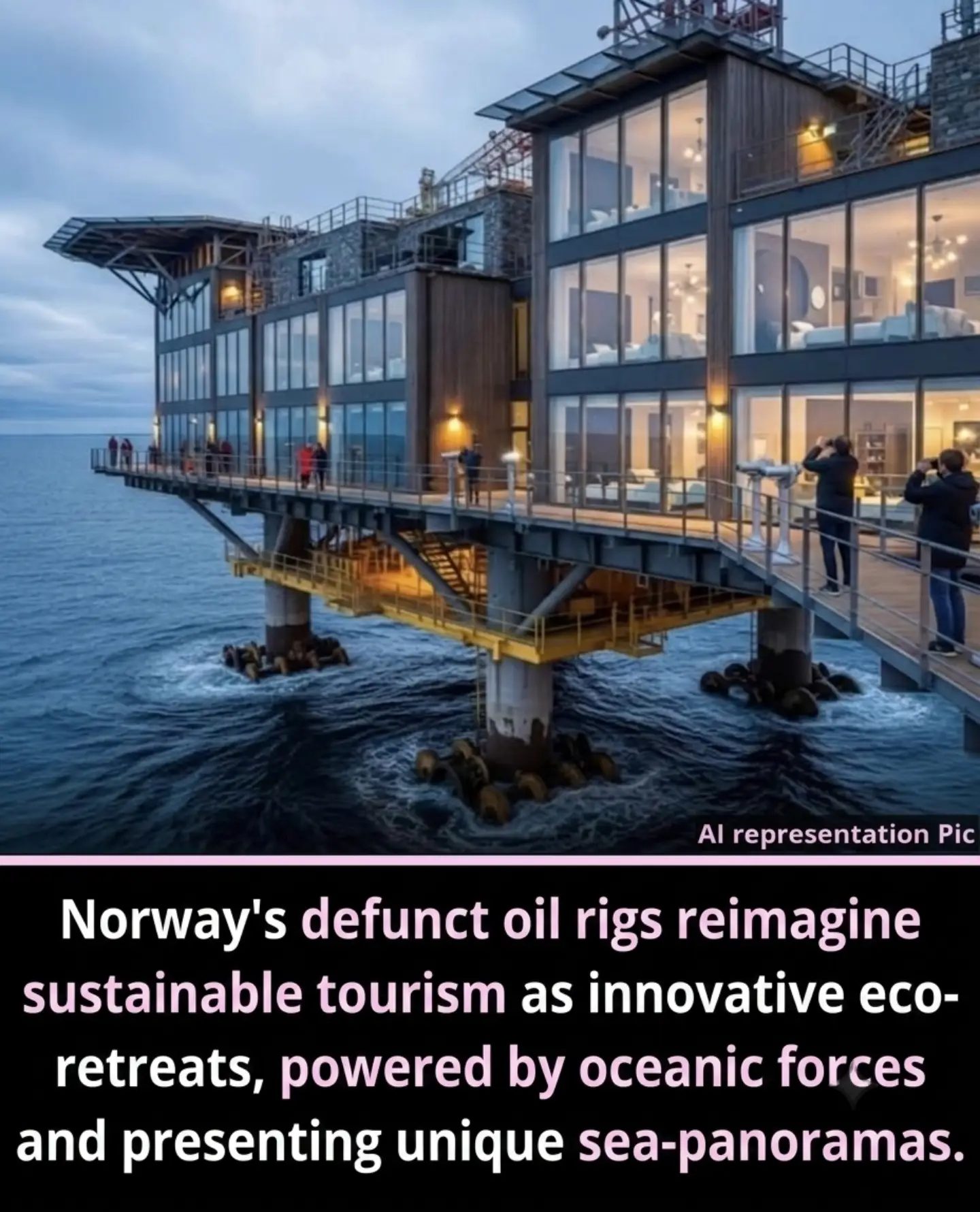
Sustainable Tourism with Repurposed Oil Rigs
Sustainable tourism is evolving in exciting ways, with one of the most innovative concepts coming from Norway. Architects in Norway are reimagining old North Sea oil platforms, once symbols of a bygone energy era, as sustainable eco-resorts. These defunct structures are being transformed into unique retreats that offer more than just stunning sea panoramas; they embody a circular economy model that prioritizes sustainability and environmental preservation.
Why This Matters
The repurposing of old oil rigs into eco-resorts is significant for several reasons. Firstly, it addresses the challenge of what to do with these massive, defunct structures that dot the ocean landscape. Rather than demolishing them, which would be environmentally costly, these rigs are being given a new lease on life. This approach not only reduces waste but also creates new opportunities for tourism, research, and environmental stewardship.
Secondly, this initiative showcases how innovative design can support sustainability. By integrating renewable energy sources and sustainable practices, these eco-resorts serve as models for future tourism developments. They demonstrate that it is possible to create luxurious experiences while minimizing environmental impact.
Main Discussion
The Concept of Eco-Resorts
The idea of transforming defunct oil rigs into eco-resorts is rooted in the principles of a circular economy. This economic model aims to eliminate waste and the continual use of resources. In this context, the old oil rigs are upcycled into hubs for tourism, renewable energy research, and environmental preservation. Powered entirely by oceanic forces, these retreats harness wave and tidal energy to meet their energy needs. Advanced filtration systems produce fresh water from the sea, and the menus focus on locally sourced, regenerative seafood.
Design and Amenities
The design of these eco-resorts is as impressive as the concept itself. Situated in the ocean, these structures feature large windows that offer panoramic sea views, providing guests with a unique and immersive experience. The interiors are designed to be both luxurious and eco-friendly, using sustainable materials and energy-efficient appliances.
Sustainability Features
One of the standout features of these eco-resorts is their commitment to sustainability. Here are some key elements:
-
Energy: The retreats are powered entirely by oceanic forces, utilizing wave and tidal energy. This not only reduces their carbon footprint but also showcases the potential of renewable energy sources.
-
Water: Advanced filtration systems are used to produce fresh water from the sea, ensuring that the retreats have a sustainable water supply without depleting local resources.
-
Food: The menus focus on locally sourced, regenerative seafood. This approach supports local fisheries and reduces the environmental impact of food transportation.
Practical Tips
For those interested in sustainable tourism, these eco-resorts offer a glimpse into the future of travel. Here are some practical tips for incorporating sustainability into your travel plans:
Choose Eco-Friendly Accommodations
When planning your next trip, look for accommodations that prioritize sustainability. This could include eco-resorts, eco-hotels, or even eco-friendly hostels. These places often have practices in place to minimize their environmental impact, such as using renewable energy sources, reducing water usage, and supporting local communities.
Support Local Economies
One of the best ways to ensure your travel is sustainable is by supporting local economies. This means purchasing locally-made products, eating at local restaurants, and engaging in activities that benefit the local community. By doing so, you can help preserve local cultures and traditions while also contributing to the economic well-being of the area.
Engage in Sustainable Activities
Whether it's hiking, snorkeling, or birdwatching, choose activities that have a low environmental impact. Many tour operators now offer eco-friendly tours that prioritize sustainability and environmental stewardship. By participating in these activities, you can enjoy your travels while also supporting conservation efforts.
Important Takeaways
The repurposing of old oil rigs into sustainable eco-resorts is a testament to the power of innovation and design. By transforming defunct structures into hubs for tourism, research, and environmental preservation, architects in Norway are leading the way in sustainable tourism. These eco-resorts offer a unique and luxurious experience while minimizing their environmental impact. This initiative serves as a model for future tourism developments, showcasing how sustainable practices can be integrated into all aspects of travel.
Conclusion
Sustainable tourism is not just a trend; it is a necessity. The repurposing of old North Sea oil platforms into eco-resorts is a prime example of how innovative design can support sustainability. By integrating renewable energy sources, advanced filtration systems, and locally sourced menus, these retreats offer a luxurious and eco-friendly experience. As we look to the future, this initiative serves as a model for how we can create sustainable tourism experiences that benefit both travelers and the environment.
Questions readers ask
What are the key benefits of Norway's repurposed oil rig resorts for guests?
Guests at these unique retreats can enjoy breathtaking sea views and experiences that blend adventure and tranquility. Additionally, they can take pride in choosing a holiday that supports sustainability and environmental preservation, aligning with a circular economy model.
How does Norway's repurposing of oil rigs address environmental challenges?
By transforming defunct oil rigs into eco-resorts, Norway avoids the environmental impact of demolition and reduces waste. This initiative also minimizes the carbon footprint of tourism infrastructure by reusing existing structures and reducing the need for new construction.
What is a circular economy model and how is it applied to these eco-resorts?
A circular economy model focuses on eliminating waste and the continual use of resources. In the context of these eco-resorts, it is applied by repurposing old oil rigs, reducing the need for new materials, and promoting sustainable practices throughout the resort operations.
How do these eco-resorts support Norway's sustainable tourism goals?
These eco-resorts align with Norway's sustainable tourism goals by providing unique experiences that prioritize environmental preservation. They attract eco-conscious travelers and inspire others to adopt sustainable practices, thereby fostering a greener future for tourism in the country.
What kind of activities and experiences can be expected at these unique ocean retreats?
Activities and experiences typically include water sports, wildlife watching, and eco-friendly excursions. Guests may also enjoy the unique architecture and engineering of the repurposed oil rigs, as well as the serene ocean views and the tranquility of the setting.
Can these repurposed oil rigs accommodate large numbers of tourists?
The capacity of each eco-resort varies depending on its size and design, but many are designed to cater to a limited number of guests. This exclusivity helps maintain a low environmental impact and ensures a high-quality experience for visitors.
How does Norway plan to expand its eco-resort offerings in the future?
Norway is continually exploring new opportunities to repurpose decommissioned oil rigs and other offshore structures. Future plans involve identifying suitable candidates for conversion and working with architects and engineers to design innovative, sustainable resorts that contribute to the country's green energy tourism initiatives.
Related deep dives
Similar reads based on topic and creator.




Recent articles
Fresh deep dives from the latest Reels we unpacked.



Comments
Be the first to comment.