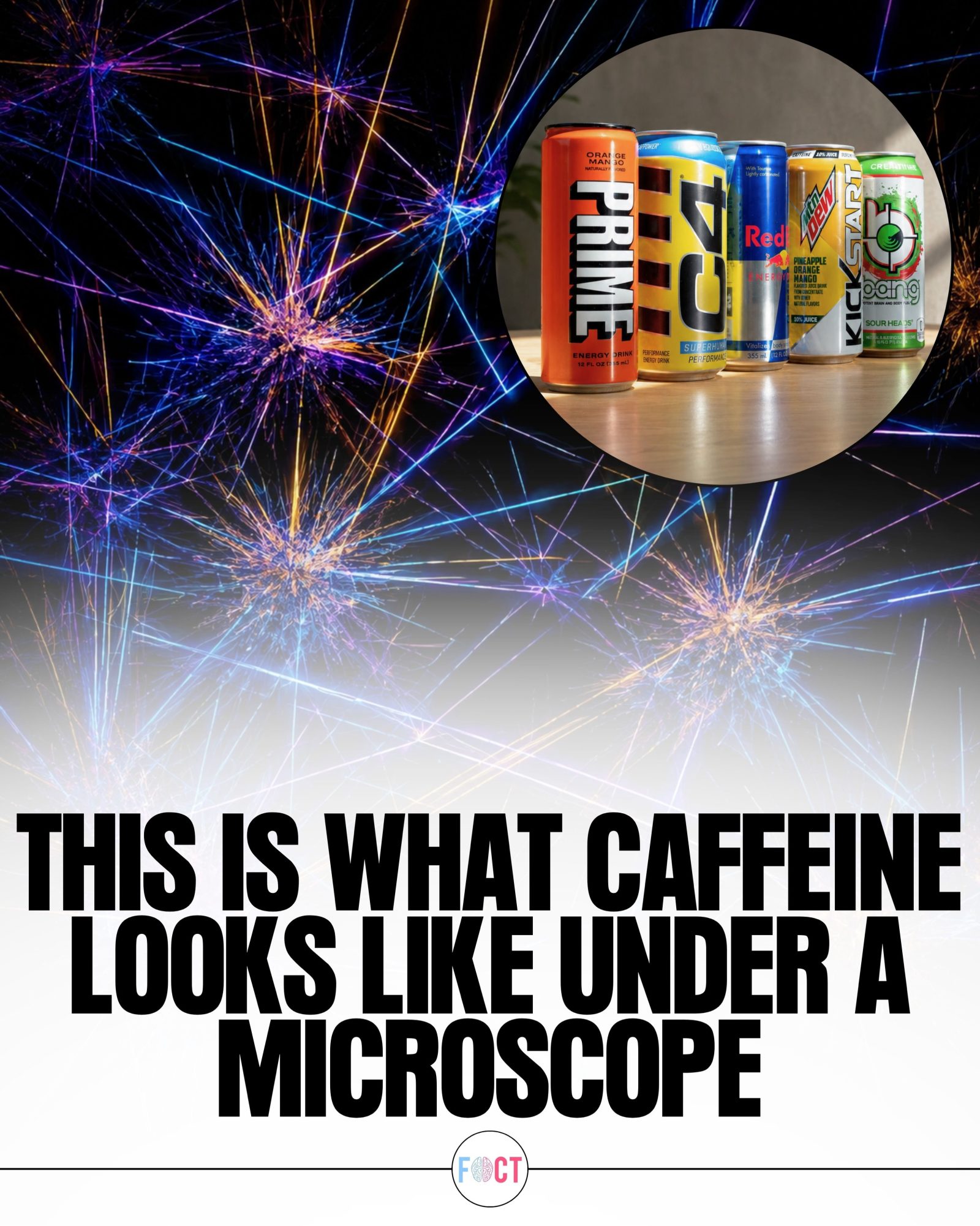
Caffeine in energy drinks is often described in relation to its crystalline nature. But what does it actually look like at a microscopic level, and how do the visual effects in popular media depict it?
Under polarized light, caffeine crystals exhibit a fascinating display of colors and patterns. This phenomenon is not just a visual trick; it's grounded in scientific principles. Caffeine, a white crystalline powder in its natural state, transforms under polarized light. Polarized light bends and splits as it passes through the crystal structure, revealing intricate details and vibrant colors. These rainbow hues are not inherently present in caffeine; they are a result of the interaction between light and the crystalline structure.
Context / Why this Matters
Energy drinks are a staple in many people's diets, providing a quick boost of energy and focus. But what's behind the buzz? Understanding the science behind caffeine can enhance our appreciation for these beverages and the effects they have on our bodies. Moreover, the visual representation of caffeine under a microscope can demystify how we perceive and understand this substance. The intriguing visual effects are not only aesthetically pleasing but also scientifically significant. They offer a glimpse into the hidden world of crystalline structures, which are fundamental to many substances we consume.
Main Discussion
The Science Behind Polarized Light and Crystals
Polarized light is a key tool in various scientific fields, particularly in crystallography. When light passes through a polarizing filter, it is aligned in a single plane. When this polarized light encounters a crystalline structure, the light waves are split and bent in different directions. The resulting colors and patterns are a direct result of this interaction, revealing the internal structure of the crystal. This technique is not limited to caffeine; it is used to study a wide range of materials, from minerals to biological samples.
Caffeine crystals, in particular, exhibit a unique response to polarized light. The vivid colors and detailed patterns observed are a result of the specific molecular arrangement within the crystal. This phenomenon is crucial in research, as it helps scientists identify and analyze different structures and compounds within a sample.
Energy Drinks and Caffeine Content
Energy drinks like Prime, Kickstart, and FSCCT often highlight their caffeine content as a key selling point. Understanding the molecular structure of caffeine can provide deeper insights into how these drinks deliver their effects. Caffeine, a stimulant, works by blocking adenosine receptors in the brain, which would otherwise signal fatigue. This blockage results in increased alertness and energy levels, making caffeine a popular choice for many.
Visual Representations in Media
The captivating visuals of caffeine under a microscope are often used in media to highlight the energetic properties of these drinks. In the display of energy drinks, visual effects simulating microscopic views of caffeine can create a sense of excitement and curiosity. The text overlay "THIS IS WHAT CAFFEINE LOOKS LIKE UNDER A MICROSCOPE" emphasizes the scientific aspect, making the product seem more credible and intriguing. These visual representations not only entertain but also educate viewers about the science behind the beverages they consume.
Practical Tips
If you're curious about the microscopic world of caffeine, here are a few practical tips to explore it yourself:
- Obtain Polarizing Filters: You can purchase polarizing filters for your microscope or camera. These filters are essential for observing the effects of polarized light on various materials, including caffeine crystals.
- Prepare a Sample: Grow your own caffeine crystals or obtain a sample from a reliable source. Ensure the sample is pure and free from contaminants for the best results.
- Set Up Your Microscope: Place the sample under the microscope and align the polarizing filters. Observe the crystal structure and note the colors and patterns that appear.
- Experiment with Lighting: Adjust the lighting and angle of the polarized light to see different effects. The interaction between light and the crystal structure can vary, revealing more details about the sample.
Important Takeaways
Understanding the microscopic world of caffeine crystals and their interaction with polarized light can enhance our appreciation for the science behind energy drinks. The vivid colors and patterns observed are not just a visual spectacle; they reveal important details about the molecular structure of caffeine. This knowledge can be applied in various fields, from material science to consumer education.
Conclusion
Caffeine in energy drinks is more than just a simple stimulant. Its crystalline structure and response to polarized light offer a fascinating glimpse into the molecular world. By understanding these principles, we can better appreciate the science behind the energy drinks we consume. Whether you're a scientist, a student, or simply curious, exploring the microscopic world of caffeine can be an enlightening experience.
Questions readers ask
What is polarized light and how does it interact with caffeine crystals?
Polarized light is light that vibrates in a single plane. When it passes through a crystalline structure like caffeine, it bends and splits, creating a vivid spectrum of colors. This happens due to the way the light interacts with the ordered arrangement of molecules in the caffeine crystal.
Why does caffeine appear as a white powder in its natural state but shows colors under polarized light?
Caffeine's white appearance in its natural state is due to its ability to scatter light in all directions. Under polarized light, however, the light waves are restricted to a single plane, and the crystal structure of caffeine causes the light to split into a range of colors, revealing the internal structure of the crystals.
What kind of microscope is used to view caffeine crystals under polarized light?
A polarized light microscope is used to view caffeine crystals. This type of microscope has two polarizing filters that create polarized light and allow the user to observe the rainbow hues and patterns in the caffeine crystals, providing insights into their internal structure.
What can we learn from the colors and patterns in caffeine crystals under polarized light?
The colors and patterns observed in caffeine crystals under polarized light can reveal information about the crystal's internal structure, its orientation, and even stress or damage to the crystal. This information can be useful for understanding the properties and behavior of caffeine in various applications.
Is the use of polarized light to view caffeine crystals limited to scientific research, or are there other practical applications?
While polarized light microscopy is often used in scientific research, it has practical applications in various industries. In the pharmaceutical industry, for example, it can be used to identify and characterize different forms of crystalline materials, ensuring the quality and purity of products like energy drinks. This technique can also be used in quality control to check for crystal damage or impurities.
Do different substances, like other ingredients in energy drinks, also show unique colors and patterns under polarized light?
Yes, many crystalline substances, including other ingredients in energy drinks, exhibit unique colors and patterns under polarized light. Each substance has a distinct crystal structure, which interacts with polarized light in a specific way, creating a unique visual signature. This can be useful for identifying and distinguishing between different ingredients.
Related deep dives
Similar reads based on topic and creator.


Recent articles
Fresh deep dives from the latest Reels we unpacked.




Comments
Be the first to comment.