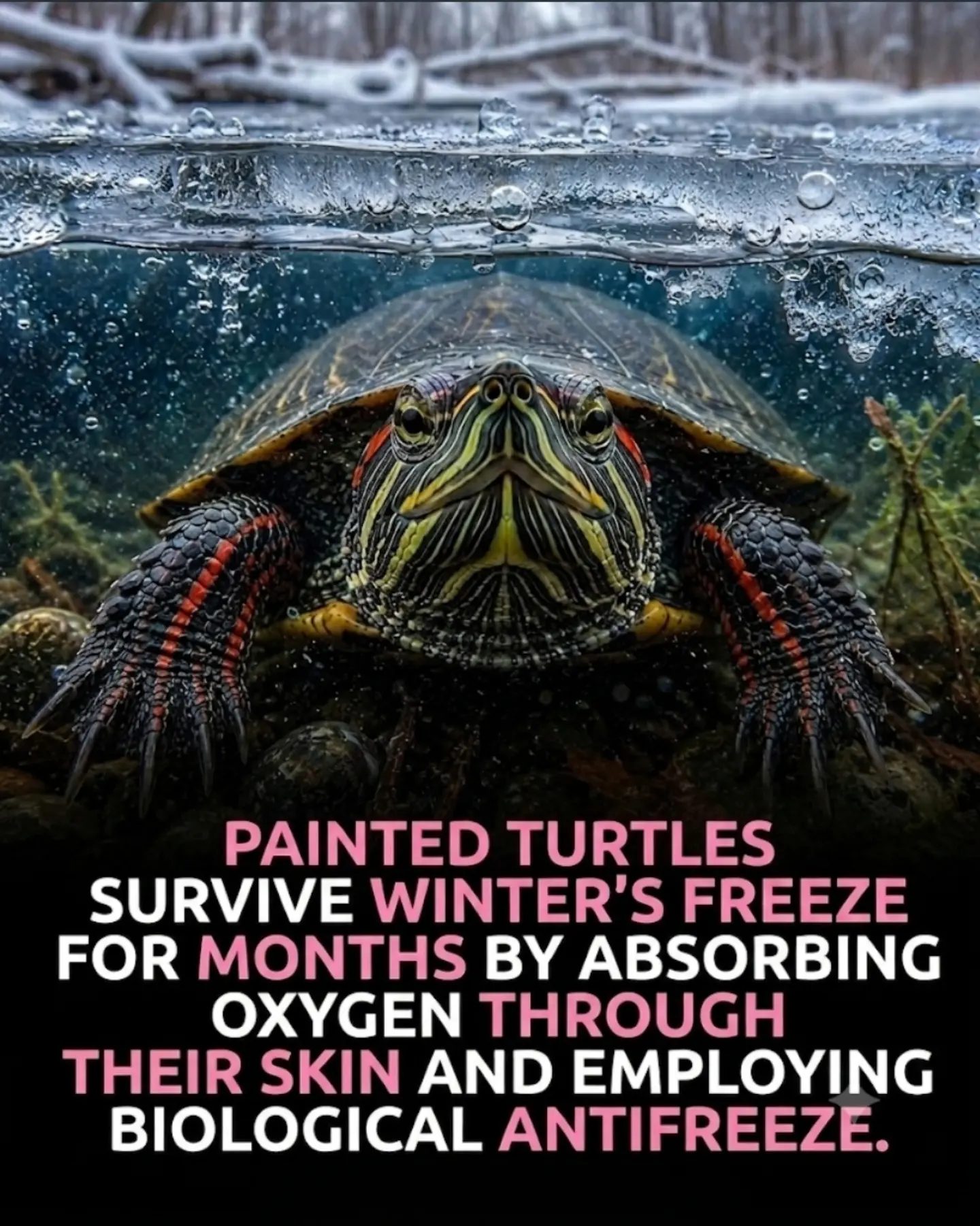
Painted Turtle Freeze Survival
The painted turtle, scientifically known as Chrysemys picta, exhibits extraordinary physiological adaptations that enable it to endure harsh winter conditions. These adaptations allow the turtles to survive for up to five months without breathing, trapped beneath thick layers of ice in frozen lakes and ponds.
The Physiology of Winter Survival
When winter sets in, painted turtles enter a state known as bradymetabolic depression. This state significantly slows their metabolic rate, allowing them to conserve energy and survive in low-oxygen environments. Their metabolic rate can drop by up to 99%, a dramatic reduction that helps them endure the long, cold months.
Anaerobic Respiration and Oxygen Absorption
One of the most remarkable adaptations of painted turtles is their ability to rely on anaerobic respiration and extra-pulmonary oxygen absorption. Anaerobic respiration means they can produce energy without the need for oxygen, which is critical when they are trapped underwater with limited access to atmospheric air.
These turtles take in dissolved oxygen directly from the water through highly vascularized areas of their skin, mouth lining, and specialized cloacal bursae—this process is often referred to as cloacal respiration. This unique method of oxygen absorption is crucial for their survival in icy conditions where atmospheric oxygen is inaccessible.
Managing Toxic Buildup
Anaerobic metabolism produces lactic acid, which can be toxic if it accumulates. However, painted turtles have evolved a clever mechanism to handle this issue. They mobilize calcium and magnesium carbonates from their own shells and skeletons to buffer their blood chemistry, neutralizing the toxic effects of lactic acid. This process ensures that their internal systems remain balanced and functional.
Biological Antifreeze
Another fascinating adaptation is their ability to produce a natural biological antifreeze. High concentrations of glucose and glycogen in their liver act as a natural protector, preventing lethal intracellular freezing. This mechanism allows the turtles to survive in water temperatures just below freezing, protecting vital organs from the damaging effects of ice crystals.
Practical Tips for Understanding Winter Survival
While painted turtles' adaptations are specific to their biology, there are broader lessons to be learned from their survival strategies:
Observing Nature
Paying close attention to how animals adapt to their environments can provide valuable insights into natural processes and inspire innovative solutions in various fields, from medicine to engineering.
Conservation Efforts
Understanding the survival mechanisms of painted turtles can aid in conservation efforts. By recognizing the specific needs and adaptations of these turtles, conservationists can develop better strategies to protect their habitats and ensure their survival.
Studying Adaptation
The study of painted turtles' adaptations can serve as a model for understanding how other species might cope with environmental changes, whether natural or man-made. This knowledge is increasingly valuable in the face of climate change and habitat loss.
Important Takeaways
Painted turtles are a striking example of nature's resilience and adaptability. Their ability to survive harsh winter conditions through a combination of metabolic depression, anaerobic respiration, and unique physiological adaptations highlights the importance of understanding and preserving biodiversity.
Additionally, their capacity to survive without atmospheric air, using cloacal respiration and biological antifreeze, emphasizes the incredible variety of survival strategies found in nature. These takeaways underscore the complexity and wonder of animal adaptations, offering inspiration and knowledge for further scientific inquiry.
Conclusion
The painted turtle's remarkable winter survival mechanisms serve as a testament to the ingenuity of nature. From their bradymetabolic depression to their unique methods of oxygen absorption and biological antifreeze, these turtles demonstrate the incredible adaptability of wildlife. By studying and appreciating these adaptations, we can gain a deeper understanding of the natural world and the extraordinary ways in which different species thrive in challenging environments.
Questions readers ask
How do painted turtles manage to survive without oxygen for extended periods during winter?
Painted turtles employ a strategy called bradymetabolic depression to slow their metabolism by up to 99%, allowing them to conserve energy and survive in low-oxygen environments. They also absorb oxygen directly through their skin and cloaca, which helps them manage during prolonged periods underwater.
What is the role of biological antifreeze in painted turtle winter survival?
Painted turtles produce natural antifreeze proteins that prevent ice crystals from forming in their tissues, which is crucial for their survival in freezing water. These proteins help maintain the turtles' bodily functions and prevent cellular damage during hibernation.
How do painted turtles handle toxic by-products during winter hibernation?
During winter hibernation, painted turtles produce lactic acid as a by-product of anaerobic respiration. They convert this lactic acid into other compounds such as glucose, which helps to manage toxic buildup in their system, preventing it from reaching harmful levels.
What triggers painted turtles to enter their winter survival mode?
The onset of colder temperatures and shorter daylight hours trigger painted turtles to enter their winter survival mode. They begin to prepare by slowing their metabolism and finding suitable underwater locations to hibernate, ensuring their survival until warmer conditions return.
Can painted turtles survive if the ice covering their hibernation spot melts prematurely?
If the ice melts prematurely, painted turtles can be vulnerable as they may not have sufficient energy reserves to respond to sudden changes. However, they are generally resilient and can adapt to such changes, though it may affect their overall health and energy levels.
How does the painted turtle's skin aid in its winter survival?
The skin of a painted turtle is specially adapted to absorb oxygen directly from the water, a process known as cloacal and cutaneous respiration. This ability is crucial for their survival during winter hibernation, allowing them to supplement the limited oxygen available underwater.
What physiological changes occur in painted turtles during winter hibernation?
During winter hibernation, painted turtles experience a significant slowdown in their metabolic rate, a process known as bradymetabolic depression. They also convert lactic acid produced from anaerobic respiration into less harmful compounds, and their bodies produce natural antifreeze proteins to prevent ice formation in their tissues.
Related deep dives
Similar reads based on topic and creator.

Recent articles
Fresh deep dives from the latest Reels we unpacked.




Comments
Be the first to comment.