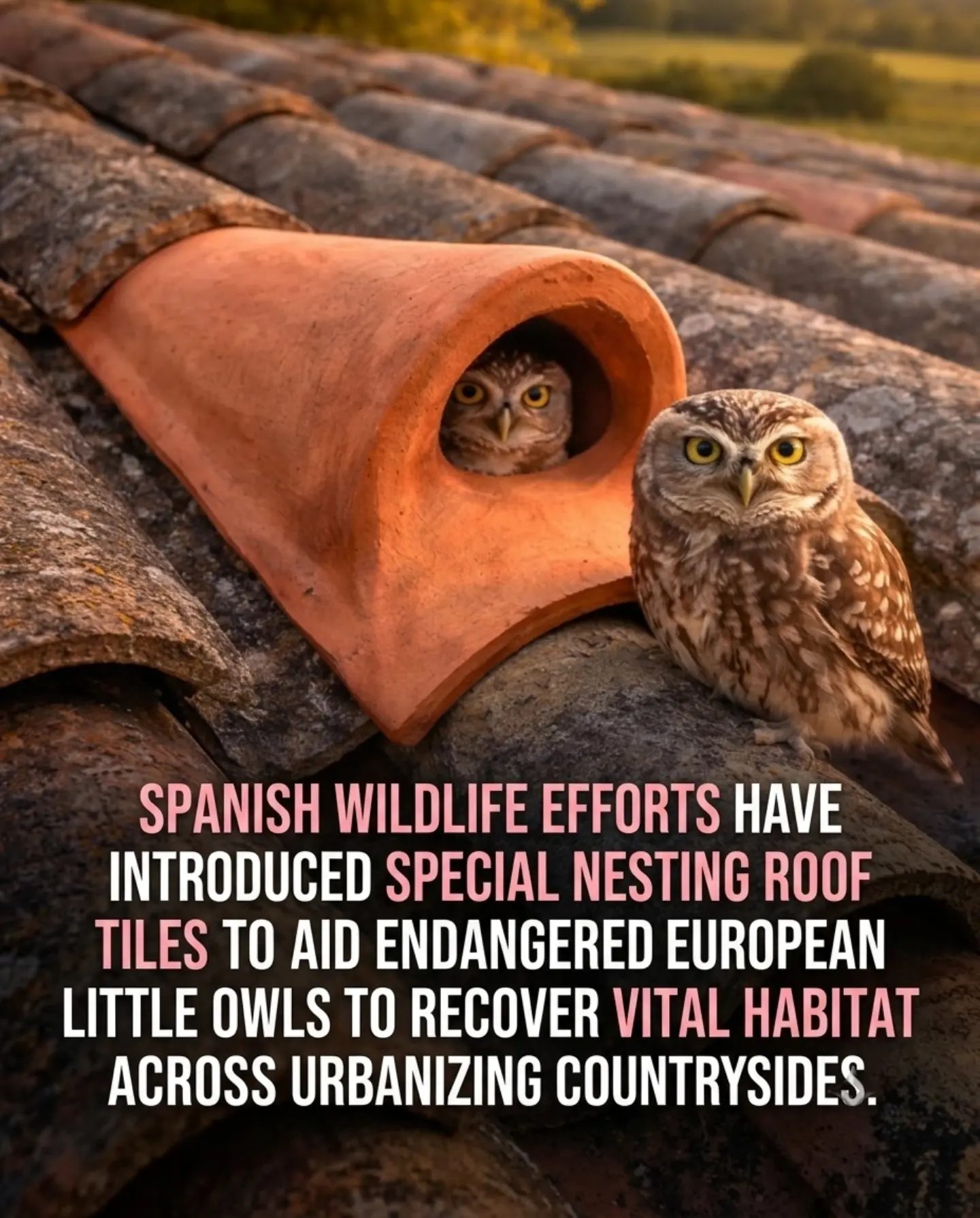
Owl Habitat Restoration: Nurturing Wildlife in Urbanizing Landscapes
Traditional clay roof tiles are playing a pivotal role in the conservation of European Little Owls. With the modernization of rural landscapes, the natural nooks and crannies that these tiny owls rely on for nesting are rapidly disappearing. However, conservationists in Spain have introduced an innovative solution: custom-made clay nesting tiles designed to blend seamlessly with traditional terracotta roofs.
Context / Why this matters
As urbanization advances, it inevitably impacts the natural habitats of many species, including the European Little Owl. These birds are particularly vulnerable to the loss of nesting sites due to the destruction and alteration of natural landscapes. This is where the introduction of special roof tiles becomes crucial. By providing safe and concealed nesting spaces, these tiles help to mitigate the effects of urbanization on owl populations and contribute to the broader goal of ecological balance.
Main discussion
The problem: Loss of natural habitats
Historically, European Little Owls have relied on the natural nooks and crannies of old buildings in rural areas for nesting. However, modern developments and renovations often result in the replacement of older structures with new ones that lack these natural features. This loss of suitable nesting sites poses a significant threat to the survival and reproduction of these owls.
The solution: Custom-made nesting tiles
To address this issue, conservationists in Spain have developed special nesting tiles. These tiles are designed to mimic the natural look of traditional terracotta roofs, making them an unobtrusive addition to the landscape. The tiles are integrated into the roofs of buildings, providing safe and hidden shelters for the owls. These "owl homes" not only help the birds thrive but also preserve the authentic look of the countryside.
The benefits of these tiles
The design of these nesting tiles offers several benefits:
- Safe and concealed shelter: The tiles provide a secure nesting environment that is protected from predators. The concealed nature of the nests ensures that the owls can raise their young in safety.
- Seamless integration: The tiles are designed to blend in with the existing traditional terracotta roofs, maintaining the aesthetic integrity of the countryside. This ensures that the conservation effort does not detract from the visual appeal of the landscape.
- Eco-friendly design: The use of traditional clay materials aligns with the principles of eco-design, ensuring that the conservation efforts are environmentally sustainable.
The impact on wildlife and the environment
The introduction of these nesting tiles has a positive impact on both the European Little Owl populations and the broader environment. By providing safe nesting sites, these tiles help to increase the owl population, which in turn contributes to the ecological balance. Moreover, the integration of these tiles into traditional roofs ensures that conservation efforts do not compromise the visual and cultural integrity of the landscape.
Practical tips
For homeowners and builders
- Consider using nesting tiles: If you are planning to build or renovate a rural property, consider incorporating these special nesting tiles into the design. This can provide a valuable nesting site for local wildlife without compromising the aesthetics of your property.
- Consult with local conservationists: Before implementing any changes, consult with local conservationists to ensure that the nesting sites are designed and placed correctly. They can provide valuable insights and guidance to maximize the benefits for local wildlife.
- Promote eco-friendly practices: Encourage the use of eco-friendly materials and practices in your construction projects. This not only benefits the environment but also supports wildlife conservation.
For conservationists
- Educate the public: Raise awareness about the importance of preserving natural habitats and the role that custom-made nesting tiles can play in this effort. This can help garner support for conservation initiatives.
- Collaborate with local communities: Work with local communities to implement nesting tile projects. Engaging the community ensures that conservation efforts are sustainable and widely supported.
- Monitor owl populations: Regularly monitor owl populations in areas where nesting tiles have been installed to assess the impact of these efforts. This data can be used to refine and improve future conservation strategies.
Important takeaways
- Innovative solutions are essential: As urbanization continues to expand, innovative solutions like custom-made nesting tiles become crucial for conserving natural habitats.
- Community involvement is key: The success of conservation efforts often depends on community involvement and support. Engaging with local communities can ensure that these initiatives are sustainable and effective.
- Eco-friendly design matters: Using eco-friendly materials and practices in conservation efforts ensures that the initiatives are environmentally sustainable and beneficial for wildlife.
Conclusion
The introduction of custom-made clay nesting tiles in Spain is a testament to the power of thoughtful design in wildlife conservation. By providing safe and concealed nesting sites for European Little Owls, these tiles help to mitigate the impacts of urbanization on these birds. This innovative approach not only supports the survival and reproduction of the owls but also preserves the natural and cultural integrity of the countryside. As rural landscapes continue to modernize, such initiatives will play a crucial role in nurturing wildlife and maintaining ecological balance.
Questions readers ask
How do custom-made clay tiles help European Little Owls in urban Spain?
Custom-made clay tiles provide artificial nesting sites that mimic the natural nooks and crannies European Little Owls use for nesting. These tiles are designed to blend in with traditional terracotta roofs, offering a safe and familiar habitat for the owls to adapt to urban environments where their natural habitats have disappeared.
Why are European Little Owls vulnerable to urbanization?
European Little Owls are vulnerable to urbanization primarily due to the loss of their natural nesting sites. As rural landscapes are developed, the trees, rock crevices, and other natural features these birds rely on for nesting are destroyed or altered, making it difficult for them to find suitable places to breed and raise their young.
How do conservationists in Spain address the loss of natural nesting sites for European Little Owls?
Conservationists in Spain have introduced custom-designed clay nesting tiles that can be integrated into traditional rooftops, helping to compensate for the loss of natural nesting sites. These tiles are specifically crafted to provide the right conditions for European Little Owls to nest, adapt, and thrive in urban and rural areas.
What are the benefits of using terracotta tiles for European Little Owl conservation?
Terracotta tiles are beneficial for European Little Owl conservation because they are durable, weather-resistant, and can blend seamlessly with the existing architecture. By using these tiles, conservationists can create owl-friendly habitats without compromising the aesthetic of the buildings or the comfort of the residents. This makes them an ideal solution for integrating wildlife conservation into urban environments.
Can European Little Owls adapt to urban environments?
Yes, European Little Owls can adapt to urban environments with the right support. By providing suitable nesting sites through custom-made clay tiles, conservationists help these owls transition from rural to urban settings. This adaptation is crucial for the survival of the species as urbanization continues to encroach on their natural habitats.
What role do traditional clay tiles play in the conservation of European Little Owls?
Traditional clay tiles serve as a base for the custom-made owl nesting tiles. By incorporating these tiles into existing structures, conservationists create a network of safe nesting sites that support the European Little Owl population in both urban and rural areas. These tiles mimic the natural habitats that the owls rely on, ensuring their long-term survival in changing landscapes.
What impact does urbanization have on European Little Owl habitats?
Urbanization has a significant impact on European Little Owl habitats by destroying and altering the natural features these birds need for nesting. As cities expand, trees, rock formations, and other natural nesting sites are replaced with buildings and infrastructure, leaving little to no suitable nesting areas for the owls. This is why initiatives like the use of custom-made clay tiles are so important in helping these birds thrive in urban environments.
Related deep dives
Similar reads based on topic and creator.
Recent articles
Fresh deep dives from the latest Reels we unpacked.




Comments
Be the first to comment.