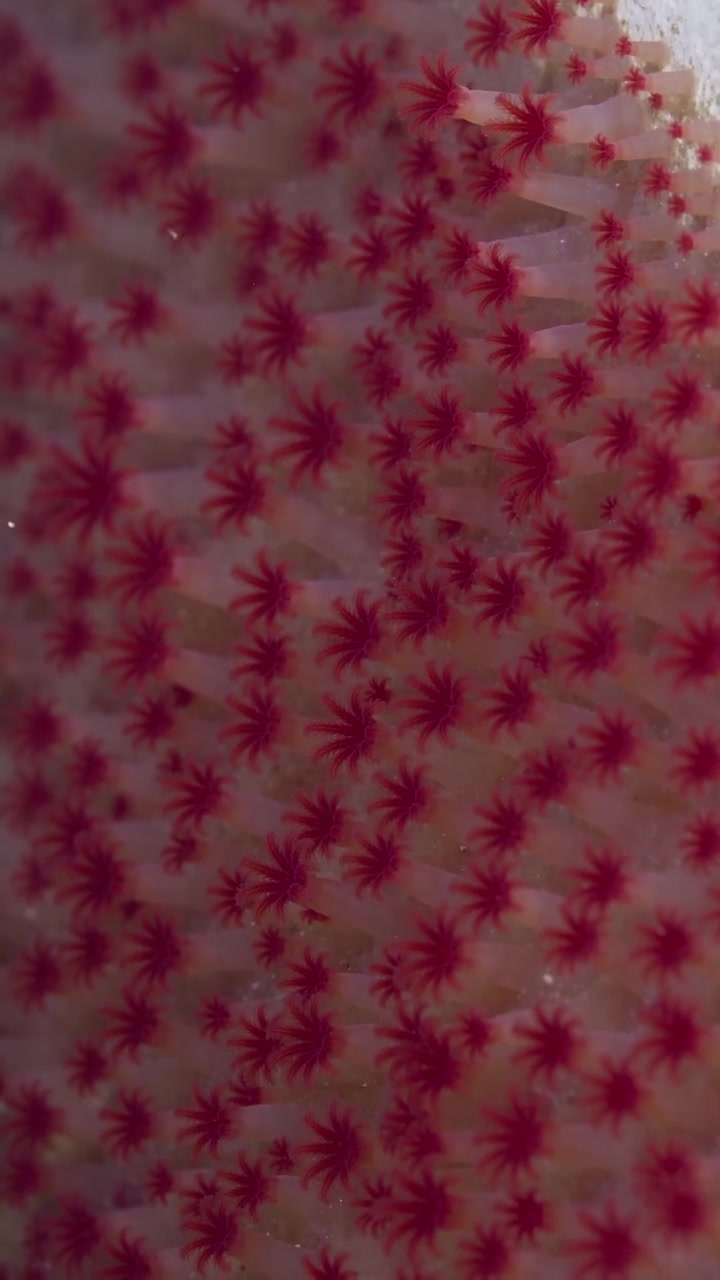
Osedax, a bone-eating worm that thrives in the crushing darkness of the deep sea, one kilometer below the waves. This worm lacks a mouth, stomach, and even eyes—no matter if its environment doesn't have light, it depends on bones of dead whales for survival.
Devouring the Deep: The Worm that Feeds on Whale Bones
Osedax, also known as the bone-eating worm, inhabits the deep ocean and feeds on the bones of dead whales. The creature lacks a mouth and stomach, and instead relies on bacteria to process its meal. The bacteria live inside the roots that the worm grows into the bone, digesting the biomaterial. The worm possesses two sets of red plumes that resemble gills; these are actually used for respiration. The female worm can be as long as a finger, while the males are smaller than grains of rice. They live symbiotically, with dozens of males residing inside the female's tube. A single skeleton can sustain an entire Osedax colony for years, like a town living off a single meal. The worm's unique way of foraging and its symbiotic relationship with bacteria is a testament to nature's ingenuity. Despite their peculiar existence, Osedax worms have been around for a hundred million years.
Feasting on the Fall of Giants
Osedax worms prey on the bones of dead whales, as whale skeletons provide a stable, nutrient-rich environment. These worms began eating the bones of sea creatures 100 million years ago, well before the existence of whales. Living without light, these worms occupy the deepest depths of the sea.
Bone Hollows and a Hungry Town
Osedax worms live in colonies called bone hollows, ovoid-shaped tunnels they carve into whale bones. Colonies can survive for years using a single whale bone. The worms display a sense of community, staying near to each other and sharing the nutrients derived from the bones. The worms are often depicted as a town living off a single meal, but the relationship is closer to agriculture: Osedax worms behave like nomadic farmers, moving on once the soil is depleted. As one skeleton becomes depleted, they drift to the next.
A Female Fiefdom
Female Osedax worms form the heart of each colony. They are finger-sized and can host dozens of males, who are much smaller, the size of a grain of rice. The dwarf males live inside the female's tube, and the worms reproduce through a process called broadcast spawning, where eggs are released into the water column. The male worms produce sperm, while the female worm retains the fertilized eggs inside her body. Since they are sessile creatures, they rely on the ocean currents to carry sperm to the female worms.
The Colony's Life Cycle
The life cycle of an Osedax colony begins when a whale carcass falls to the ocean floor. The first thing that grows on the carcass is usually a biofilm, which eventually harbors Osedax worms. Once the bones fall off the whale carcass, the Osedax worms take root and begin their meal.
Practical Obedience to a Fascinating Unknown
Take a dive into the abyss and adopt the mindset of a marine biologist. If you have the chance to visit a marine biology museum, look for the exhibits showcasing these wonders. Even more, try viewing the full whale-fall story and three more deep-sea animals on YouTube. Living in the ocean's depths, these worms are profoundly mysterious. Although observing these creatures might not be possible for everyone, learning about them has the power to provide a deeper appreciation for the wonders of the deep sea.
- Learn More: Visit the DeepPlanetTV YouTube channel for more underwater exploration videos. The channel offers full episodes and other deep-sea creature features.
- Explore Marine Biology: If you're interested in learning more, consider diving into marine biology. Books and documentaries can provide more answers and raise more questions.
- Stay Informed: Given the fragility of deep-sea ecosystems, staying informed about marine conservation efforts is crucial.
Questions readers ask
How exactly do Osedax worms eat without a mouth or stomach?
Osedax worms have a unique way of feeding. They grow roots into the whale bones and rely on bacteria that live inside these roots to digest the bone material. This symbiotic relationship allows the worms to extract nutrients without needing a mouth or stomach.
What is the role of the male worms in the Osedax colony?
Male Osedax worms are significantly smaller than the females and reside inside the female's tube. Their primary role is to produce sperm, which is then released into the water column to fertilize the eggs. This reproductive strategy is called broadcast spawning, and it ensures the survival of the species in the deep-sea environment.
How do Osedax worms breathe in the deep sea?
Osedax worms have red plumes that resemble gills, but these are actually used for respiration. These plumes help the worms absorb oxygen from the water, which is crucial for their survival in the deep sea where oxygen levels can be low.
Can Osedax worms survive without whale bones?
Osedax worms are highly specialized and rely on whale bones for their survival. They have evolved to thrive in the nutrient-rich environment provided by whale carcasses. Without these bones, it's unlikely that they would be able to survive, as they depend on the bacteria that digest the bone material for their nutrition.
How long can an Osedax colony survive on a single whale bone?
An Osedax colony can survive for years on a single whale bone. The worms carve out tunnels called bone hollows and live in colonies, sharing the nutrients derived from the bones. As the bone becomes depleted, the colony moves on to the next available skeleton, much like nomadic farmers.
Are there any other creatures that have a similar relationship with bacteria as Osedax worms?
While there are other creatures that have symbiotic relationships with bacteria, the specific way Osedax worms use bacteria to digest bone material is quite unique. This relationship allows them to thrive in an environment that is inhospitable to most other forms of life, making them a fascinating subject of study in marine biology.
Related deep dives
Similar reads based on topic and creator.

Recent articles
Fresh deep dives from the latest Reels we unpacked.


Comments
Be the first to comment.