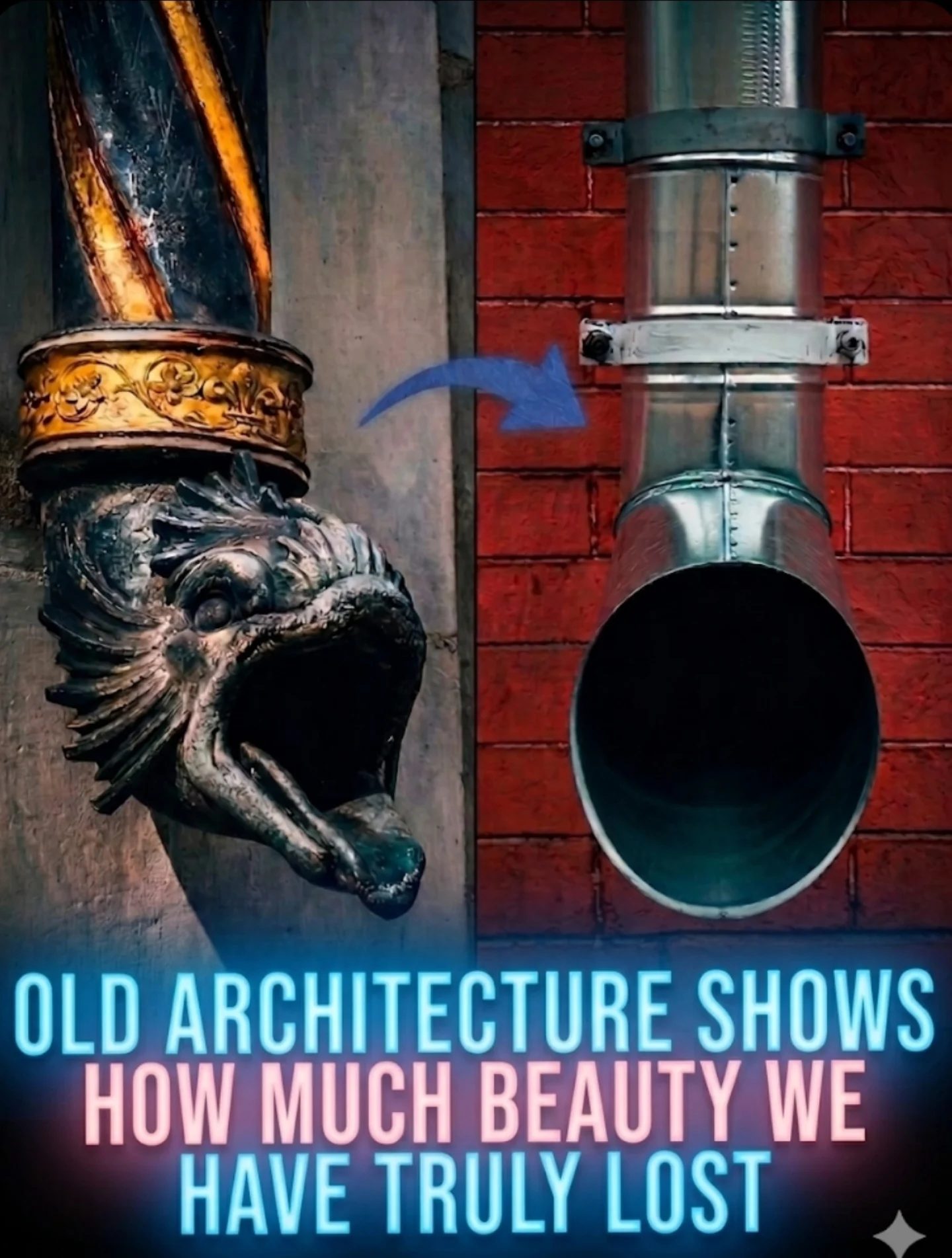
Architectural Details: A Tale of Two Epochs
The juxtaposition of old and new architectural elements reveals a striking contrast between the ornate craftsmanship of the past and the utilitarian minimalism of the present. This comparison highlights the evolution of urban design, where functional infrastructure was once an opportunity for artistic expression, but has now shifted towards industrial efficiency.
Context: Why This Matters
Understanding the transition from ornate to utilitarian architecture is crucial for appreciating the aesthetic and cultural value of historical buildings. It also sheds light on the practical considerations that drive modern construction, offering insights into the trade-offs between functionality and beauty in urban environments.
Ornamental Craftsmanship of the Past
Intricate Designs and Artistry
Old architecture is often celebrated for its elaborate and intricate designs. Structures from centuries past frequently feature detailed carvings, gilded accents, and other ornamental elements. These designs not only serve functional purposes but also add an aesthetic value that enriches the urban landscape. For example, a gargoyle-style spout might include intricate floral carvings, transforming a simple downspout into a piece of art.
Historical Significance
The craftsmanship of old architecture reflects the skill and artistry of past eras. These structures often tell stories of the culture, history, and societal values of their time. Each element, from the carved stone to the metalwork, is a testament to the dedication and expertise of the artisans who created them. These designs are a testament to the idea that even functional components can be elevated to artwork, adding depth and character to the urban landscape.
The Lost Art of Ornamental Craftsmanship
The shift from ornate to utilitarian design has led to a decline in the artistry and craftsmanship that once characterized urban architecture. The modern focus on cost-effectiveness and durability has often resulted in the loss of these intricate details, leaving contemporary landscapes with a more functional but less inspiring character.
Utilitarian Minimalism of the Present
Practical and Durable Designs
Contemporary architecture emphasizes practicality and durability. Modern materials, such as galvanized steel, are chosen for their cost-effectiveness and ability to withstand the elements. This shift towards industrial efficiency has made buildings more functional and durable, but it has also led to a more uniform and less intricate aesthetic.
The Trade-Offs
The transition to utilitarian design has come at the expense of the architectural soul. While modern buildings excel in logistical practicality, they often lack the aesthetic character and artistic expression that defined older structures. The focus on efficiency means that the aesthetic value of architectural details is often overlooked, leaving contemporary urban landscapes functional but less inspiring.
Practical Tips for Appreciating Architectural Details
Observe and Compare
Take the time to observe and compare old and new architectural elements. Notice the intricate details in older buildings and appreciate how they add depth and character to the urban landscape. Compare these details to the more functional designs of modern architecture, and consider how each serves its purpose.
Learn the Stories
Many historical buildings have stories to tell. Learning about the history and design of older structures can enhance your appreciation for their aesthetic and cultural significance. This knowledge can also provide context for understanding the evolution of urban design.
Embrace the Juxtaposition
The juxtaposition of old and new architectural elements can be a source of inspiration. By appreciating both the ornate craftsmanship of the past and the utilitarian minimalism of the present, you can gain a deeper understanding of the trade-offs and values that shape our urban landscapes.
Important Takeaways
The comparison between old and new architectural elements underscores the tension between functionality and beauty in urban design. Historical architecture showcases the intricate craftsmanship and aesthetic value of the past, while modern buildings prioritize cost-effectiveness and durability. This shift, while practical, has led to a loss of the architectural soul that once characterized urban landscapes.
Conclusion
By appreciating the intricate craftsmanship of the past and the practical considerations of the present, we can gain a deeper understanding of how urban design has evolved. Both eras have their unique strengths, and by embracing their juxtaposition, we can create more balanced and inspiring urban environments.
Questions readers ask
What are the key differences between old and new architectural craftsmanship?
Old architectural craftsmanship is characterized by intricate, ornate designs that reflect the artistic skills and cultural values of the past, whereas modern craftsmanship focuses more on industrial efficiency and minimalism, often sacrificing elaborate ornamentation for practicality.
Why is it important to study the evolution of architectural craftsmanship?
Studying the evolution of architectural craftsmanship helps us appreciate the aesthetic and cultural significance of historical buildings. It also provides insights into the practical considerations that shape modern construction, illustrating the balance between functionality and beauty in urban environments.
How has the role of architectural ornamentation changed over time?
In the past, architectural ornamentation was a primary feature, reflecting the artistic expression of the era. Today, ornamentation often takes a backseat to functional design, with modern architecture prioritizing simplicity and efficiency over elaborate details.
What drove the shift from ornate to utilitarian architecture?
The shift from ornate to utilitarian architecture was driven by several factors, including advancements in industrial technology, a growing emphasis on efficiency, and changes in cultural attitudes towards design. This transition has significantly impacted the way we build and perceive urban spaces.
How does the contrast in architecture between old and new reflect changes in urban design?
The contrast in architecture between old and new reflects a broader shift in urban design from artistic expression to practical functionality. Historical architecture often featured intricate details that served as opportunities for artistry, while modern architecture is more focused on practical infrastructure and industrial efficiency.
What are some examples of old vs new architectural design contrasts in urban environments?
Examples of old vs new architectural design contrasts can be seen in various cities, such as the ornate facades of historic buildings in contrast to the sleek, minimalist designs of new skyscrapers. These contrasts highlight the evolution of architectural craftsmanship and the changing priorities in urban design.
What can we learn from the evolution of architectural craftsmanship about the balance between beauty and functionality in modern construction?
The evolution of architectural craftsmanship teaches us that while functionality is crucial for modern construction, there is still a place for beauty and artistic expression. It encourages us to consider how we can integrate aesthetic elements into functional designs, creating urban environments that are both practical and visually appealing.
Related deep dives
Similar reads based on topic and creator.

Recent articles
Fresh deep dives from the latest Reels we unpacked.




Comments
Be the first to comment.