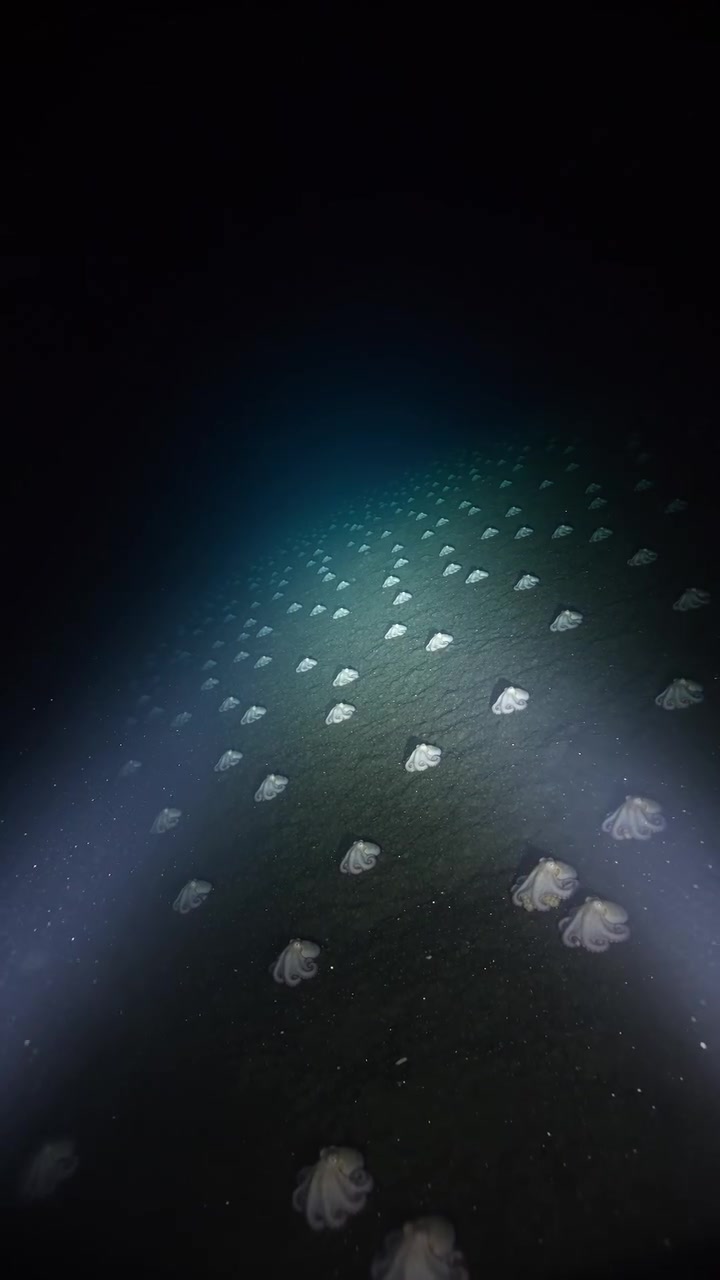
The Octopus Nursery Two Miles Deep
Two miles beneath the surface, amid cold, dark waters near California, scientists discovered something astonishing: twenty thousand octopuses congregated in one spot, each sitting on a clutch of eggs. The site, known as the Octopus Garden, is the largest gathering of these cephalopods ever observed. The finding, by the Monterey Bay Aquarium Research Institute (MBARI) in 2018, has revealed a unique octopus behavior. Warm water and egg hatching are key to the octopus nursery. These octopuses have chosen a dark volcanic slope where warm water seeps out from cracks in the rock, maintaining a temperature of about 11 degrees Celsius — a stark contrast from the mostly freezing ocean around it.
Deep-Ocean Nursery Strategism
Trying to understand why octopuses would choose to live so deep and how that environment benefits their eggs. The Pacific Ocean holds many mysteries, but these octopuses are just one clue of deep ocean life. TIt’s cold and dark at that depth, which is why these octopuses have come together to preserve their eggs and hatching is heavily reliant on the warm temperatures. The eggs of these octopuses would take years to hatch in the colder water. In their chosen spot, the eggs hatch under two year and it's similar to moving a nest from a fridge to a windowsill. Each one rests upside down on eggs, arms folded over them, making sure they're warm enough.
The Octopus Nesting Strategy
The favored volcanic slope of the octopuses is a good indicator of the octopuses' preference for warmth. Octopuses typically lay eggs in the winter and summer months, with the warmer waters providing an ideal environment for the eggs to hatch. With warmer waters, octopuses' eggs hatch in under two years, as opposed to the years it would take in colder waters. This strategy ensures that the young octopuses have a better chance of survival, as they are hatched in an environment that is conducive to their growth and development.
Egg Incubation
Octopuses follow through their incubation strategy with their arms. Arms are used to tuck the eggs into spots that have warmer temperatures. The eggs are also moved to other spots if the temperature drops, and taken to warmer water spots, showcasing their vigilance.
The Warm Water Phenomenon
Warm water is another key element to the octopus egg incubation strategy. Warm water seeps up through the cracks in the rock, providing a warm environment for the octopuses to incubate their eggs. This warm water is also crucial for the survival of the young octopuses, as it helps to keep them warm and safe.
Communal Nesting Site
The Octopus Garden is a surprisingly communal environment that is also beneficial for their chances of survival. The warm water spots is preferred by all the octopuses, which means they have each other for protection against any danger. This communal environment also allows them to share resources and work together to protect their young.
Climate Preferences
This warm spot is not just for the 20,000 octopuses. The temperature around the rock is barely above freezing, which would make it difficult for the eggs to hatch. However, the warm water that seeps through the rock provides a comfortable environment for the eggs to hatch in under two years.
Explorations and Discoveries at the International Deep Sea Zone
Revealing discoveries like the Octopus Garden on the Davidson Seamount highlight how much we have to learn about deep- sea life. As the MBARI team has studied the site for the past three years, they've uncovered that the water's warm temperature is what helps maintain the survival of the young octopuses. This discovery also underscores the importance of the deep sea ecosystems and how they impact the rest of the ecosystem. While most people don't realize it, the deep sea is a mysterious world that holds many secrets. There are many different types of ecosystems and species of plants and animals in the deep sea, each with its own unique characteristics and behaviors.
Deep Sea Exploration for Everyone
Each twenty thousand octopuses curiosity piques when they think of deep sea exploration, but also has a way to explore. Deep sea exploration is not just reserved for scientists and researchers. Everyone can explore the deep sea by watching the exploration videos available on YouTube. The episodes offer a glimpse into the deep sea world and can teach viewers a lot about the different ecosystems and species that live there. Additionally, viewers can learn about the different technologies and tools used in deep sea exploration.
- Dive into DeepPlanetTV Check out DeepPlanetTV for full episodes of deep-sea exploration. The channels captures deep sea footage and focuses on the Daily lives of octopuses and animals in the deep sea.
- Watch and Learn Deep ocean exploration videos show you different aspects of sea life, from octopuses to shrimp. Listen to the conversations had by the scientists about these creatures as it also shows you how the hatching occurs.
- Share the Experience You will only find out that deep sea exploration is not just for scientists. These videos also help inspire curiosity and wonder in the deep sea and make everyone want to explore it. Many people enjoy watching these videos and sharing them with their friends and family.
Questions readers ask
What species of octopuses are gathered in the Octopus Garden?
The article doesn't specify the exact species of the 20,000 octopuses gathered. However, given the location near California and the depths involved, it's likely a deep-sea species, possibly a member of the genus Grimpoteuthis, known for their deep-sea habitats.
How do the octopuses maintain the warmth of their eggs without a continuous water source?
The octopuses use their arms to tuck the eggs into warmer spots and move them around if the temperature drops. This behavior showcases their vigilance and ensures the eggs are kept in the most favorable conditions for hatching.
Is the Octopus Garden the only known deep-sea nursery of its kind?
The Octopus Garden is the largest gathering of octopuses ever observed, but it's not clear if it's the only one of its kind. Deep-sea exploration is still in its early stages, and there could be other similar sites yet to be discovered.
Could the octopuses' behavior change if the warm water source were to disappear?
If the warm water source were to disappear, the octopuses might struggle to incubate their eggs effectively. The warmer temperatures are crucial for the eggs to hatch in under two years, so a change in the environment could significantly impact their reproductive success.
What would happen to the young octopuses if the communal environment were disrupted?
The communal environment provides protection and shared resources for the octopuses. If disrupted, the young octopuses might face increased risks from predators and a lack of support, potentially reducing their chances of survival.
Can this deep-sea gathering be observed by humans?
Observing this deep-sea gathering would require specialized equipment and expertise, such as those used by the Monterey Bay Aquarium Research Institute. It's not something that can be easily seen by humans without the right tools and training.
How do the octopuses communicate or coordinate their nesting behavior in such a large group?
The article does not detail specific communication methods, but the octopuses' coordinated behavior suggests some form of signaling or response to environmental cues. Their communal nesting and protective strategies indicate a level of social organization, even if it's not well-understood.
Related deep dives
Similar reads based on topic and creator.


Recent articles
Fresh deep dives from the latest Reels we unpacked.


Comments
Be the first to comment.