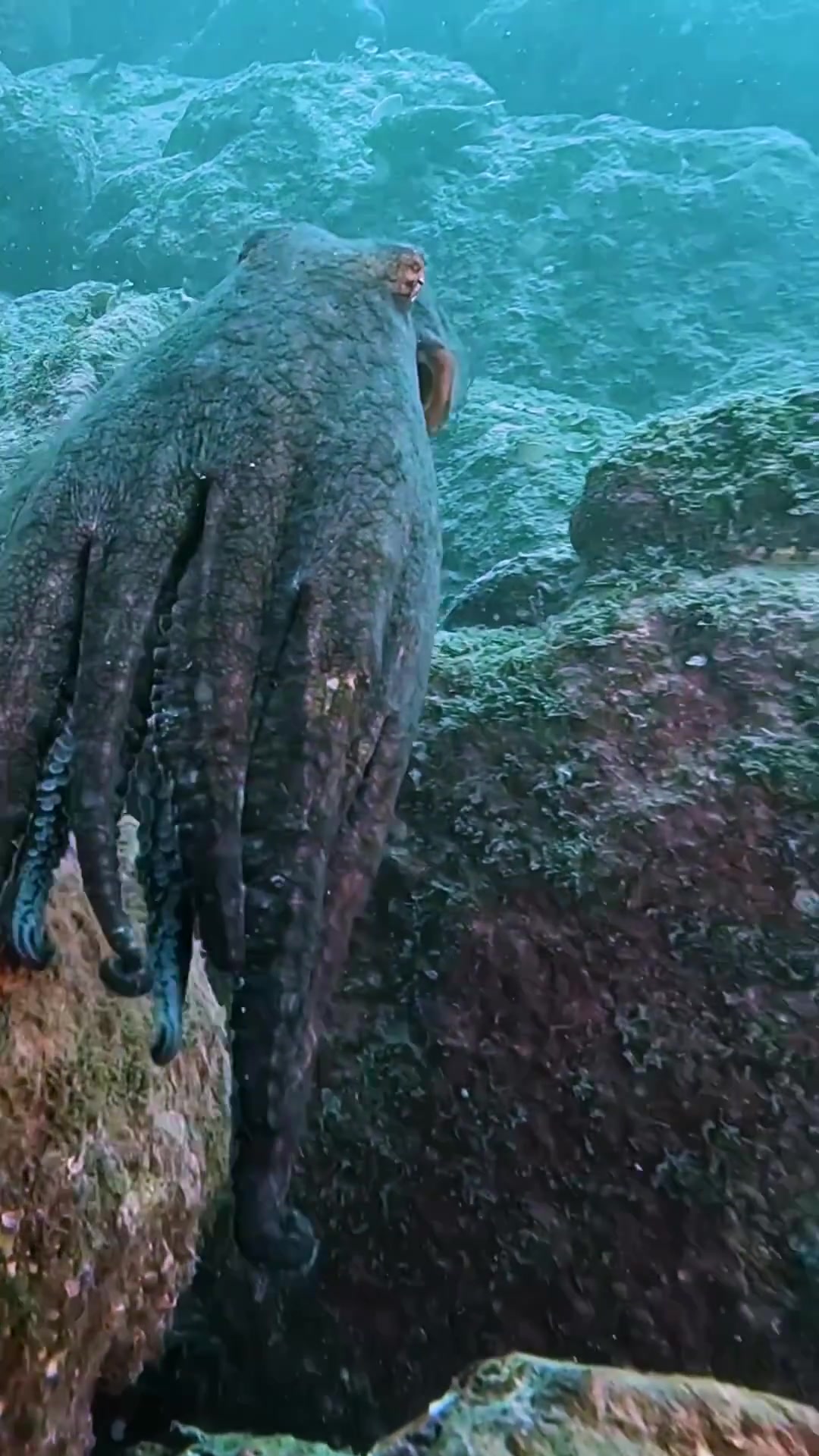
An underwater world unfolds, body as colorful as coral. The octopus settles, its camouflage shifting with the rocky terrain, blending into the surroundings. Shoals of fish dart nearby. Because octopuses are not just "in the water" — they live here, exploring their homes along the reefs.
The Art of Underwater Life
An octopus in its natural underwater habitat is a marvel of marine life. It hunts, avoids predators, and navigates a complex environment using its distinctive body and behaviors. Octopuses are known for their intelligence, problem-solving skills, and remarkable ability to change color and texture to mimic their surroundings. The unique design of their bodies allows them to squeeze through small spaces, and their tentacles are equipped with powerful suction cups that help them grip surfaces and manipulate objects. This adaptation enables the octopus to explore and interact with its marine surroundings effortlessly.
The Cultural Lure of the Octopus's Abyss
The octopus's unique underwater lifestyle captivates biologists, artists, and filmmakers. The species' striking form and behaviors make it a focal point for conservation, research, and storytelling. Octopuses play central roles in ocean preservation discussions, too: their habitat is an important part of the marine ecosystem. Conservation efforts and research collaborations to understand its life cycle have been paramount, especially for species like the octopus that play crucial roles in marine biodiversity. Films like Finding Nemo and scientific research from universities across the world draw further attention to the octopus.
A Color Master in the Rocks
The octopus lives in a variety of habitats, from rocky shores to ocean depths. Each location has its unique challenges and species that it must adapt to, and the octopus's camouflage is critical. An octopus's ability to change color and texture allows it to blend seamlessly into its surroundings. This adaptive skill is more than just a suvival tactic; it plays a pivotal role in how octopuses interact with other creatures and in hunting and avoiding predators. While the video only gives glimpses of the rocky terrain, the octopus's movements show how much it relies on camouflage and spatial navigation to thrive. Because octopuses also have a sophisticated nervous system, they can exhibit remarkable problem-solving skills and even demonstrate creative maneuvers. Octopuses have been known to use tools, such as rocks or shells, in their natural habitats to achieve goals.
Direct Encoding
The octopus's interaction with its surroundings involves complex movements and behaviors. Its tentacles are equipped with powerful suction cups that allow it to grip and manipulate objects, and the creature uses these appendages to navigate through its environment. The way it moves around rocks and coral shows complex control over its body. This allows them to manage the spaces and escape from larger predators.
A World of Small Creatures and Colours
The underwater world is a bustling ecosystem, and small fish are often seen swimming near the octopus. This interaction highlights the intricate web of life in marine environments, where each creature plays a unique role. The octopus, with its camouflage and hunting skills, is a vital part of this ecosystem. Small fish serve as both prey and companions to the octopus, contributing to the balance of the underwater world.
Watching the Octopus in Nature
To experience the wonders of the natural underwater habitat, consider exploring marine ecosystems in person or through films and documentaries. Taking a guided snorkeling or scuba diving tour can provide a direct, immersive view of natural underwater habitats. When observing marine life, remember to prioritize conservation and minimize disturbance to the environment.
- Visit Marine Reserves: Explore marine reserves where biodiversity is protected, and marine life can flourish.
- Support Research Institutions: Look for organizations dedicated to marine research and conservation.
- Use Eco-Friendly Gear: When diving or snorkeling, use gear that minimizes environmental impact.
Questions readers ask
How exactly does an octopus change its color and texture to match its surroundings?
Octopuses have specialized cells called chromatophores, iridophores, and leucophores in their skin. These cells can expand or contract to change color and reflect light, allowing the octopus to mimic the colors and patterns of its environment. This process is controlled by the octopus's sophisticated nervous system, enabling it to adapt to different habitats quickly.
Can octopuses use their camouflage to hunt as well as to hide from predators?
Yes, the octopus's camouflage is a versatile tool for both hunting and evading predators. By blending into its surroundings, it can sneak up on prey without being detected. This ability is crucial for hunting small fish and other creatures in its underwater habitat.
How do octopuses use their camouflage to interact with other marine creatures?
The octopus's camouflage allows it to approach other marine creatures undetected, which can be beneficial for both hunting and avoiding confrontation. This ability also helps in navigating complex marine ecosystems, where interactions with various species are common.
Are there any limitations to an octopus's ability to camouflage?
While octopuses are remarkably good at camouflage, there are limitations. For instance, if the environment changes rapidly or if the octopus is in an unfamiliar habitat, it might take time to adapt. Additionally, some predators, like marine birds, might still spot an octopus if it moves suddenly, revealing its true form.
How do octopuses use their tentacles and suction cups in their daily life?
Octopuses use their tentacles and suction cups for a variety of tasks, including navigating through their environment, manipulating objects, and even using tools like rocks or shells. The suction cups provide a strong grip, allowing the octopus to move effortlessly through its habitat and interact with its surroundings.
Related deep dives
Similar reads based on topic and creator.



Recent articles
Fresh deep dives from the latest Reels we unpacked.

Comments
Be the first to comment.