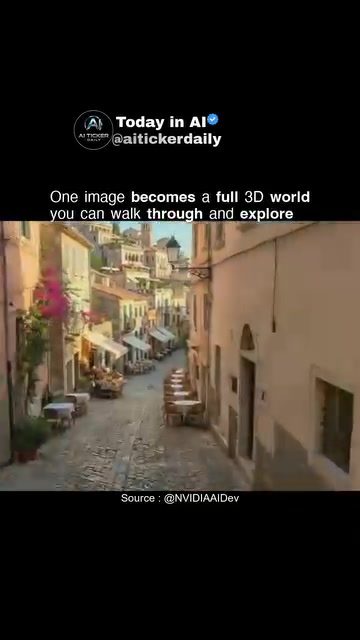
Generating Immersive 3D Worlds from 2D Images with AI
The latest advancements in AI technology are making it possible to transform 2D images into fully explorable 3D worlds. This groundbreaking development, showcased by NVIDIA, allows users to virtually walk through and explore environments generated from single images. The core technology behind this innovation is NVIDIA's AI software, which aims to enhance the user experience by providing stronger spatial consistency over long navigation paths. This ensures that the environments remain coherent and realistic as users move through them.
Why This Matters
The ability to generate 3D worlds from 2D images has significant implications for various industries, including gaming, virtual reality, architecture, and real estate. This technology opens up new possibilities for creating immersive experiences, allowing users to explore virtual environments in a more engaging and realistic way. For example, in the gaming industry, developers can create vast, detailed worlds from a single image, reducing the time and resources required for environment design. In real estate, potential buyers can virtually walk through properties, gaining a better understanding of the space without physically visiting the location.
The Technology Behind AI-Driven 3D World Generation
Lyra 2.0: Enhancing Spatial Consistency
One of the key advancements in this field is NVIDIA's Lyra 2.0. This technology is designed to generate persistent, explorable 3D worlds at scale. The core claim of Lyra 2.0 is its ability to maintain stronger spatial consistency over long navigation paths. This means that as users move through the generated 3D environment, the spatial relationships between different elements remain consistent, ensuring a seamless and coherent experience.
NVIDIA's Role in AI Development
NVIDIA has been at the forefront of AI research, and their contributions have significantly impacted the development of AI software. Their efforts in creating immersive experiences from static images are part of a broader initiative to push the boundaries of what is possible with AI. By leveraging their expertise in graphics processing and AI, NVIDIA has developed technology that can transform a single 2D image into a fully navigable 3D environment. This includes creating realistic textures, lighting, and depth perception, making the virtual world feel as real as possible.
From 2D to 3D: The Transformation Process
The process of converting a 2D image into a 3D world involves several steps. First, the AI software analyzes the 2D image to understand its composition, including the arrangement of objects, the perspective, and the overall scene. Next, the software uses this information to generate a 3D model, adding depth and spatial relationships. Finally, the software applies realistic textures and lighting to create a visually appealing and immersive environment. The result is a 3D world that users can explore, with the AI ensuring that the environment remains coherent and consistent as they move through it.
Practical Tips for Exploring 3D Worlds
When exploring 3D worlds generated from 2D images, there are several tips to enhance the experience:
Navigate with Purpose
Take your time to explore different parts of the environment. Since the spatial consistency is maintained, you can move freely without losing the sense of direction or getting disoriented. This allows for a more immersive and enjoyable experience.
Look for Details
Pay attention to the details in the environment. The AI software is designed to create realistic textures and lighting, so you might notice small details that add to the overall realism of the 3D world. This can make the experience more engaging and lifelike.
Experiment with Different Views
Try looking at the environment from different angles and perspectives. The AI software ensures that the spatial relationships remain consistent, so you can get a better understanding of the environment by exploring it from various viewpoints.
Important Takeaways
The advancements in AI technology have made it possible to generate immersive 3D worlds from 2D images, providing new opportunities for various industries. Key points to remember include:
- AI software, such as Lyra 2.0, can transform 2D images into fully explorable 3D worlds, maintaining spatial consistency over long navigation paths.
- The technology has significant implications for gaming, virtual reality, architecture, and real estate, offering new ways to create and explore virtual environments.
- Experiencing 3D worlds generated from 2D images involves navigating with purpose, paying attention to details, and experimenting with different views.
Conclusion
The ability to generate 3D worlds from 2D images is a significant leap forward in AI technology. With advancements like NVIDIA's Lyra 2.0, users can now explore immersive and realistic environments generated from single images. This technology has the potential to revolutionize how we interact with virtual worlds, offering new possibilities for various industries. As AI continues to evolve, we can expect even more innovative and immersive experiences in the future.
Questions readers ask
How does NVIDIA's AI convert 2D images into 3D worlds?
NVIDIA's AI technology uses advanced algorithms to analyze the content and depth cues present in a single 2D image. It then generates a 3D environment that can be explored, maintaining strong spatial consistency to ensure the environment remains coherent and realistic during navigation. The core technology behind this process is called image-to-3D conversion.
What makes NVIDIA's 3D worlds unique?
NVIDIA's 3D worlds stand out due to their immersive nature and the strong spatial consistency maintained across long navigation paths. This means that as users explore the generated 3D environments, the world around them remains coherent and realistic, providing a more believable and engaging experience.
In which industries can NVIDIA's 3D world generation be applied?
NVIDIA's 3D world generation technology has broad applications across various industries. It can enhance gaming by creating realistic and explorable environments. In virtual reality, it can provide immersive experiences. For real estate and architecture, it offers innovative ways to visualize and map out spaces, making it easier to plan and showcase properties.
How does spatial consistency improve the 3D exploration experience?
Spatial consistency ensures that the 3D environment generated from a 2D image remains coherent and realistic as users navigate through it. This means that the layout, scale, and details of the environment remain accurate and believable, providing a more immersive and engaging experience. It prevents the environment from appearing disjointed or unrealistic, which can disrupt the user's immersion.
Can users generate 3D worlds from any 2D image using NVIDIA's technology?
While NVIDIA's technology is advanced, the quality of the 3D world generated can depend on the content and details present in the original 2D image. Images with clear depth cues and distinct features tend to produce more accurate and immersive 3D environments. It's important to use high-quality images for the best results, but NVIDIA's AI is designed to handle a wide range of input images effectively.
What are the benefits of using AI for 3D world generation in gaming?
In gaming, AI-generated 3D worlds can provide dynamic and ever-changing environments, enhancing the player's experience. They can also reduce the time and resources required to create detailed 3D environments, allowing game developers to focus on other aspects of game design. Additionally, AI can generate a variety of environments, offering players unique and fresh experiences with each playthrough.
How can real estate professionals benefit from NVIDIA's 3D world generation?
Real estate professionals can use NVIDIA's 3D world generation to create virtual tours and visualizations of properties. This allows potential buyers to explore properties remotely, providing a more engaging and informative experience. It can also help with architectural planning and design, as architects and designers can visualize and navigate through proposed layouts and structures in 3D before construction begins.
Related deep dives
Similar reads based on topic and creator.


Recent articles
Fresh deep dives from the latest Reels we unpacked.




Comments
Be the first to comment.