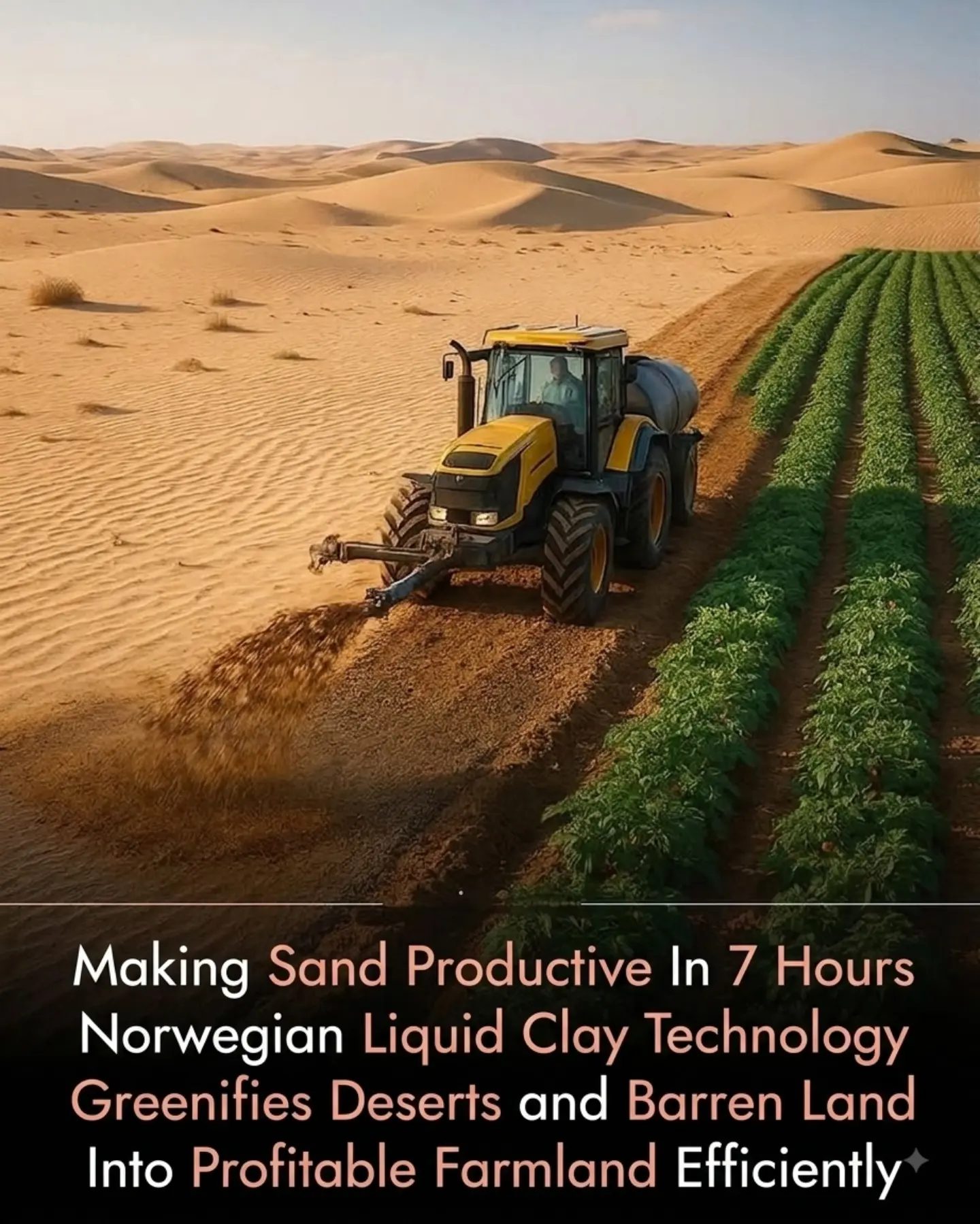
Desert Greening Technology
Desert greening technology is a cutting-edge approach to transforming barren lands into productive farmland. This innovative method, as illustrated by the use of a tractor spraying a green liquid onto sandy desert landscapes, promises to turn previously unusable land into fertile ground in a remarkably short period.
Context / Why this matters
Greening deserts isn't just about making the landscape look better; it's about creating sustainable agricultural landscapes. The world faces significant challenges in food security and environmental degradation. As the global population grows, the demand for arable land increases, making it crucial to find innovative ways to utilize marginal lands, including deserts. Desert greening technology offers a solution that could revolutionize farming in the driest regions. The ability to quickly transform barren land into profitable farmland could alleviate food shortages and provide economic opportunities in arid areas.
Main discussion
The Technology Behind Desert Greening
Desert greening technology leverages advanced techniques to make sand productive in a short period. One such method involves the use of Norwegian Liquid Clay Technology, which is designed to greenify deserts and barren land efficiently. This technology claims to transform sand into productive farmland within just 7 hours. The process involves applying a green liquid that contains essential nutrients and water-retaining properties, enabling plants to thrive in otherwise inhospitable conditions.
Organic Matter and Soil Health
While the 7-hour transformation claim is ambitious and may overlook the complexities of soil health, the importance of introducing organic matter to sandy soils cannot be overstated. Organic matter, such as compost, manure, and plant materials, acts as a sponge, holding water and providing a slow-release source of nutrients. This is crucial because sand alone lacks the nutrients and water retention necessary for sustainable agriculture.
Water Management Techniques
Effective water management is vital in arid regions. Efficient irrigation systems, such as drip irrigation, are necessary to prevent water loss and direct water and nutrients specifically where they are needed for plant growth. This targeted approach ensures that water is used efficiently, which is particularly important in desert environments where water is scarce.
Cover Cropping and Crop Rotation
Cover cropping and crop rotation are essential techniques for maintaining soil health. Cover crops, like legumes, can protect the soil from erosion, suppress weeds, and contribute organic matter when plowed back into the soil. Crop rotation helps maintain soil health and reduce the risk of nutrient depletion, ensuring that the land remains productive over time.
Practical tips
For those looking to implement desert greening techniques, consider the following practical tips:
Conduct Soil Tests
Before applying any technology or amendment, it’s essential to conduct thorough soil tests. This will help you understand the specific needs of your land and tailor your approach accordingly. Soil tests can reveal nutrient deficiencies, pH levels, and water retention capabilities, guiding you in selecting the right amendments.
Use Organic Matter
Incorporate organic matter into the soil as much as possible. Compost, manure, and plant materials are excellent choices. Organic matter improves soil structure, increases water retention, and provides a slow-release source of nutrients. This is one of the most effective ways to transform sandy soil into arable land.
Implement Efficient Irrigation
Invest in efficient irrigation systems like drip irrigation. These systems deliver water directly to the roots of plants, reducing water loss through evaporation and runoff. This targeted approach is particularly effective in arid regions where water is a precious resource.
Practice Cover Cropping and Crop Rotation
Integrate cover crops and crop rotation into your farming practices. Cover crops can protect the soil from erosion, suppress weeds, and contribute organic matter. Crop rotation helps maintain soil health and reduce the risk of nutrient depletion, ensuring long-term productivity.
Gradual Improvement
Understand that transforming barren land into productive farmland is a gradual process. While technologies like Norwegian Liquid Clay Technology claim rapid results, sustainable agriculture in sandy or challenging environments relies on patience, consistent management, and practices that build soil health over time.
Important takeaways
Desert greening technology offers a promising solution to turning barren land into productive farmland. While the claim of transforming sand into arable soil within 7 hours is ambitious, the fundamental principles of soil improvement—such as incorporating organic matter, efficient water management, and cover cropping—are well-grounded. These practices can lead to significant improvements in soil health and productivity, even in the most challenging environments.
Conclusion
Desert greening technology represents a significant advancement in sustainable agriculture. By leveraging innovative techniques and traditional soil improvement methods, it is possible to transform barren deserts into productive farmland. This not only addresses food security challenges but also provides economic opportunities in arid regions. Understanding the fundamental principles of soil health and implementing best practices can lead to long-term success in desert greening efforts.
Questions readers ask
What exactly is Norwegian Liquid Clay Technology and how does it work?
Norwegian Liquid Clay Technology is an innovative method designed to transform desert landscapes into productive farmland. The process involves spraying a specialized liquid clay mixture onto sandy desert soil. This mixture helps to bind the loose sand particles, creating a stable structure that can retain water and nutrients, making the land suitable for agriculture in just 7 hours.
How does this technology help with global food security?
By converting deserts and other marginal lands into farmland, Norwegian Liquid Clay Technology significantly increases the amount of arable land available for agriculture. This helps to address global food security issues by providing more space to grow crops, especially in regions where food production has been limited by harsh environmental conditions.
Can this technology be applied to all types of desert soil?
Norwegian Liquid Clay Technology is primarily designed for sandy desert soils. Its effectiveness in other types of desert soil, such as rocky or salty soil, may vary. It's best to consult with experts to determine the suitability of this technology for specific soil types in different desert regions.
What are the environmental benefits of desert greening technology?
Desert greening technology offers several environmental benefits, including the reduction of soil erosion and the restoration of degraded lands. By making deserts productive, this technology also helps to sequester carbon, improve biodiversity, and support sustainable ecosystems.
How long does it take to see results after applying Norwegian Liquid Clay Technology?
The transformation process is remarkably fast. After applying the liquid clay, the desert land can be ready for planting and cultivation within just 7 hours. This quick turnaround makes it a highly efficient solution for rapid desert land conversion.
What kind of crops can be grown on desert land treated with Norwegian Liquid Clay Technology?
The treated land can support a variety of crops, including those that are typically grown in arid regions, such as grains, vegetables, and even some fruits. The specific types of crops will depend on the local climate and the quality of the restored soil, but the technology opens up new possibilities for agriculture in desert regions.
What are the maintenance requirements for soil treated with Norwegian Liquid Clay Technology?
Once the soil has been treated and is ready for planting, it will require standard agricultural practices to maintain productivity. This includes regular watering, fertilization, and crop rotation. The liquid clay treatment itself does not require ongoing applications but should be considered a one-time, foundational step towards sustainable desert agriculture.
Related deep dives
Similar reads based on topic and creator.

Recent articles
Fresh deep dives from the latest Reels we unpacked.




Comments
Be the first to comment.