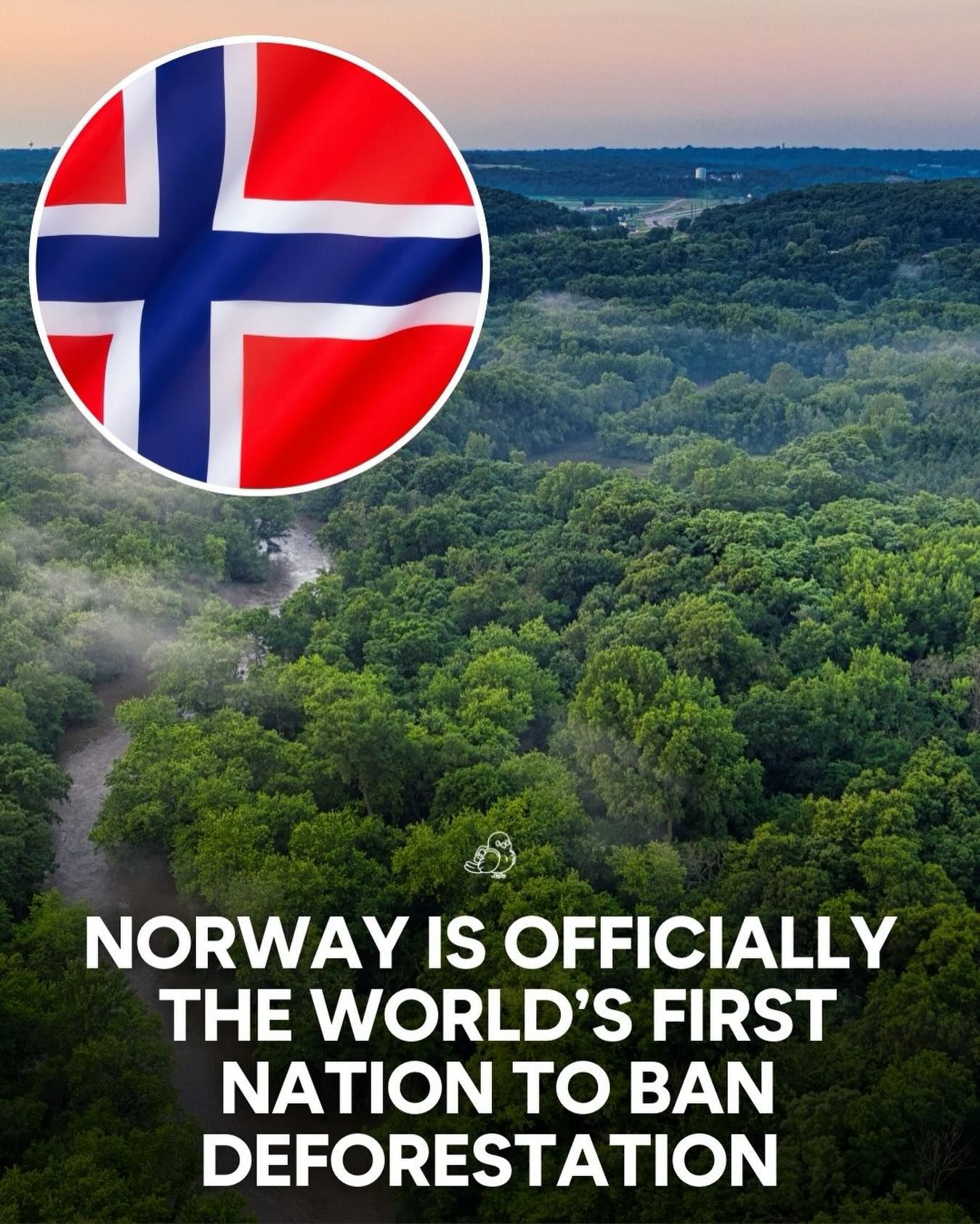
Norway's Deforestation Ban
Norway has made history by becoming the first country in the world to officially ban deforestation. This bold move involves a commitment to a zero-deforestation policy, which means no government contracts for products linked to forest destruction. This policy encompasses a wide range of commodities, including palm oil and soy.
Context / Why This Matters
Deforestation is a critical environmental issue with far-reaching consequences. Forests play a vital role in maintaining biodiversity, regulating the climate, and supporting numerous ecosystems. However, widespread deforestation has led to significant losses in forest cover, contributing to climate change and the extinction of countless species. By implementing a zero-deforestation policy, Norway is setting a new standard for environmental protection and sustainability.
The Scope and Impact of Norway's Policy
Comprehensive Coverage
Norway's deforestation ban is comprehensive, extending to all products and industries that contribute to forest destruction. This includes major commodities like palm oil and soy, which are often linked to deforestation in countries like Brazil, Indonesia, and Malaysia. By refusing to engage in government contracts for these products, Norway is putting pressure on industries to adopt more sustainable practices.
Global Leadership
Norway's pioneering move positions the country as a global leader in environmental conservation. By taking this bold step, Norway is not only protecting its own natural resources but also setting a precedent for other nations to follow. This leadership role is crucial as the world grapples with increasing environmental challenges.
Practical Tips for Supporting Deforestation-Free Policies
While Norway's policy is a significant step, individual actions can also contribute to reducing deforestation. Here are some practical tips to support deforestation-free initiatives:
Choose Sustainable Products
Opt for products that are certified as sustainably sourced. Look for labels like the Rainforest Alliance Certified, Forest Stewardship Council (FSC) certified, or Roundtable on Sustainable Palm Oil (RSPO) certified. These certifications ensure that the products you buy are not contributing to deforestation.
Support Local and Sustainable Agriculture
Support local farmers and agricultural practices that prioritize sustainability. By buying locally produced food, you can reduce the demand for commodities that are often linked to deforestation.
Advocate for Change
Engage with your local government and businesses to advocate for deforestation-free policies. Encourage them to adopt sustainable practices and support initiatives that protect forests and biodiversity.
Important Takeaways
Norway's deforestation ban is a significant milestone in the global effort to protect forests and combat climate change. This policy highlights the importance of comprehensive and bold actions in addressing environmental challenges. By taking a zero-deforestation stance, Norway is leading by example and encouraging other countries to follow suit.
The policy's impact is not just symbolic; it has practical implications for industries and consumers worldwide. By refusing to engage in government contracts for products linked to deforestation, Norway is putting pressure on industries to adopt more sustainable practices. This pressure can drive significant changes in how commodities like palm oil and soy are sourced and produced.
Conclusion
Norway's deforestation ban is a groundbreaking move that sets a new standard for environmental protection. By committing to a zero-deforestation policy, Norway is leading the way in safeguarding our planet's forests and biodiversity. This policy serves as a call to action for other countries and individuals to adopt sustainable practices and advocate for deforestation-free initiatives. As we celebrate this historic step, it is crucial to continue supporting and promoting policies that protect our environment for future generations.
Questions readers ask
What does Norway's zero-deforestation policy entail?
Norway's zero-deforestation policy means the country will not issue government contracts for products that contribute to forest destruction. This includes a wide range of commodities like palm oil and soy, aiming to reduce the demand for goods linked to deforestation.
Why is Norway's deforestation ban significant on a global scale?
Norway's deforestation ban is significant because it sets a new precedent for global environmental sustainability. As the first country to implement such a policy, Norway is encouraging other nations to follow suit and take stronger measures against deforestation.
How does deforestation impact the environment?
Deforestation has several environmental impacts. It leads to the loss of biodiversity, contributes to climate change by reducing carbon absorption, and disrupts ecosystems that support numerous plant and animal species. Additionally, deforestation can result in soil erosion and disruption of water cycles.
What commodities are affected by Norway's deforestation policy?
Norway's deforestation policy covers a broad range of commodities, including palm oil and soy. These are often linked to deforestation due to the large areas of land required for their cultivation. By targeting these commodities, Norway aims to reduce the overall demand for goods that contribute to forest destruction.
How does Norway's policy on deforestation affect its government contracts?
Norway's policy on deforestation directly affects government contracts by prohibiting the use of goods and products linked to forest destruction. This means that companies supplying these products will need to adhere to strict sustainability standards to maintain their contracts with the Norwegian government.
What steps can other countries take to follow Norway's example?
Other countries can follow Norway's example by implementing similar zero-deforestation policies. This involves committing to sustainable procurement practices, promoting stronger environmental regulations, and encouraging the use of deforestation-free commodities.
What is the meaning of Norway's zero deforestation policy in the context of global sustainability?
Norway's zero deforestation policy signifies a strong commitment to global sustainability. By refusing to support products that contribute to forest destruction, Norway is taking a proactive stance against climate change and biodiversity loss, inspiring other nations to adopt more stringent environmental policies.
Related deep dives
Similar reads based on topic and creator.

Recent articles
Fresh deep dives from the latest Reels we unpacked.




Comments
Be the first to comment.