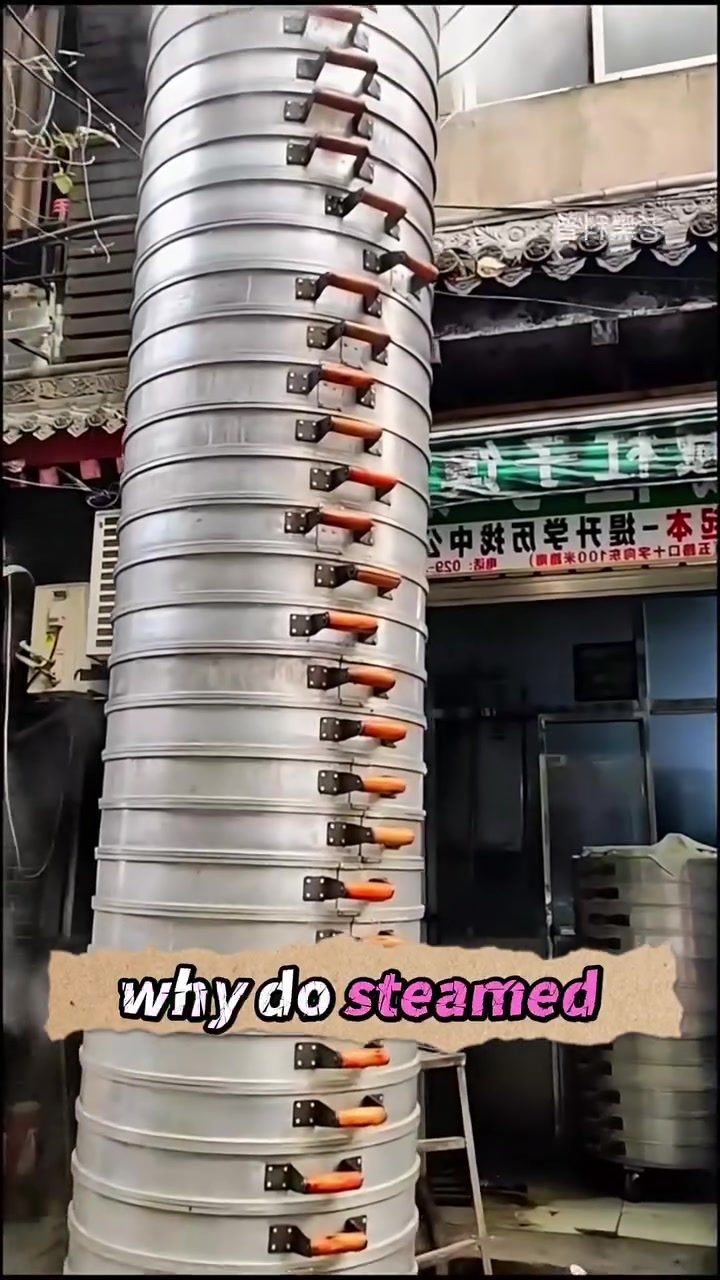
The Art of Stacking Bun Steamers in Northern China
Steamed buns are a beloved staple in many Asian cuisines, and the process of making them efficiently is an art in itself. In northern China, steamed bun shops have developed a unique method of stacking their steamers to maximize space and efficiency.
Why This Matters
Understanding the stacking method of steamed bun machines in northern China offers insights into innovative solutions for small business operations in urban areas. By employing vertical stacking, these shops can produce a high volume of buns in tight spaces, making it a practical and efficient technique for other businesses as well.
Main Discussion
The Vertical Steaming Method
The vertical stacking of buns is not just a space-saving trick but a method that maximizes efficiency. Shops in northern China often face narrow storefronts, making it impractical to spread steamers sideways. Instead, they stack their steamers high, sometimes requiring a ladder to reach the top. This method allows for the production of thousands of buns daily, meeting the demands of busy customers.
Fuel Efficiency
One of the most significant advantages of this stacking method is fuel efficiency. By stacking the steamers vertically, a single stove can heat dozens of steamers at the same time. This reduces the overall fuel usage and operating costs, making it a cost-effective solution for small businesses.
Cooking Dynamics
Interestingly, the stacking method also affects the cooking process. In these giant stacks, the bottom buns usually cook faster than the top ones. This is due to the natural heat distribution, where the bottom layers receive more direct heat from the stove. Understanding this dynamic can help in adjusting cooking times and ensuring even cooking throughout the stack.
Practical Tips
Maximizing Space
For those looking to implement a similar system, here are some practical tips:
- Assess Your Space: Measure your kitchen or shop space to determine the maximum height you can stack your steamers.
- Invest in Quality Equipment: Ensure that your steamers are sturdy and can withstand the weight and heat of multiple layers.
- Safety First: Always prioritize safety. Make sure that the stacking system is stable and that your employees can safely access all levels of the steamer.
Optimizing Fuel Usage
- Insulate Your Steamers: Proper insulation can help retain heat, making the steaming process more efficient and reducing fuel consumption.
- Regular Maintenance: Regularly clean and maintain your stoves and steamers to ensure they are working at their optimal capacity.
Ensuring Even Cooking
- Adjust Cooking Times: Since the bottom buns cook faster, you may need to adjust the cooking times for different levels. Experiment with shorter cooking times for the bottom layers and longer times for the top.
- Rotate Steamers: If possible, rotate the steamers periodically to ensure even cooking throughout the stack.
Important Takeaways
The vertical stacking method of steamed bun machines in northern China is a testament to ingenuity and efficiency. By stacking steamers high, these shops can produce a large volume of buns in limited space while also saving on fuel costs. This method also highlights the importance of understanding cooking dynamics to ensure even and efficient cooking.
Conclusion
The vertical stacking of steamed bun machines in northern China is a smart trick that can be highly beneficial for small businesses. By maximizing space, optimizing fuel usage, and understanding cooking dynamics, this method ensures efficient and cost-effective production. Whether you are a small business owner or a food enthusiast, this technique offers valuable insights into innovative culinary practices.
Questions readers ask
What are the primary benefits of stacking steamed bun machines vertically?
Stacking steamed bun machines vertically allows for significant space savings, which is crucial in urban areas with limited space. This method also enables high-volume production, making it possible to produce thousands of buns daily, even in small shops.
How does vertical stacking improve efficiency in steamed bun production?
Vertical stacking improves efficiency by optimizing space and allowing for continuous production. With this method, buns can be steamed in multiple layers simultaneously, reducing the overall time needed for preparation.
Is vertical stacking of steamed bun machines suitable for all types of businesses?
While vertical stacking is particularly beneficial for small businesses in urban areas, it can be adapted by any business looking to optimize space and increase production. However, it's important to consider the specific needs and constraints of your business before implementation.
Can the vertical stacking method be applied to other types of food production?
Yes, the vertical stacking method can be applied to other types of food production, especially in scenarios where space is limited. For example, it can be used in the preparation of other steamed foods, or even in baking, where vertical ovens are used.
What are some challenges to consider when implementing vertical steamer machines?
One of the primary challenges is the initial setup cost. Additionally, proper ventilation and safety measures need to be ensured. Staff training is also crucial to handle the new equipment and maintain the quality of the buns.
How does the vertical stacking method impact the taste and quality of the steamed buns?
When implemented correctly, the vertical stacking method does not negatively impact the taste and quality of the steamed buns. In fact, it can help maintain consistency in the steaming process, ensuring even cooking and high-quality buns.
Recent articles
Fresh deep dives from the latest Reels we unpacked.




Comments
Be the first to comment.