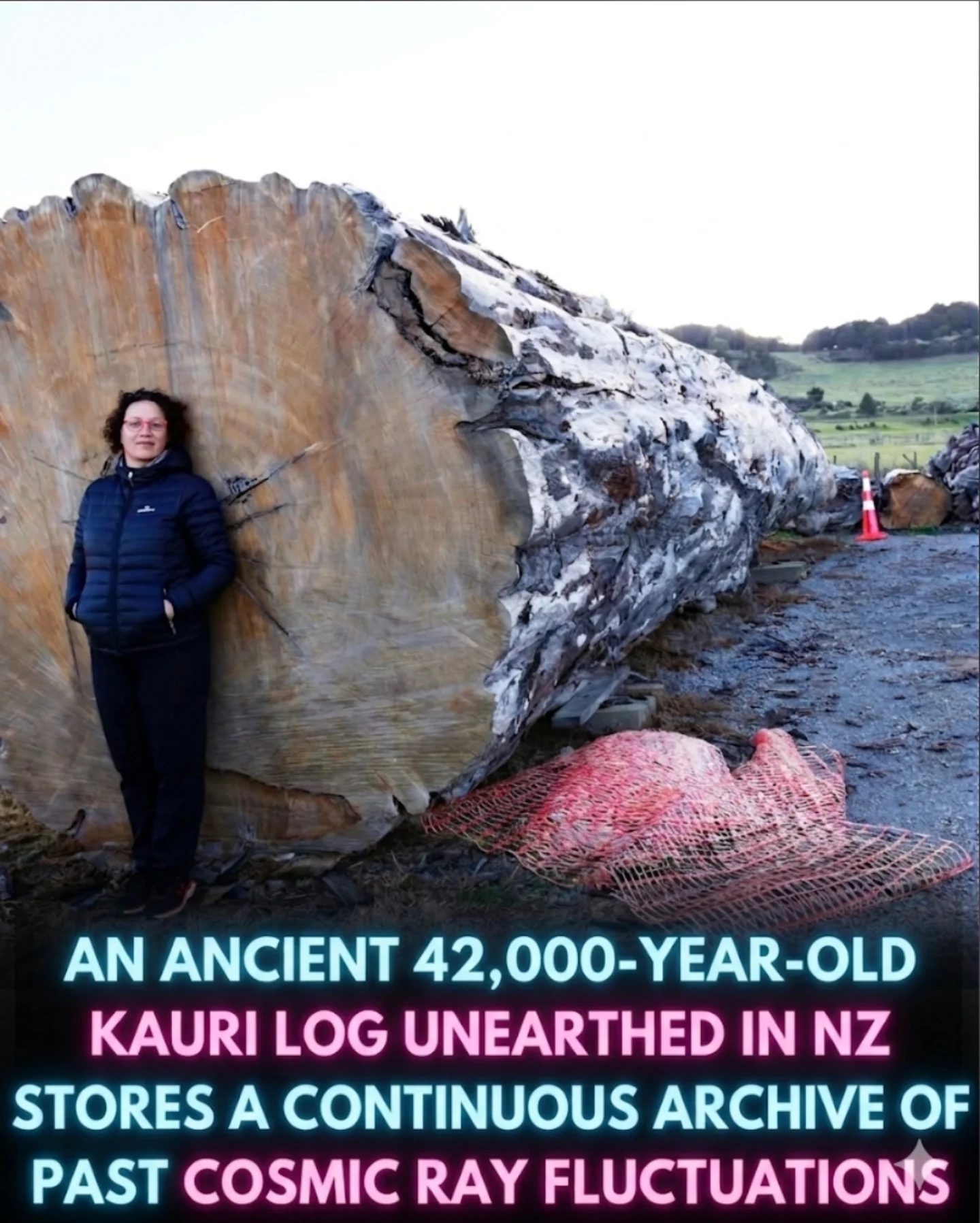
Ancient Kauri Log Discovery
The 42,000-year-old Kauri log discovered in New Zealand is a remarkable find that provides an invaluable record of past environmental and cosmic conditions. This ancient log, unearthed from sediment layers, holds a continuous archive of cosmic ray fluctuations, offering scientists a unique window into the Earth's past.
Why This Matters
Understanding the Earth's history and the forces that have shaped it is crucial for various scientific disciplines, including climatology, geology, and astrophysics. The Kauri log's ability to store a detailed, year-by-year record of environmental changes and cosmic ray fluctuations makes it an exceptionally valuable resource. By analyzing this log, researchers can gain insights into climatic shifts, solar activity, and the interactions between the Earth's magnetic field, atmosphere, and solar activity during the late Pleistocene epoch.
Main Discussion
The Significance of the Kauri Log
The Kauri log's age, estimated to be 42,000 years, places it in a critical period of Earth's history. This epoch, known as the late Pleistocene, saw significant climatic changes, including the transition from the last glacial period to the current interglacial period. The log's preservation in New Zealand's sediment layers has allowed it to maintain a continuous record of cosmic ray fluctuations, which are influenced by solar activity and the Earth's magnetic field.
Cosmic Ray Fluctuations
Cosmic rays are high-energy particles that originate from space. They interact with the Earth's atmosphere and magnetic field, and their fluctuations can provide valuable information about past solar activity and geomagnetic changes. The Kauri log's unique ability to store a record of these fluctuations makes it an exceptional tool for studying the Earth's past.
Environmental and Cosmic Records
The log contains chemical and structural markers within its rings that researchers can analyze to reconstruct significant climatic shifts and solar events. These markers are preserved in the wood's cellular structure and can be used to create a high-resolution data set of past environmental and cosmic conditions. This data set is particularly valuable because it provides a continuous record, allowing scientists to track changes over time with a high degree of accuracy.
Climate and Solar Activity
By examining the Kauri log, researchers can gain insights into how the Earth's climate and solar activity have interacted over tens of millennia. This information is crucial for understanding the mechanisms behind climatic changes and their impact on the Earth's environment. The log's record of cosmic ray fluctuations can also provide clues about the Earth's magnetic field's behavior and its role in modulating solar activity.
Practical Tips
For those interested in studying ancient environmental and cosmic records, the Kauri log serves as an excellent model. Here are some practical tips for researchers and enthusiasts:
Preservation Techniques
To preserve ancient logs like the Kauri, it is essential to maintain the right conditions. Sediment layers, such as those found in New Zealand, can act as natural preservatives, protecting the wood from decay and degradation. Researchers should consider the physical and chemical conditions of the site where the log was found and replicate these conditions in a controlled environment.
Analytical Methods
To extract the valuable data stored in the Kauri log, researchers must employ a variety of analytical methods. These methods may include:
- Dendrochronology: The study of tree rings to determine the age and climatic conditions of the tree during its lifetime.
- Isotopic Analysis: Analyzing the isotopic composition of the wood to understand past environmental conditions.
- Geomagnetic Studies: Investigating the Earth's magnetic field behavior by analyzing the log's record of cosmic ray fluctuations.
Collaboration and Data Sharing
Collaborating with other researchers and institutions can enhance the study of ancient logs. Sharing data and insights can lead to new discoveries and a more comprehensive understanding of the Earth's past. Researchers should also engage with the public and disseminate their findings to raise awareness about the importance of such discoveries.
Important Takeaways
The discovery of the 42,000-year-old Kauri log in New Zealand offers a unique opportunity to study past environmental and cosmic conditions. Key takeaways from this discovery include:
- The log serves as a continuous archive of cosmic ray fluctuations, providing a detailed record of past solar activity and geomagnetic changes.
- Analyzing the log's chemical and structural markers allows researchers to reconstruct significant climatic shifts and solar events.
- The log's preservation in sediment layers highlights the importance of understanding natural preservation techniques.
- Collaboration and data sharing are essential for making the most of such valuable scientific resources.
Conclusion
The 42,000-year-old Kauri log discovered in New Zealand is a treasure trove of information about the Earth's past. By studying this ancient archive, researchers can gain valuable insights into climatic shifts, solar activity, and the interactions between the Earth's magnetic field and atmosphere. This discovery underscores the significance of preserving and analyzing ancient biological records to deepen our understanding of the natural world and its complex interactions.
Questions readers ask
What makes the 42,000-year-old Kauri log from New Zealand so significant?
The Kauri log is significant because it provides a continuous, year-by-year record of past environmental changes and cosmic ray fluctuations. This makes it a unique tool for scientists studying Earth's history and solar activity, as it spans a critical period of climatic shifts and geological transitions.
How old is the Kauri log, and where was it discovered?
The Kauri log is approximately 42,000 years old. It was discovered in New Zealand, preserved within sediment layers, which have helped maintain its remarkable state of preservation.
What types of historical data can be extracted from the Kauri log?
The Kauri log contains data on past environmental changes, including climatic shifts, and detailed records of cosmic ray fluctuations. These records offer insights into solar activity and help scientists understand the forces that have shaped Earth's history.
Why is the Kauri log important for studying solar activity?
The Kauri log records cosmic ray fluctuations, which are influenced by solar activity. By analyzing these fluctuations, scientists can reconstruct past solar activity patterns, providing valuable information about the Sun's behavior over thousands of years.
How does the Kauri log contribute to our understanding of New Zealand's environmental history?
The Kauri log offers a detailed environmental history of New Zealand, spanning a period of significant climatic and geological changes. By studying this log, researchers can learn more about the environmental conditions that shaped the region over thousands of years.
What methods do scientists use to analyze the Kauri log?
Scientists use various methods to analyze the Kauri log, including radiocarbon dating to determine its age and dendrochronology to study its growth rings. Additionally, they analyze the log’s chemical composition to understand past environmental conditions and cosmic ray fluctuations.
What can the Kauri log reveal about past cosmic events?
The Kauri log's records of cosmic ray fluctuations can reveal information about past cosmic events, such as solar storms and supernovae. These events leave traces in the log, which scientists can analyze to better understand the history of cosmic activity and its impact on Earth.
Related deep dives
Similar reads based on topic and creator.



Recent articles
Fresh deep dives from the latest Reels we unpacked.




Comments
Be the first to comment.