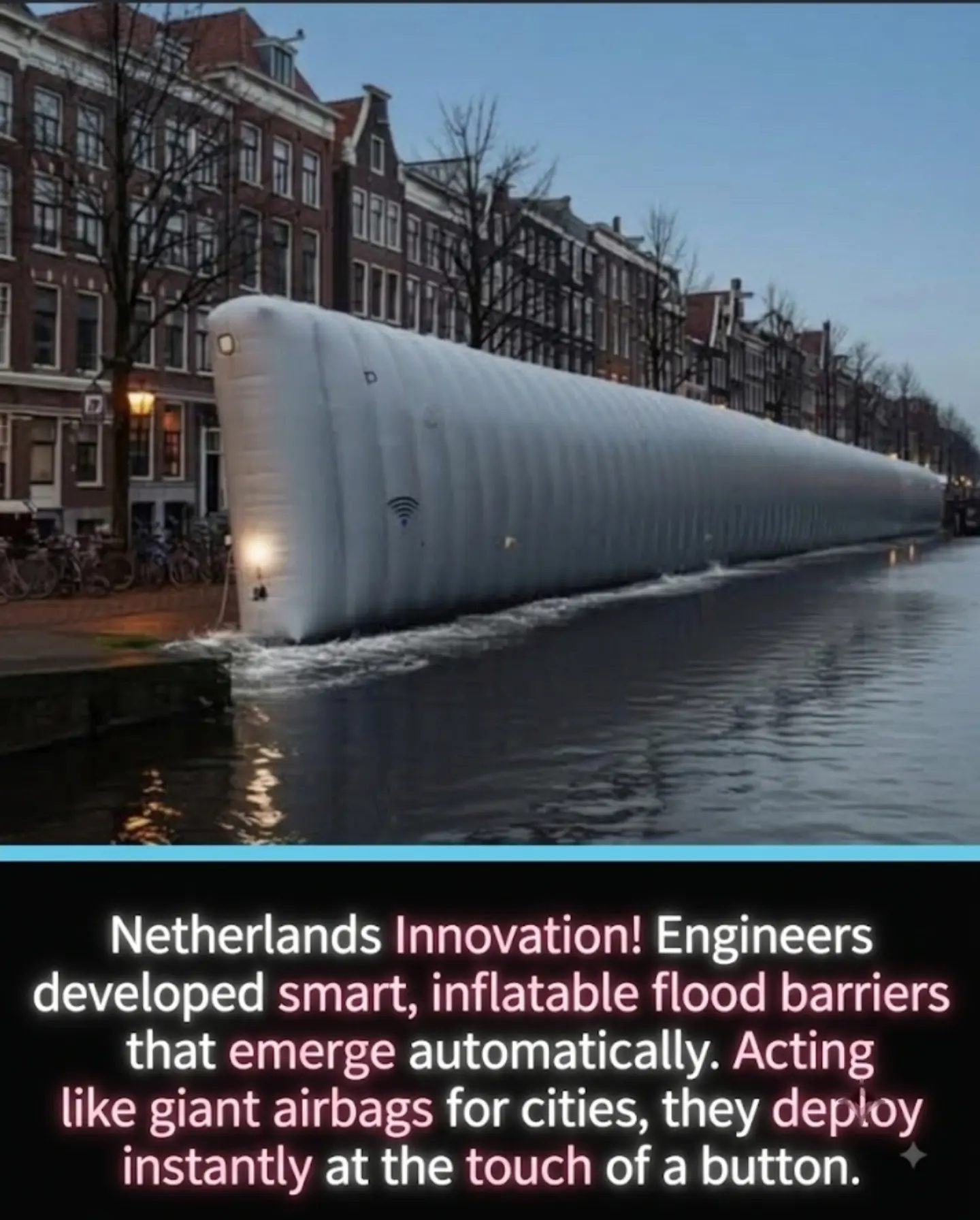
Inflatable Flood Barriers: The Future of Urban Flood Protection
In the low-lying Netherlands, the threat of flooding is an ever-present challenge. However, a remarkable innovation is revolutionizing how cities combat this danger. Engineers have developed inflatable flood barriers that spring into action instantly, acting as smart, autonomous sentinels guarding against rising waters.
The Dutch have long been respected for their expertise in water management, but this new technology is a quantum leap forward. Out of sight and out of mind, these barriers lie dormant beneath the canals of Amsterdam. When floodwaters begin to rise, the barriers automatically detect the danger and inflate within minutes, no human intervention required.
Why This Matters
With climate change accelerating, urban flooding is becoming an increasingly pressing issue. According to the World Meteorological Organization, the frequency of extreme weather events—many of which involve heavy rainfall and subsequent flooding—has risen substantially in recent decades. This is particularly concerning for historic and low-lying cities.
These cities face a double-edged sword: they are often rich in cultural heritage, making them prime tourist destinations, but their age and low-lying positions make them highly vulnerable to flooding. Moreover, traditional flood defenses like concrete walls or levees can be expensive, unsightly, and disruptive to urban life. The Dutch solution offers a potential way forward.
The Design and Function of Inflatable Flood Barriers
Automatic Deployment
The brilliance of these inflatable barriers lies in their automatic deployment. Sensors embedded in the system continuously monitor water levels. When the water rises to a critical point, compressed air is released into the barriers, causing them to inflate rapidly. This process transforms them from inconspicuous under-the-surface structures into robust walls that can withstand the pressure of floodwaters.
The barriers can be inflated in as little as 1-2 minutes, a speed that is critical when every second counts. This rapid response minimizes the potential damage and disruption caused by flooding.
Materials and Durability
Constructed from high-strength, flexible materials, these barriers are designed to withstand the harsh conditions of floodwaters. The materials used are resistant to both physical and chemical degradation, ensuring that the barriers remain effective over time.
Moreover, the flexible nature of the barriers allows them to conform to the shape of the canal or riverbed, creating a tight seal that prevents water from flowing over or under them.
Versatility and Adaptability
One of the key advantages of inflatable flood barriers is their versatility. They can be adapted to various waterways, from small canals to wide rivers. This makes them suitable for a range of urban environments, from historic city centers to modern industrial zones.
Additionally, these barriers can be integrated into existing infrastructure, minimizing the need for extensive construction or demolition. This makes them a cost-effective solution for cities looking to upgrade their flood defenses.
Environmental Impact
Environmentally, these barriers have a negligible impact. Unlike concrete structures, which can disrupt local ecosystems by altering water flow and sediment patterns, inflatable barriers have a minimal footprint. They do not impede water flow under normal conditions and can be rapidly deployed and deflated without causing lasting environmental damage.
Cost-Effectiveness
While the initial investment for installing such a system might be significant, the long-term cost savings are substantial. With rapid deployment and minimal maintenance requirements, these barriers can save cities millions in repair costs and lost revenue due to flooding.
They also eliminate the need for constant monitoring and maintenance, which is a common requirement for traditional flood defenses like concrete walls or levees.
Practical Tips for Implementing Inflatable Flood Barriers
Conduct a Comprehensive Risk Assessment
Before implementing these barriers, it's essential to conduct a thorough risk assessment. This should include mapping out all potential flood-prone areas, identifying the most vulnerable infrastructure, and determining the appropriate size and number of barriers needed.
Engage with the Community
Community engagement is crucial for the successful implementation of any flood defense system. Engage with local residents, businesses, and other stakeholders to discuss the plan, address any concerns, and ensure that everyone understands the benefits and potential impacts of the new system.
Ensure Robust Maintenance Plans
Though inflatable barriers require minimal maintenance, regular checks and updates are still necessary. Develop a maintenance plan that includes periodic inspections, testing of the deployment systems, and updates to the sensor technology.
Integration with Existing Systems
For maximum effectiveness, inflatable barriers should be integrated with existing flood defense systems. This might include coordinating with local authorities to ensure that the barriers can work in conjunction with other defenses, such as water pumps or levees.
Regular Simulations
Conduct regular simulations to test the deployment of the barriers and ensure that the system is functioning as intended. This will help identify any potential issues and allow for necessary adjustments before a real emergency arises.
Important Takeaways
- Rapid Deployment: The most significant advantage of inflatable barriers is their rapid deployment. They can be fully inflated in just a couple of minutes, providing an immediate defense against rising floodwaters.
- Automatic Activation: The automatic activation system reduces the need for constant monitoring and human intervention, making it a reliable defense mechanism.
- Environmental Friendliness: Unlike concrete structures, inflatable barriers have a minimal environmental footprint, making them a sustainable option for flood defense.
- Versatility: These barriers can be adapted to various waterways and urban environments, making them a versatile solution for many different types of cities.
- Cost Savings: While the initial investment can be high, the long-term savings in repair costs and lost revenue make it a cost-effective solution.
Conclusion
Inflatable flood barriers represent a groundbreaking advancement in urban flood protection. With their rapid deployment, automatic activation, and minimal environmental impact, they offer a versatile and sustainable solution to the growing threat of urban flooding. As climate change continues to exacerbate the risks, cities around the world will need to consider innovative solutions like these to safeguard their historic streets and cultural heritage. For the Netherlands, this technology is a testament to their enduring expertise in water management and a beacon of hope for cities facing similar challenges.
Questions readers ask
How do the inflatable barriers in the Netherlands detect floods?
The inflatable barriers in the Netherlands are equipped with advanced sensors that automatically detect changes in water levels. These sensors trigger the inflation process when floodwaters start to rise, ensuring a swift response to potential threats.
What makes inflatable flood barriers a step forward in water management?
Inflatable flood barriers represent a significant advancement because they are discreet, efficient, and autonomous. They remain hidden until needed, and inflate instantly to protect against rising waters, making them a practical solution for urban environments.
Can these barriers be used in other cities besides the Netherlands?
Yes, the technology used in these inflatable barriers can be adapted for use in other cities facing similar flood risks. The Dutch have a well-established reputation for water management, and their innovations in flood protection have global applications.
Are there any maintenance requirements for these barriers?
The inflatable barriers require regular inspections to ensure that the sensors and inflation mechanisms are in good working order. However, because they remain dormant until needed, they are generally low-maintenance compared to traditional flood defense systems.
How quickly can these barriers be deployed during a flood?
These barriers can be deployed within minutes after the sensors detect rising water levels. This rapid response is crucial for minimizing damage in urban areas where flooding can occur suddenly and without much warning.
What role do inflatable barriers play in Netherlands' water management strategy?
The inflatable barriers are a key component of the Netherlands' comprehensive water management strategy. They work alongside traditional methods to provide an additional layer of protection, helping to safeguard low-lying cities from the ever-present threat of flooding.
Are there any environmental benefits to using inflatable barriers for flood protection?
Inflatable barriers offer environmental benefits by reducing the need for large, permanent structures that can disrupt ecosystems. They are designed to be low-impact and eco-friendly, making them an attractive option for environmentally-conscious cities.
Related deep dives
Similar reads based on topic and creator.

Recent articles
Fresh deep dives from the latest Reels we unpacked.




Comments
Be the first to comment.