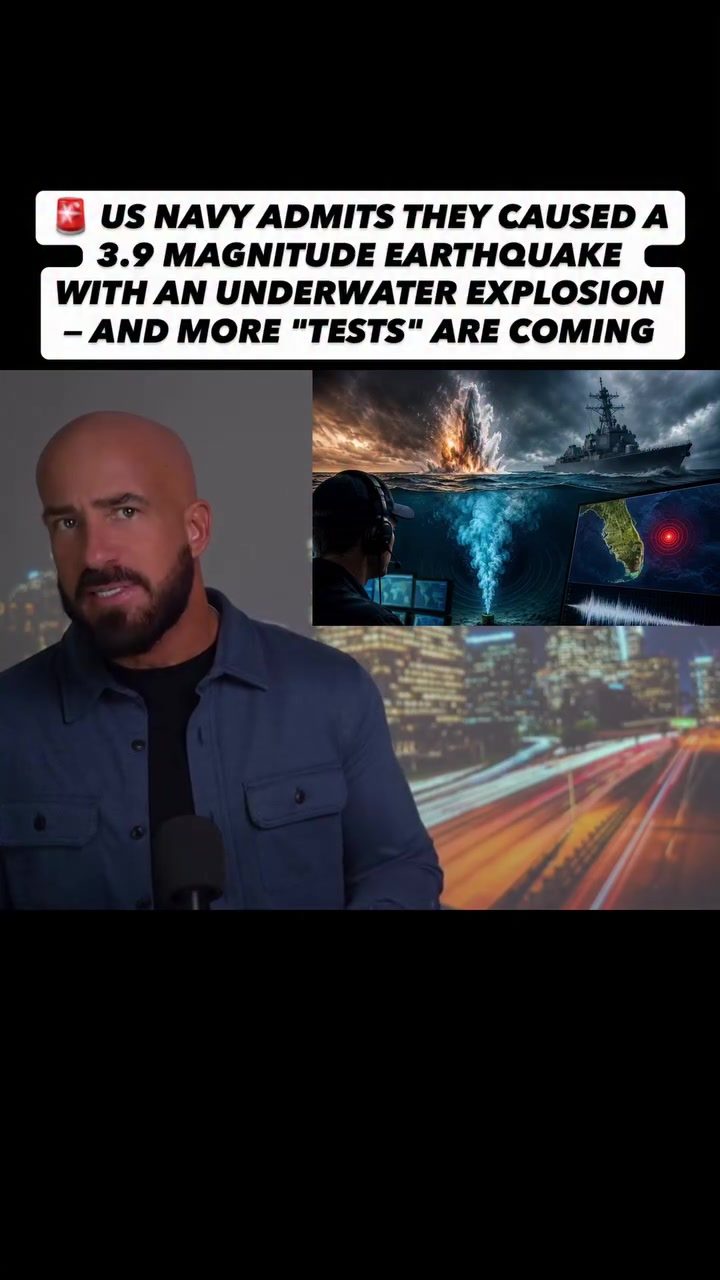
Navy Conducted an Underwater Explosion That Triggered a Magnitude 3.9 Earthquake
The United States Navy recently admitted to causing a 3.9 magnitude earthquake through an underwater explosion. This revelation has sparked significant conversation and concern among researchers, residents near the explosion site, and those affected by earthquakes. The event, which occurred off the coast of Florida, was unusual because it was not a natural earthquake, but rather a result of a controlled explosion by the Navy for testing purposes.
Why This Matters
Underwater explosions have the potential to generate seismic activity similar to natural earthquakes. Understanding the Navy's methods and the implications of such tests is crucial for assessing the risks and safety measures involved. This event highlights the interconnectedness of military activities and geological phenomena, as well as the potential for human activities to trigger natural disasters.
Main Discussion
The Underwater Explosion
The earthquake, which registered a magnitude of 3.9, was detected by researchers in Florida. Its origin in the ocean, over 90 miles from the shore, indicated a powerful event. Unlike typical earthquakes, this one was not natural; it was the result of an underwater explosion conducted by the US Navy. Such explosions are part of the Navy's testing protocols, which aim to simulate and study various scenarios related to naval warfare and defense mechanisms.
Navy's Responsibility
The Navy took responsibility for the event, acknowledging that the test caused the earthquake. This admission is significant because it underscores the Navy's transparency and accountability in conducting such tests. Furthermore, the Navy has warned that more tests are scheduled, raising questions about future impacts and safety measures.
Impact and Public Concerns
The severity of the earthquake, though moderate, highlights the potential risks associated with such tests. The Navy's admission has sparked public concern, particularly about the frequency and safety of these tests. The recent twin earthquakes in Peru, which resulted in significant damage and loss of life, have added to these concerns, as people wonder if similar tests could have played a role in natural disasters.
Geographical and Environmental Considerations
The tests are not confined to a single location. After the Florida event, Peru experienced a magnitude 3.7 earthquake, causing significant damage and destruction of homes in the mountainous Hunin region east of Lima. Emergency workers are actively clearing debris and searching for survivors, underscoring the real-world impact of seismic events.
Practical Tips
Staying Informed
For those living in areas where such tests might occur, staying informed about upcoming tests and their potential impacts is crucial. Local authorities often provide updates and guidelines on how to respond to seismic events, whether natural or man-made. Monitoring official channels and local news sources can help residents stay prepared.
Preparedness and Safety
Preparing for potential earthquakes, whether natural or man-made, involves several key steps:
- Emergency Kit: Ensure you have an emergency kit with essentials like water, food, a first-aid kit, and a flashlight.
- Safety Drills: Conduct regular earthquake drills to know what to do during an event. This includes finding safe spots in your home and office and practicing the “Drop, Cover, and Hold On” method.
- Stay Updated: Follow local news sources and official announcements for updates on any upcoming tests or seismic activity.
Community Awareness
Community leaders and local authorities play a vital role in raising awareness about the risks and safety measures. Organizing public meetings, workshops, and drills can help residents understand the potential impacts and how to respond effectively. Collaboration between military authorities and local communities can also enhance transparency and trust.
Public Involvement
Public involvement in monitoring and reporting seismic activities is essential. Encouraging residents to report any unusual activity or disruption related to these tests can help authorities gather more data and improve safety measures. Additionally, local communities can advocate for stricter regulations and more transparent communication from military authorities.
Important Takeaways
- The US Navy conducted an underwater explosion that triggered a magnitude 3.9 earthquake off the Florida coast.
- The Navy has acknowledged responsibility and has warned of upcoming tests, raising concerns about the frequency and safety of such activities.
- Recent earthquakes in Peru and Florida highlight the potential impacts of military tests on local communities.
- Preparedness, transparency, and public involvement are critical in mitigating the risks associated with these tests.
Conclusion
The recent admission by the US Navy about causing a 3.9 magnitude earthquake through an underwater explosion underscores the significant impact of military activities on geological phenomena. As more tests are planned, it is crucial for authorities to prioritize transparency, safety, and public involvement. By staying informed, prepared, and engaged, communities can better navigate the risks associated with such activities and ensure their safety and well-being.
Questions readers ask
What caused the 3.9 magnitude earthquake off Florida's coast?
The 3.9 magnitude earthquake off Florida's coast was caused by an underwater explosion conducted by the United States Navy as part of a testing exercise.
How do underwater explosions generate seismic activity?
Underwater explosions release a significant amount of energy, which can propagate through the Earth's crust and generate seismic waves, similar to those produced by natural earthquakes.
What are the potential risks associated with the Navy's underwater testing?
The potential risks include triggering seismic activity, which could cause concern among nearby residents, disrupt marine life, and potentially damage coastal infrastructure.
Why did the Navy conduct an underwater explosion?
The Navy conducts underwater explosions for various testing purposes, which may include evaluating the effects of explosions on naval vessels, equipment, and training exercises.
What is the difference between a natural earthquake and a man-made earthquake caused by the Navy?
A natural earthquake occurs due to the movement of tectonic plates, while a man-made earthquake, such as the one caused by the Navy, is a result of human activities like explosions, which release energy and trigger seismic activity.
What safety measures does the Navy take during underwater testing?
The Navy employs various safety measures during underwater testing, including careful planning, monitoring seismic activity, and coordinating with relevant authorities to minimize risks to the public and the environment.
Related deep dives
Similar reads based on topic and creator.

Recent articles
Fresh deep dives from the latest Reels we unpacked.




Comments
Be the first to comment.