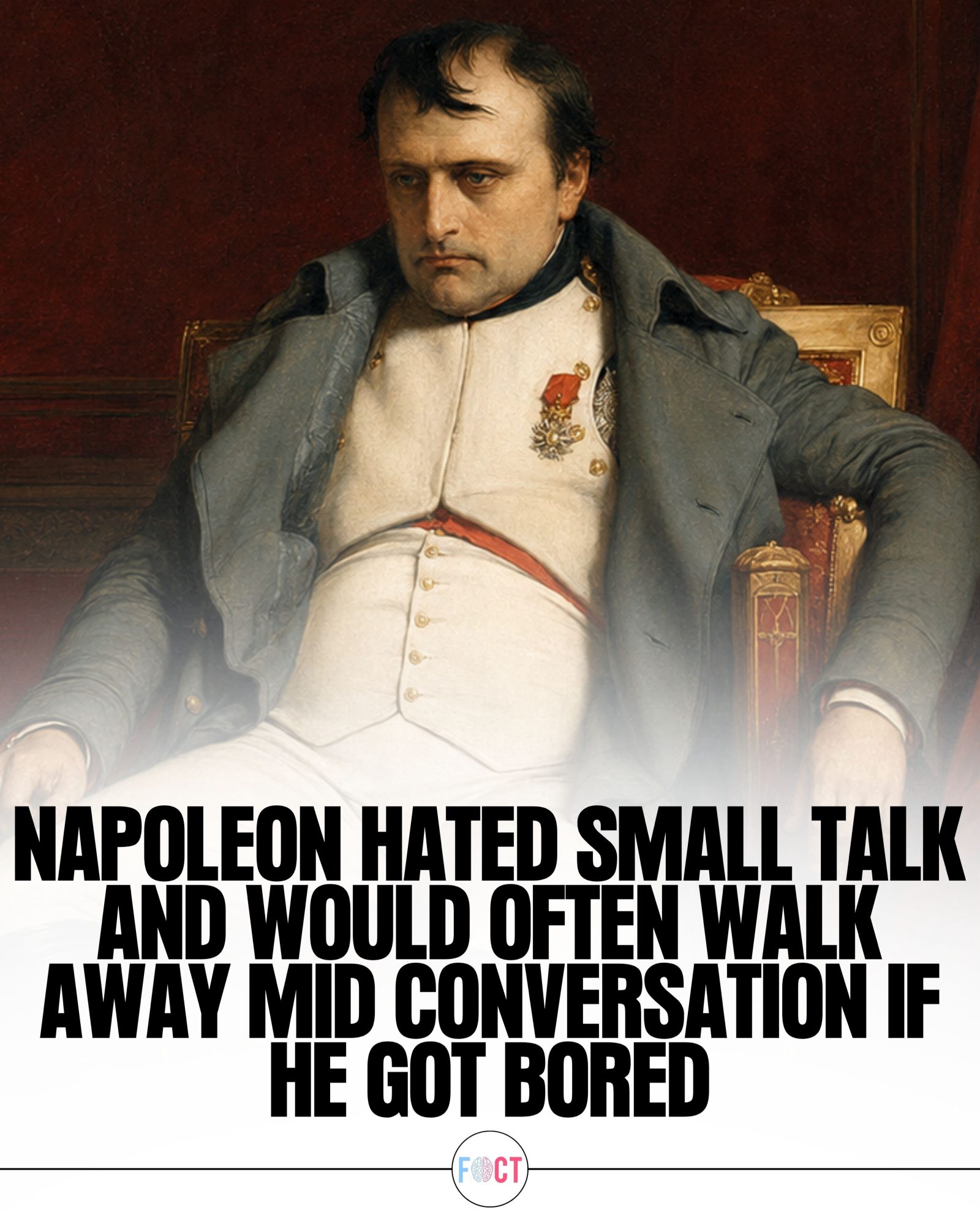
Napoleon Bonaparte's Low Tolerance for Small Talk
Napoleon Bonaparte, the French emperor, had a well-known dislike for small talk. Accounts from those who knew him reveal that he had zero tolerance for superficial chatter and would often walk away from conversations if they became boring, even during formal dinners or important social gatherings. This behavior, while seen as rude by some, reflected his intense, focused personality and his obsession with efficiency.
Why This Matters
Napoleon's aversion to small talk is more than just a quirky historical anecdote. It offers insights into his leadership style, his approach to communication, and his prioritization of substance over social niceties. Understanding this aspect of his personality can provide valuable context for those interested in history, leadership, and psychology.
Napoleon and The Art of Conversation
Napoleon preferred deep discussions on strategy, science, history, or politics. If the topic turned trivial, he would simply turn around and leave without excusing himself, a habit that left many people stunned. This behavior was not just about his dislike for small talk; it was a reflection of his intense focus and his belief in the value of time.
He believed in efficiency in all aspects of his life, and that included conversations. Napoleon valued substance and time above social niceties. He saw small talk as a waste of time and energy, both of which he considered precious resources. This approach to communication was a key part of what made him an extraordinarily driven leader.
Efficiency Over Etiquette
Napoleon's behavior during conversations highlighted his prioritization of efficiency over etiquette. He valued substance over superficiality, and this was evident in his interactions. While it was often seen as rude, it was a part of what made him who he was. He believed that time spent on trivial matters was time wasted, and he was not one to waste time.
Napoleon's Personality in Leadership
A Driven Leader
Napoleon's intolerance for small talk was a reflection of his driven personality. He was a man of action and results, and this was evident in his approach to communication. He saw conversations as opportunities for learning and growth, and he expected the same from others. If a conversation did not meet this standard, he had no interest in continuing it.
His Obsession with Efficiency
Napoleon's obsession with efficiency extended to all aspects of his life. He believed in getting things done quickly and effectively, and he expected the same from those around him. This approach to life and leadership made him a formidable figure, respected and feared by many. His aversion to small talk was just one aspect of his personality that contributed to his larger-than-life character.
Practical Tips
If you find yourself in a situation where you need to communicate with someone who values substance over small talk, here are a few tips to keep in mind:
- Be Prepared: Have a list of topics or questions that are relevant and meaningful. This will show that you value substance and are prepared for a deeper conversation.
- Stay On Topic: Avoid veering into small talk or trivial subjects. Stick to the main topics and avoid unnecessary digressions.
- Be Concise and Clear: Make your points clearly and concisely. Avoid beating around the bush or using unnecessary words.
- Show Enthusiasm: Show genuine enthusiasm and interest in the topics being discussed. This will help keep the conversation engaging and meaningful.
- Keep It Professional: Maintain a professional demeanor and avoid informal or casual language. This will help keep the conversation on track and focused.
Important Takeaways
Napoleon Bonaparte's aversion to small talk offers valuable insights into his personality, his approach to leadership, and his prioritization of efficiency. His behavior during conversations, while sometimes seen as rude, was a reflection of his intense, focused personality and his belief in the value of time. Understanding this aspect of his personality can provide valuable context for those interested in history, leadership, and psychology.
Conclusion
Napoleon's intolerance for small talk was a defining characteristic of his personality and leadership style. It was a reflection of his belief in efficiency, substance, and time. While it was often seen as rude, it was a part of what made him who he was. For those who admire him and his accomplishments, understanding this aspect of his personality can offer valuable insights and inspiration.
Questions readers ask
Did Napoleon Bonaparte's dislike for small talk affect his relationships with others?
Napoleon's intolerance of small talk likely strained some of his relationships, as he would often leave conversations and even social gatherings when they became trivial. This behavior may have been perceived as rude, but it was consistent with his intense focus on meaningful interactions. However, his close associates understood this trait and adapted their communication styles to accommodate his preferences.
How did Napoleon's communication style reflect his leadership approach?
Napoleon's preference for depth over small talk aligned with his leadership style, which valued efficiency and substance. He believed in direct, meaningful conversations that could yield tangible results, a principle he applied to both his personal and professional communications. This approach helped him maintain a focused and productive environment.
What did Napoleon Bonaparte do when he encountered small talk during important events?
During formal dinners or important social gatherings, if Napoleon found conversations becoming trivial, he would not hesitate to walk away. This behavior underscored his belief in the value of efficiency and his dedication to prioritizing substantive discussions, even in formal settings.
How did Napoleon's focus on meaningful conversations benefit his leadership?
Napoleon's focus on meaningful conversations allowed him to gather useful information, make informed decisions, and foster a culture of productivity. By prioritizing depth over small talk, he ensured that his time and the time of those around him was used effectively, leading to more productive outcomes.
How did Napoleon's intolerance of small talk affect his social gatherings?
Napoleon's intolerance of small talk significantly impacted his social gatherings, as he would often leave when conversations turned trivial. This behavior set a clear expectation for those around him, encouraging more substantive discussions and reflecting his belief in the importance of efficiency and depth in all interactions.
What can modern leaders learn from Napoleon's approach to communication?
Modern leaders can learn from Napoleon's approach by understanding the importance of prioritizing meaningful conversations. By focusing on substance over small talk, leaders can foster a more productive and efficient environment, encouraging deeper, more valuable interactions among team members.
Why did Napoleon Bonaparte prefer depth over small talk in his conversations?
Napoleon preferred depth over small talk because it aligned with his intense, focused personality and his obsession with efficiency. He believed that meaningful conversations were more valuable and productive, and therefore, he prioritized them to ensure that his time and energy were well-spent.
Related deep dives
Similar reads based on topic and creator.


Recent articles
Fresh deep dives from the latest Reels we unpacked.




Comments
Be the first to comment.