The Fog-Drinking Beetle in the Namib
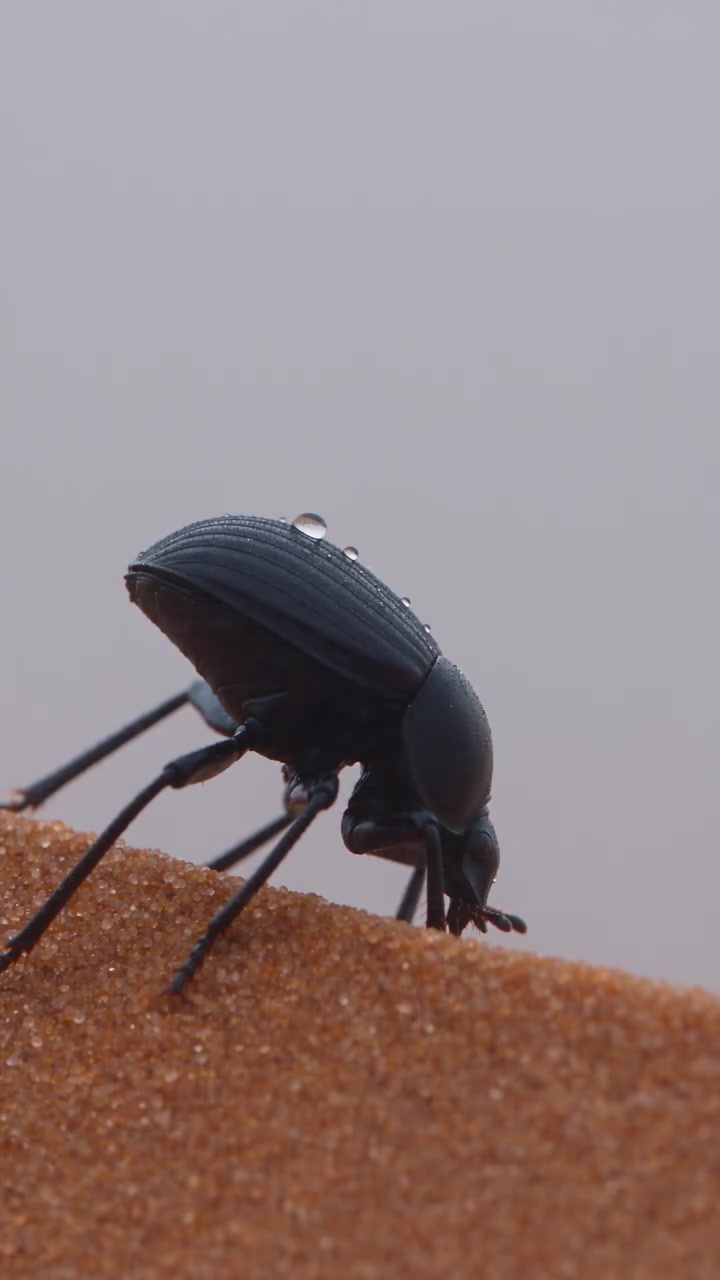
In the arid expanse of the Namib Desert, the world's oldest desert, a tiny beetle performs a remarkable feat. This desert beetle drinks fog. The beetle climbs to the crest of a dune, stands on its head and with its body tilting forward, allows droplets to merge and slide to its mouth. The fog, which rolls in from the cold sea, is enough for the beetle to drink a third of its body weight, which in human terms, is 25 liters in just one sitting. Named Onymachius Wygodziaki, this beetle species has earned its survival credentials because it lives in an environment where rain never falls. Whenever fog rolls in, the beetle finds itself in the right conditions to drink.
The Fog Collectors of the Namib
The Namib Desert is a harsh environment, where rain is nonexistent, and water is scarce. Sand dunes and dry riverbeds dominate the landscape. Because of these characteristics, some years, no rain falls, but the fog provides enough moisture for life to thrive. In this unforgiving desert, this beetle climbs to the crest of a dune every foggy night to collect water, making it a natural master in dry area survival.
The Process of Drinking Fog in the Desert
Drinking water from the air is the way of life for the beetle. The remarkable design of the beetle’s body allows it to trap fog on the bumpy textures of its back. It is said that it stands on its head on a dune facing the wind. Beetles harbor bumpy surfaces on their backs that trap fog rolling off the sea. The water droplets merge and roll down to its mouth. Once they reach the beetle’s mouth, it drinks it. On a good night, it drinks a third of its own weight from the collected droplets.
The Pure Biology
The beetle’s head-down position helps it align the natural angle of its body with the direction of the wind. A beetle climbs to the highest point on a dune. There, it would tip forward and by doing so, it ensures that the water rolls down its body and into its mouth. This process results in the beetle being able to collect over 20% of its body weight in water.
The Creation of the Fog Net
This process of drinking drops has inspired engineers to develop similar structures for fog nets in dry places. As a beetle that drinks the sea without ever reaching it, standing on its head, it is a natural example of ingenuity. The beetle demonstrated the concept of fog harvesting. The Namib beetle inspired engineering designs such as large-scale fog nets in dry places. These nets mimic the beetle's ability to trap and collect water from the air, providing a sustainable water solution.
How to Recognize the Fog Drinking Beetle
Spot the beetle in real life. The beetle lives in sandy areas near the coast in Namibia, which at certain times of the year, can be well above 100 degrees. The Namib beetle is small and can be difficult to spot on the ground because of its dark color, but it is well adapted to the challenging environment.
Questions readers ask
What makes the Namib beetle unique in its water collection method?
The Namib beetle, specifically the species *Onymachius Wygodziaki*, is unique because it collects water by drinking fog. Unlike other animals that rely on rain or standing water, this beetle has adapted to harvest moisture from the air, making it well-suited to survive in the arid Namib Desert where rain is virtually non-existent. Its remarkable ability to drink a significant amount of water, up to a third of its body weight, from fog droplets is what sets it apart.
How does the beetle's body structure help it capture fog?
The beetle's body has a unique bumpy texture that allows it to trap fog droplets. When the beetle stands on its head at the crest of a dune, it positions itself in a way that the water droplets roll down its body towards its mouth. The natural angle of its body, combined with the direction of the wind, ensures that the water droplets merge and slide into its mouth, providing a steady source of hydration.
What inspired engineers to create fog nets, and how do they work?
Engineers were inspired by the Namib beetle's fog-collecting abilities to create large-scale fog nets, which are designed to mimic the beetle's natural water-harvesting mechanism. These nets are set up in dry areas to trap and collect water from the air, similar to how the beetle's bumpy surface traps fog droplets. The nets provide a sustainable water solution by harvesting moisture from the fog, much like the beetle does in the Namib Desert.
Can the fog drinking beetle survive in other deserts with similar conditions?
It is likely that the Namib beetle could survive in other deserts with similar conditions, such as those with high temperatures and foggy nights. However, the beetle is specifically adapted to the Namib Desert's unique environment, so its ability to thrive in different deserts would depend on factors like the availability of fog and the presence of suitable sand dunes. Its survival in the Namib Desert is a testament to its remarkable adaptations, but transferring it to a different environment would require careful observation and study.
How often does the beetle need to drink fog to survive?
The Namib beetle drinks fog whenever it rolls in from the cold sea. This can happen regularly, depending on the weather patterns. The beetle's ability to collect water from the fog is crucial for its survival in the arid Namib Desert, where rain is almost non-existent. By drinking a significant amount of water from the fog, the beetle can sustain itself in the harsh desert environment. The frequency of fog occurrence determines how often the beetle needs to drink, but it is clear that the beetle has adapted to make the most of these opportunities.
What are the differences between the Namib beetle and other desert-adapted animals?
The Namib beetle stands out from other desert-adapted animals because of its unique method of collecting water from fog. While many desert animals have adaptations to conserve water, such as burrowing or having specialized kidneys, the beetle's ability to drink fog is a rare and highly specialized adaptation. This allows it to thrive in an environment where water is extremely scarce, making it a fascinating example of natural ingenuity and survival.
Related deep dives
Similar reads based on topic and creator.
Recent articles
Fresh deep dives from the latest Reels we unpacked.

Comments
Be the first to comment.