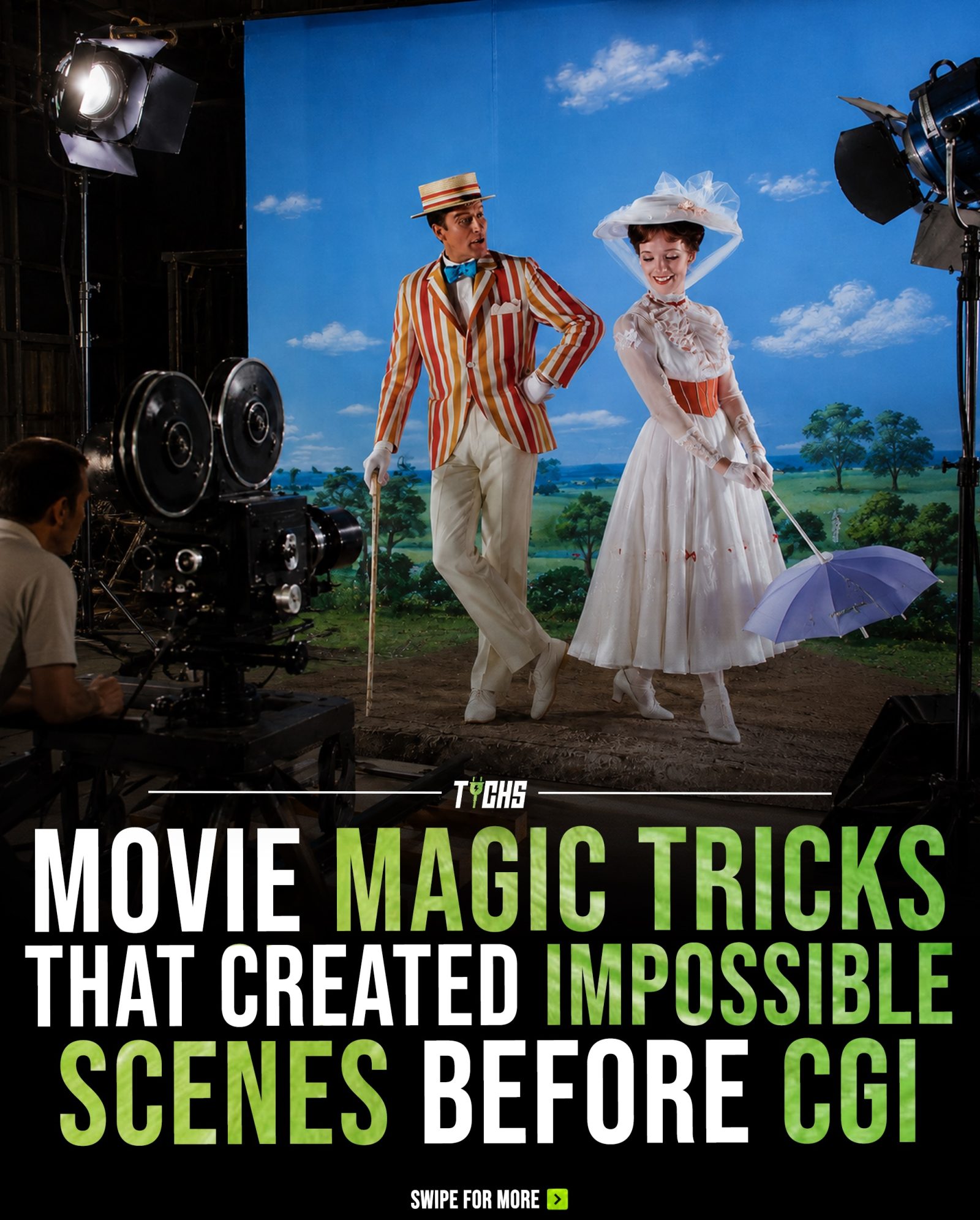
Movie Magic Tricks
Before the advent of computer-generated imagery (CGI), filmmakers relied on ingenious techniques to create impossible scenes on screen. These methods, often rooted in creativity, engineering, and practical effects, continue to inspire and captivate audiences and filmmakers alike. Practical effects from the pre-CGI era often required intricate planning, precise execution, and a deep understanding of both physics and the limitations of the film camera.
Why This Matters
Understanding these techniques provides insight into the evolution of filmmaking and highlights the creativity of those who pioneered these methods. It also serves as a reminder that even in the era of digital effects, the foundation of movie magic lies in the craftsmanship and ingenuity of filmmakers.
Main Discussion
Double Exposure
One of the most iconic techniques used by filmmakers before CGI was double exposure. This method involves re-winding the same film strip and recording over it twice. In the process, two separate scenes merge into one seamless shot without any digital editing. Classic examples include the legendary Stargate sequence in "2001: A Space Odyssey," where the seamless integration of scenes showcases the power of double exposure.
Creating Invisible Footprints
Another fascinating technique involves creating invisible footprints. Filmmakers achieved this by placing hidden wooden cutouts beneath fake snow. The cutouts prevented the snow from settling in specific areas, creating the illusion of footprints that appeared and disappeared as needed. This method was particularly effective in creating scenes that defied the laws of nature.
Mirror Illusions
Mirror illusions were another popular technique. By strategically placing mirrors, filmmakers could create the appearance of multiple objects or characters in a single frame. This method required careful planning and precise execution to ensure that the mirrors reflected the desired scenes without revealing the trick to the audience. Mirror illusions paved the way for modern visual effects, demonstrating the power of optical illusion in filmmaking.
The Stargate Sequence in 2001: A Space Odyssey
The Stargate sequence in "2001: A Space Odyssey" is a quintessential example of pre-CGI movie magic. Directed by Stanley Kubrick, this sequence showcased the use of multiple exposures, rotating sets, and intricate lighting to create a visually stunning and otherworldly environment. The sequence remains a testament to the creativity and technical prowess of filmmakers in the pre-CGI era.
Practical Tips
Planning and Preparation
Practical effects require meticulous planning and preparation. Filmmakers need to map out every detail, from the placement of props to the precise timing of actions. This ensures that the effects are seamless and believable, enhancing the overall viewing experience.
Understanding Physics
A deep understanding of physics is crucial for creating realistic practical effects. Filmmakers must consider factors like gravity, momentum, and light to achieve the desired outcomes. For instance, understanding how light reflects and bends can help in creating convincing mirror illusions.
Craftsmanship and Attention to Detail
Craftsmanship and attention to detail are essential in practical effects. Every element, from the design of props to the placement of mirrors, must be carefully crafted to create a convincing illusion. This level of detail ensures that the effects are believable and add to the overall authenticity of the scene.
Important Takeaways
The Enduring Legacy of Practical Effects
Practical effects from the pre-CGI era continue to inspire and influence modern filmmaking. Many techniques, such as double exposure and mirror illusions, are still used today, often in conjunction with digital effects. These methods remind us that movie magic existed long before the advent of computers and digital visual effects.
The Art of Storytelling
The use of practical effects in filmmaking is not just about creating visually stunning scenes; it is also about storytelling. Practical effects can enhance the narrative by adding layers of depth and realism, making the story more immersive and engaging.
The Power of Creativity
Creativity is the backbone of practical effects. Filmmakers often push the boundaries of what is possible with the tools available, resulting in innovative techniques that captivate audiences. This creativity continues to drive the evolution of filmmaking, inspiring new generations of filmmakers to explore and innovate.
Conclusion
Movie magic tricks from the pre-CGI era showcase the ingenuity and creativity of filmmakers. From double exposure to mirror illusions and the creation of invisible footprints, these techniques continue to inspire and captivate audiences and filmmakers alike. The legacy of these effects serves as a reminder that the foundation of movie magic lies in the craftsmanship and storytelling abilities of filmmakers.
Questions readers ask
What is the double exposure technique and how was it used in pre-CGI filmmaking?
Double exposure is a technique where two images are superimposed on a single frame of film. Filmmakers used this method to create ghostly apparitions, composites, and otherworldly scenes. It involves exposing the same frame of film twice, creating a layered effect that can make objects or people appear in impossible locations. For example, it was used in the 1932 film Dracula to make characters seem to transform, or even to show a ghostly reflection.
How were mirror illusions used to create movie magic before CGI?
Mirror illusions were a popular method to create the illusion of doubling or multiplying characters. Filmmakers would place a large mirror behind the actor and film the scene from a specific angle, making it appear as though there are multiple actors. This technique was often used to depict ghosts, duplicates, or even to create the illusion of a character interacting with their own reflection. It was famously used in the 1944 film Gaslight, where the mirror illusion creates a complex and haunting scene.
What were some of the challenges faced by filmmakers using practical effects in the pre-CGI era?
Practical effects required meticulous planning and execution. Filmmakers had to account for various factors like lighting, camera angles, and timing. They also needed to be creative in solving problems on the fly, often relying on their own ingenuity to overcome technical limitations of the medium. Additionally, ensuring safety and accuracy in stunts or special effects was a significant concern, as there were no digital safety nets.
How did filmmakers create the illusion of invisible footprints in movies before CGI?
To create the illusion of invisible footprints, filmmakers would often use a combination of clever camera angles and practical effects. One common technique involved having the actor tread in a pre-dug trench, covered with a thin layer of material that matched the surrounding environment. The actor could then appear to walk without leaving footprints. This method was famously used in the 1934 film The Invisible Man.
What are some classic movie tricks that relied on practical effects and ingenuity before CGI?
Classic movie tricks include techniques like forced perspective, where objects or sets are designed to appear larger or smaller than they are, and miniature models, which were used to depict large-scale scenes or action sequences. Other tricks include rear projection, where actors perform in front of a projected background, and stop-motion animation, which involves photographing an object in incremental movements to create the illusion of motion.
What role did engineering and physics play in old-school film effects?
Engineering and physics were crucial in developing practical effects. Filmmakers had to understand the mechanics of how things move, fall, or interact with light to create believable illusions. This knowledge was essential for creating convincing stunt sequences, designing miniature models that could withstand the rigors of filming, and manipulating camera angles and lighting to achieve the desired visual effects. For example, scale models had to be constructed with the correct proportions and weight to simulate real-world physics, while understanding the principles of optics was key to creating convincing illusions with mirrors and lenses.
Related deep dives
Similar reads based on topic and creator.
Recent articles
Fresh deep dives from the latest Reels we unpacked.




Comments
Be the first to comment.